Court Orders Refund of Overpaid Land Use Fees After Local Authorities Apply Incorrect Valuation Timing in Resettlement Case

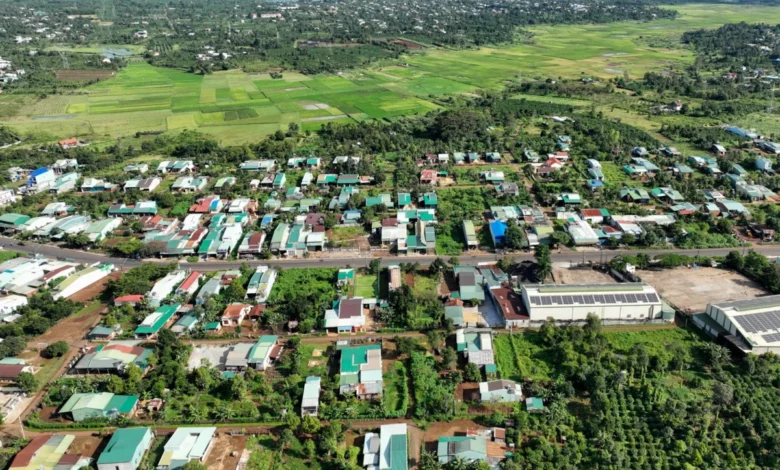
A resident in Gia Lai province has successfully overturned a local administrative decision after enduring a multi-year legal battle concerning land resettlement fees. The case highlights systemic vulnerabilities in the application of land valuation laws during urban development projects, revealing how administrative miscalculations can unjustly burden citizens who are already displaced by public infrastructure initiatives. Following a successful appeal at the appellate level, the court ordered the relevant government bodies to refund 171 million VND in overpaid land use fees, alongside administrative costs, bringing temporary closure to a grievance that spanned nearly half a decade.
Chronology of the Resettlement Dispute
The origins of the dispute trace back to September 2019, when the People’s Committee of Hoài Nhơn district in B
ỉnh Định province (formerly) approved an extensive compensation, support, and resettlement plan for households affected by the Bạch Đằng Street Residential Area construction project. Among the affected citizens was Mrs. H., a resident currently residing in Gia Lai province, who owned a 139.5-square-meter parcel of land that was slated for acquisition to clear the path for urban development.
Under the terms of the September 2019 compensation plan, Mrs. H. was slated to receive a designated resettlement lot measuring 120 square meters along T8 Street. Concurrently, she was awarded 299 million VND in monetary compensation for her original property and successfully handed over the vacant land to local authorities in September 2019.
However, the administrative realization of her resettlement plot faced extraordinary delays. It was not until December 2024—more than five years after the initial resettlement scheme was approved—that the local authorities officially issued the land allocation decision for Mrs. H.’s designated resettlement plot.
Compounding the prolonged wait, the local administration applied a completely different land pricing framework than the one mandated by law for her specific case. Instead of utilizing the land valuation schedule active at the time of the initial resettlement approval in September 2019, the administration applied a newer pricing resolution enacted by the town committee on September 25, 2019. This discrepancy resulted in a dramatic surge in the calculated land use fees, forcing Mrs. H. to pay an additional 171 million VND that she legally should not have owed.
Financial Burden and Administrative Resistance
To secure the title and finalize her legal obligations regarding the resettlement property, Mrs. H. ultimately completed financial transactions totaling approximately 575 million VND. This total comprised 560 million VND in disputed land use fees, 800,000 VND in registration fees, and 14 million VND in late-payment penalties levied due to the protracted administrative processing.
Upon realizing that the land use fees had been calculated using an incorrect valuation date, Mrs. H. filed formal complaints with local authorities. She argued that the retroactive application of a later pricing schedule violated established legal frameworks and unfairly inflated her financial obligations. Her grievances, however, were summarily dismissed by the Chairman of the Hoài Nhơn town People’s Committee.
Left with no alternative administrative recourse, Mrs. H. initiated an administrative lawsuit. She formally requested the court to annul the unlawful land allocation decisions tied to the inflated pricing, invalidate the administrative response that rejected her initial complaints, and compel the relevant offices to recalculate her land use fees based on the proper legal benchmarks originally established in 2018 and 2019. Furthermore, she demanded the complete reimbursement of the 171 million VND in overpaid land use fees, alongside associated registration costs.
Initial Judicial Setback at the Court of First Instance
Despite the clear discrepancies in the valuation timeline, the case initially faced a major judicial hurdle at the court of first instance. The People’s Court of Region 06 in Gia Lai dismissed all of Mrs. H.’s claims in their entirety. The first-instance judges ruled against her requests for reimbursement, accepting the general argument put forward by revenue collection agencies that citizens must fully satisfy financial obligations as determined by current administrative notices, leaving any retroactive adjustments dependent entirely on official land registry updates transmitted by competent authorities.
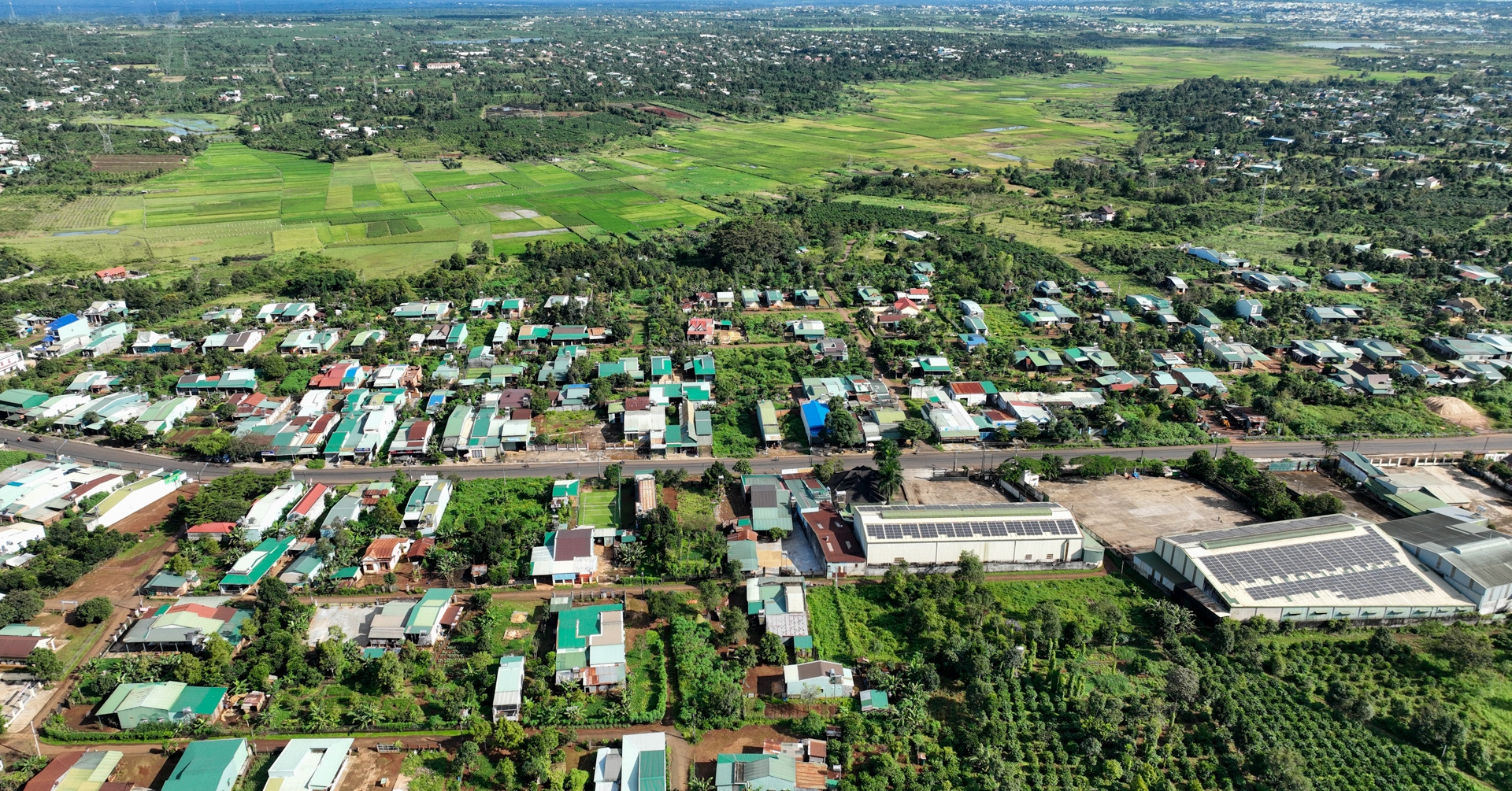
Refusing to accept a verdict that she viewed as legally flawed and economically unjust, Mrs. H. exercised her statutory rights and filed an appeal against the entire first-instance judgment, elevating the case to the provincial appellate level.
Appellate Review Uncovers Legal Misapplications
The appellate proceedings at the People’s Court of Gia Lai province brought a thorough re-evaluation of the statutory provisions governing land allocation and valuation. The appellate panel closely examined the timeline of administrative actions against the explicit mandates found within Vietnam’s legal framework, specifically referencing Clause 4, Article 254 of the 2024 Land Law.
According to statutory guidelines, the price of resettlement land must be formally established at the precise time the compensation, support, and resettlement plan is officially approved. The law dictates that if the land price at the actual time of land handover is lower, that lower price must be applied, ensuring that citizens do not bear the brunt of administrative inflation or bureaucratic delays.
Upon cross-referencing these legal standards with the facts of Mrs. H.’s case, the appellate court uncovered a stark administrative error. The Hoài Nhơn district authorities had officially approved the compensation and resettlement plan on September 11, 2019. Yet, the pricing resolution utilized by the local administration to calculate her fees was dated September 25, 2019—weeks after the resettlement plan had already been legally finalized.
Furthermore, internal investigative bodies corroborated these findings. A verification report issued by the Hoài Nhơn town Inspectorate on February 12, 2025, explicitly acknowledged that applying the September 25, 2019 resolution was inconsistent with the provisions of the 2024 Land Law.
Judicial Verdict and Final Ruling
Recognizing the undeniable validity of the appellant’s claims, the People’s Court of Gia Lai province sustained Mrs. H.’s appeal, formally overturning the earlier judgment delivered by the court of first instance.
In its binding decision (Judgment No. 03/2026/HC-PT dated September 8, 2026), the appellate court declared the December 2024 land allocation decisions—specifically the portions relying on the incorrect September 2019 pricing schedule—to be unlawful and void. The court also annulled the administrative decision issued by the Chairman of the Hoài Nhơn town People’s Committee that had previously dismissed the citizen’s complaints.
Crucially, the appellate court ordered the People’s Committee of Bồng Sơn ward, in coordination with Regional Tax Branch No. 4 of Gia Lai province, to execute a full refund to Mrs. H. The refunded amounts include the 171 million VND in overpaid land use fees and 350,000 VND in excess registration fees.
Broader Implications for Land Administration and Citizen Rights
This legal resolution serves as a critical reminder of the administrative accountability required of local government bodies during large-scale public infrastructure and urban renewal projects. Delays in land allocation and resettlement execution frequently expose citizens to shifting economic conditions and changing regulatory interpretations, which can inadvertently create severe financial hardships for vulnerable households.
Legal experts note that the appellate court’s strict adherence to the 2024 Land Law reinforces the principle that administrative timelines must be respected. When local authorities issue resettlement plans, the baseline financial metrics established at that moment create a binding framework that cannot be unilaterally altered by subsequent administrative delays or retrospective pricing applications.
For displaced residents navigating complex bureaucratic landscapes, this ruling provides an important precedent demonstrating that administrative miscalculations can be successfully challenged through the judicial system. As local authorities across regions continue to process lingering resettlement cases from past infrastructure developments, the verdict underscores the necessity of precise administrative compliance to safeguard citizens’ property rights and maintain public trust in state-led urban planning initiatives.