The impending launch of the iPhone 20, expected in September 2027, marks a significant milestone in the history of Apple’s smartphone division. Commemorating the 20th anniversary of the device that revolutionized mobile computing, industry analysts and supply chain leaks suggest that Apple is preparing a comprehensive redesign that goes beyond iterative hardware updates. Much like the iPhone X in 2017—which introduced the "notch" design and Face ID—the iPhone 20 is anticipated to be a watershed moment for the brand, potentially redefining the aesthetic and technical standards for the next decade of mobile technology.
A Legacy of Innovation: From 2007 to 2027
To understand the weight of the upcoming iPhone 20, one must look at the trajectory of the product line. In 2007, Steve Jobs unveiled the original iPhone, a device that replaced physical keyboards with multi-touch interfaces. Ten years later, the iPhone X broke the mold of the home button, introducing the bezel-less display and advanced biometric security through Face ID.
As we approach the two-decade mark, Apple is reportedly focusing on a "total screen" philosophy. According to reports from industry insiders like Bloomberg’s Mark Gurman, the company is aiming to eliminate the remaining physical interruptions on the front glass, effectively moving toward a device that feels like a single, seamless slab of glass.
Redefining Aesthetics: The Four-Sided Curved Display
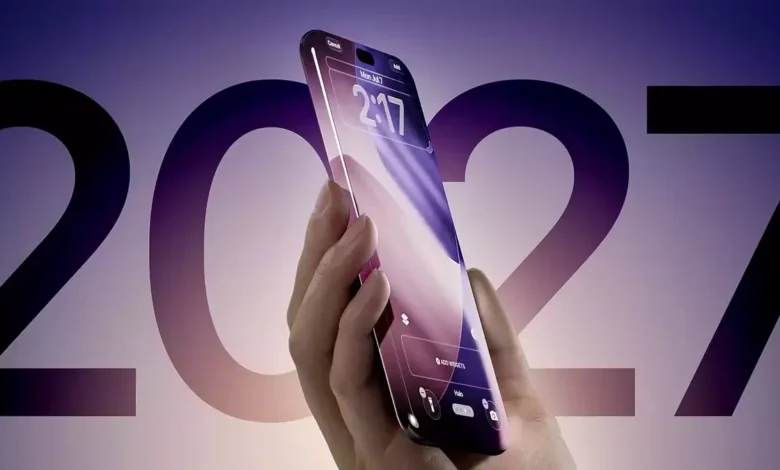
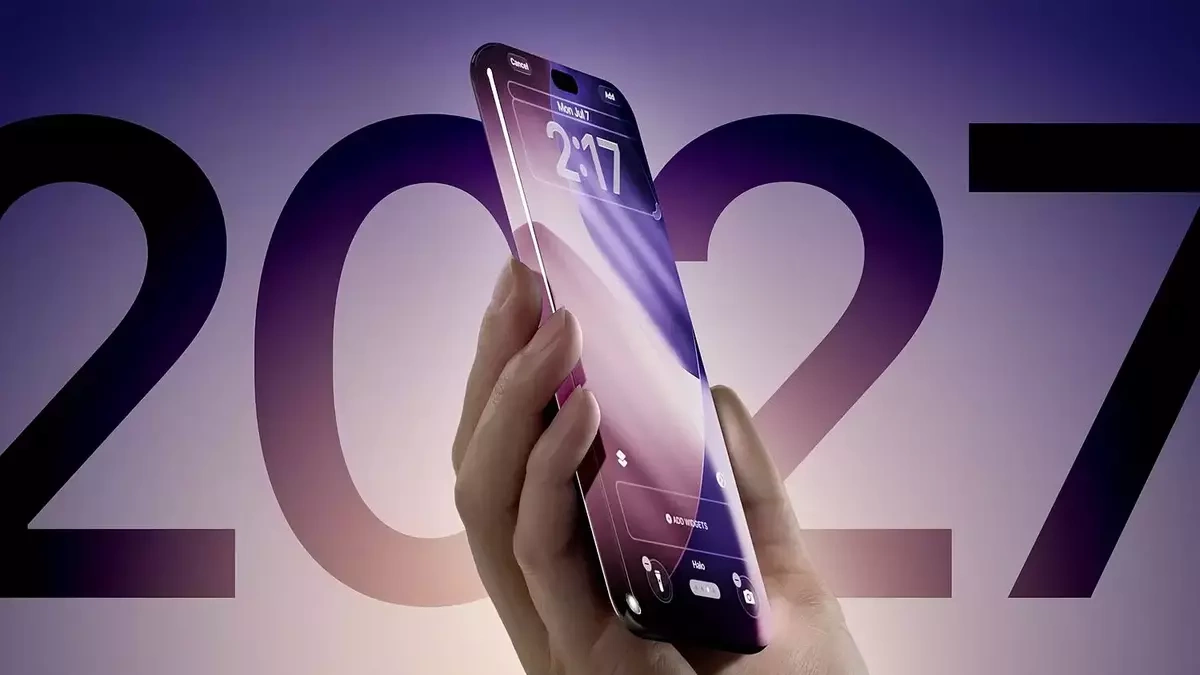
The most striking visual change expected in the iPhone 20 is the adoption of a four-sided curved display. Unlike previous iterations that featured subtle curves at the edges, this design aims to wrap the OLED panel around all four sides, effectively concealing the metal frame from the perspective of the user. Apple is reportedly collaborating with Samsung Display to perfect an OLED panel with unprecedented depth and clarity. The goal is to create a "glass-slab" appearance, where the device appears to be an object carved from a single piece of premium material, devoid of visible buttons or frame-breaks.
Advanced Display Technology: COE and Beyond
Beneath the glass, Apple is investigating the integration of Color Filter on Encapsulation (COE) technology. This advancement allows for thinner screen profiles while significantly increasing peak brightness and power efficiency. While UBI Research suggests that mass production constraints might push the widespread application of COE to 2029, the inclusion of this technology in the 20th-anniversary model remains a subject of intense speculation within the manufacturing sector. If successfully implemented, it would provide a substantial improvement in outdoor visibility and energy conservation.
The Evolution of Biometrics: Under-Display Integration
For years, the "Dynamic Island" has been the hallmark of Apple’s front-facing sensor housing. However, reports from Phone Arena indicate that Apple is aggressively testing an under-display integration for the entire Face ID and selfie camera array. This move would remove the need for any screen cutouts, achieving a true full-screen experience. While previous attempts by other manufacturers have suffered from diminished light intake and reduced image quality, Apple’s research into advanced optical transparency suggests they are targeting a 2027 debut for this technology, provided they can ensure the biometric security standards remain as robust as the current Face ID implementation.
The Shift to Haptic-Feedback Controls
A hallmark of the iPhone 20’s hardware refinement will be the total transition to solid-state, haptic-feedback buttons. The traditional volume, power, Action, and the new Camera Control buttons are expected to be replaced by touch-sensitive, flush-mounted zones integrated directly into the chassis. By utilizing an advanced version of Apple’s Taptic Engine, these zones will simulate the tactile sensation of a physical click without any actual mechanical movement. This shift not only improves the structural integrity and water resistance of the device but also allows for a more streamlined, dust-resistant physical design.
Custom Silicon and 5G Connectivity
The backbone of the iPhone 20 will be the A21 Pro chip, built on an advanced 2-nanometer process. Following the A20 Pro’s deployment on the iPhone 18 series, the A21 Pro will prioritize extreme power efficiency and localized AI processing. Furthermore, Apple is set to debut its third-generation 5G modem, the "C3," in 2027. Designed to outperform Qualcomm’s current industry-standard solutions, this proprietary modem is expected to significantly reduce latency and enhance the efficiency of the device’s artificial intelligence operations, which are increasingly reliant on high-speed data throughput.
Advancements in Imaging: The LOFIC Breakthrough
Apple’s dependence on third-party imaging sensors, primarily from Sony, may see a shift with the iPhone 20. The company is reportedly developing its own stacked image sensors utilizing LOFIC (Lateral Overflow Integration Capacitor) technology. This allows each pixel to store more light, drastically expanding the dynamic range—potentially up to 20 stops. For the professional photographer, this means unparalleled detail in both deep shadows and bright highlights, a leap that would solidify the iPhone’s position as a primary tool for cinema-grade mobile content creation.
Battery and Memory: The Internal Powerhouse
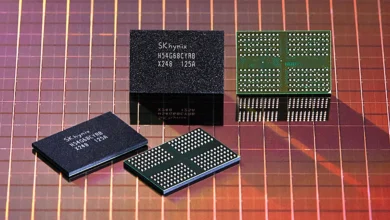
To support the demanding AI models running directly on the device, Apple is exploring silicon-anode battery technology. This material allows for a higher concentration of lithium ions per gram, extending battery life without increasing the physical size of the cell. Complementing this is a new, vertically stacked RAM architecture. By stacking memory chips, Apple can significantly increase bandwidth, ensuring that large language models (LLMs) and complex neural networks operate with minimal latency, even when the user is multitasking.
Strategic Implications and Market Context
The move toward these radical hardware changes is not merely an aesthetic choice; it is a strategic necessity. As the smartphone market reaches a plateau in terms of yearly upgrades, the iPhone 20 serves as a "super-cycle" catalyst. By pushing the boundaries of display, sensor, and battery technology, Apple is aiming to compel users of older devices—and those currently using competitors’ flagship models—to upgrade.
Furthermore, the integration of proprietary 5G modems and custom camera sensors signals a long-term goal of total vertical integration. By reducing reliance on external suppliers like Qualcomm and Sony, Apple gains better control over its supply chain, margins, and the specific performance characteristics of its hardware. This is particularly crucial as the company shifts its focus toward "on-device AI," where the harmony between custom silicon, high-bandwidth RAM, and efficient battery management is paramount.
Looking Ahead
As of November 2026, these specifications remain subject to final engineering validation. Historically, Apple has shown a willingness to delay or refine features if they do not meet their internal benchmarks for reliability and user experience. Nevertheless, the convergence of these leaks suggests a clear direction for the company. The iPhone 20 is shaping up to be a device that prioritizes the "vanished" interface—where the technology disappears to leave only the content.
The official unveiling, expected in September 2027, will likely be one of the most closely watched product launches in recent history. Whether it succeeds in its mission to redefine the smartphone for the next decade will depend on how seamlessly these ambitious technologies—from the four-sided curved glass to the under-display biometrics—are integrated into the final consumer product. For now, the industry remains in a state of anticipation, waiting to see if Apple can once again turn a milestone anniversary into a masterclass in technological evolution.