
The Vietnamese government is aggressively pursuing a national data strategy to propel digital transformation and foster sustainable economic growth, aiming to position the nation as a leader in the global data economy. This strategic imperative was underscored at the Vietnam – Asia DX Summit 2024, where key officials articulated the vision and roadmap for harnessing the power of data.
The Dawn of a Data-Centric Era
Deputy Minister of Information and Communications, Nguyen Manh Hung, delivered a significant address at the summit on May 28, 2024, highlighting a paradigm shift in resource utilization. He stated that digital transformation is creating a new form of resource: data. For the first time in its development history, humanity is moving from a consumer of natural resources to a creator of a new resource – data. Historically, industrial development primarily focused on depleting natural resources. Today, the digital economy is generating an abundance of data, which the government views as a critical asset.
Recognizing the profound importance of data for Vietnam’s future prosperity and its ambition to join the ranks of leading nations in the digital age, the Ministry of Information and Communications (MIC) has secured approval from the Prime Minister for a "National Data Strategy until 2030." This landmark strategy is a crucial component of Vietnam’s digital transformation journey, focusing on building a robust data infrastructure and a new data ecosystem that will drive national digital transformation.
The strategy emphasizes the development of data infrastructure and data-driven platforms, aiming to create a new foundation for the nation’s digital transformation. This initiative is not merely about collecting information; it is about transforming raw data into actionable insights that can fuel innovation, enhance public services, and stimulate economic competitiveness.

A Strategic Framework for National Data Development
The National Data Strategy until 2030, approved in February 2024, sets a clear direction for the country. Its core objective is to place data at the center of all digital transformation activities. This involves building comprehensive data infrastructure and developing data-driven platforms.
Mr. Tran Minh Tan, Deputy Director of the National Digital Transformation Institute under the MIC, elaborated on the strategy during a workshop on "Effective Data-Driven Enterprise Management and Operation" on May 29, 2024. He explained that the strategy’s overarching goal is to promote data as the central element in executing all activities related to infrastructure development and building data-driven platforms.
"A data infrastructure with quality data, big data, structured data, and unstructured data will create a strong foundation for digital transformation, for the development of artificial intelligence applications," Mr. Tan stated. "From this, the State will play a leading role, guiding and directing the entire nation to participate in data development and collectively benefit from data."
The strategy outlines six key points and three specific objectives to guide Vietnam’s data development. These include:
- Developing public data: Establishing and organizing public data to serve social development. This involves making government data accessible and usable for innovation and public benefit.
- Developing technological data: Creating a data market and fostering the development of the data economy. This aims to establish a vibrant ecosystem where data can be traded, analyzed, and utilized to drive economic growth.
- Ensuring data security and resource utilization: Implementing measures to protect data security and effectively exploit data resources, particularly through cross-border data flows, to establish Vietnam as a "data hub" in the region.
The Ministry of Information and Communications has developed an action plan to implement the national data strategy. This plan includes guiding directives for ministries, sectors, and localities to align their efforts with the national data strategy.

A critical immediate task for these entities is to compile a list of "big data" and "large data" within their respective domains. This data will then be integrated into the data development strategy of each ministry, provincial People’s Committee, and relevant agencies. This process aims to consolidate data assets and create a unified framework for their utilization, ensuring that departmental and local data development plans are synchronized with the national strategy.
"This is extremely important, creating a foundation for agencies, organizations, and businesses to participate in the development, sharing, and utilization of data from various ministries and provinces," emphasized the representative from the National Digital Transformation Institute.
Empowering Businesses with Data: Challenges and Opportunities
The importance of data-driven management for enterprises was a recurring theme at the Vietnam – Asia DX Summit 2024. During the workshop on "Effective Data-Driven Enterprise Management and Operation," Mr. Nguyen Ngoc Ly, Director of MISA’s Business Center, shared insights from a technology company actively supporting digital transformation. He asserted that collecting and exploiting data will help businesses operate more efficiently, enhance their competitiveness, and significantly increase productivity, especially when data is leveraged by Artificial Intelligence (AI).
Mr. Ly highlighted that data-driven management is an essential trend. He urged businesses to establish and exploit data infrastructure from the outset. He noted that the cost of building data capabilities is significantly lower when initiated early in a company’s lifecycle, compared to waiting until the enterprise reaches a large scale.
"Businesses need to plan and have a strategy to manage and operate based on data right from the beginning," Mr. Ly advised. "A crucial requirement is to have technology solutions that support data exploitation."

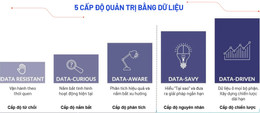
According to MISA, many Vietnamese businesses, particularly Small and Medium-sized Enterprises (SMEs), are still in the early stages of data maturity, often stuck at "level 2" of data exploitation. They have yet to fully tap into the potential of data to advance to higher levels. This situation calls for businesses to invest comprehensively in digital transformation and foster a mindset shift in management to overcome these challenges.
MISA’s development of the MISA AMIS platform is a strategic response to these challenges. The platform has been deployed to over 250,000 businesses and more than 25,000 business lines across various sectors and scales. MISA AMIS aims to provide businesses with updated solutions for enterprise management on a unified platform. It offers reporting and visualization tools to help business leaders gain a comprehensive picture of their operations, enabling them to make strategic decisions and optimize operational efficiency. Furthermore, MISA AMIS has integrated the MISA AVA AI solution, enhancing the efficiency of applying artificial intelligence in management and business operations.
Addressing the Hurdles: Data Silos and Cost Barriers for SMEs
Despite the recognized benefits, several critical challenges impede Vietnamese SMEs from effectively adopting data-driven management. Three primary obstacles stand out:
- Data Silos: A common issue is the fragmented nature of data across different departments and systems within a company. This often leads to a lack of data integration and interoperability, creating information silos that hinder comprehensive analysis.
- Lack of Data Literacy and High Costs: Many businesses struggle with a lack of data literacy and face high costs associated with data infrastructure. In some cases, businesses may purchase solutions that are only suitable for a specific stage of development, making data exploitation difficult later on.
- Accessibility to Advanced Solutions: SMEs, in particular, encounter difficulties in accessing comprehensive Enterprise Resource Planning (ERP) solutions due to their high costs, making it challenging to afford the necessary functionalities.
"For many businesses, they have purchased fragmented solutions, departmental systems that do not connect with each other, leading to information being duplicated or scattered," analyzed a MISA representative. "Furthermore, some solutions are only suitable for a particular stage of a business’s development, making it difficult to exploit data later. Notably, SMEs face significant challenges in accessing comprehensive ERP solutions due to the high costs involved in implementing features."
Building a Data-Centric Economy: A Long-Term Vision
The push for data-driven development is intrinsically linked to Vietnam’s broader aspirations for economic modernization and green transition. The government recognizes that robust data infrastructure and sophisticated data analytics capabilities are fundamental to achieving these goals.
The National Data Strategy until 2030 is designed not only to enhance digital transformation but also to lay the groundwork for a sustainable and inclusive economy. By fostering a data-driven ecosystem, Vietnam aims to attract investment, stimulate innovation, and create high-value jobs. The strategy’s emphasis on data security and cross-border data flows also signals an intention to position Vietnam as a strategic player in the regional and global digital landscape.
The involvement of technology companies like MISA is crucial in this endeavor. By providing accessible and integrated data management solutions, they are empowering businesses, especially SMEs, to overcome their limitations and participate more effectively in the data economy. The success of this strategy will depend on continued government support, industry collaboration, and a concerted effort to build a skilled workforce capable of harnessing the full potential of data.
The journey towards a fully data-driven Vietnam is ongoing, but the clear articulation of the National Data Strategy and the active engagement of both public and private sectors indicate a strong commitment to transforming data into a powerful engine for national development and prosperity in the 21st century. The strategy’s success will be measured not only by its technological advancements but also by its tangible impact on economic growth, social well-being, and the nation’s ability to navigate the complexities of a rapidly evolving global landscape.
Related posts: