On July 20th, Ukrainian forces, utilizing advanced First-Person View (FPV) drones, conducted a series of devastating precision strikes against Russian military assets, specifically targeting critical air defense and radar systems. The operation, orchestrated by units affiliated with the Ukrainian Center for Countering Disinformation and the Center for Deep Attack, successfully neutralized at least one Tor-M2 short-range air defense system and crippled five crucial radar installations. The U.S. Special Operations Forces (USF) attributed the intelligence and operational success to a multi-faceted approach involving specialized units.
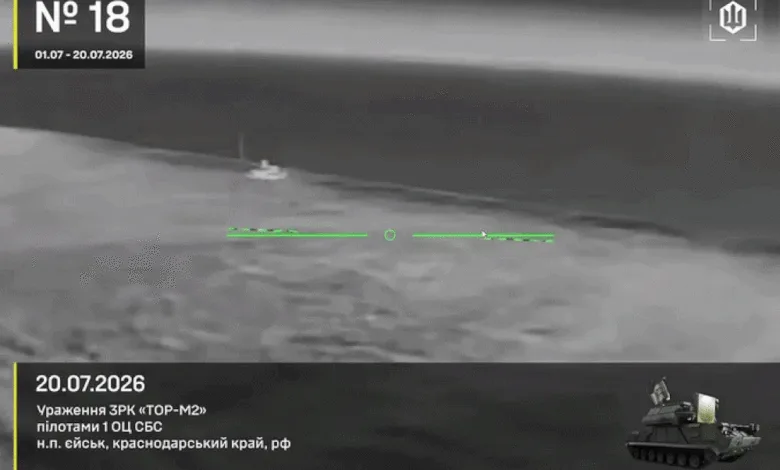
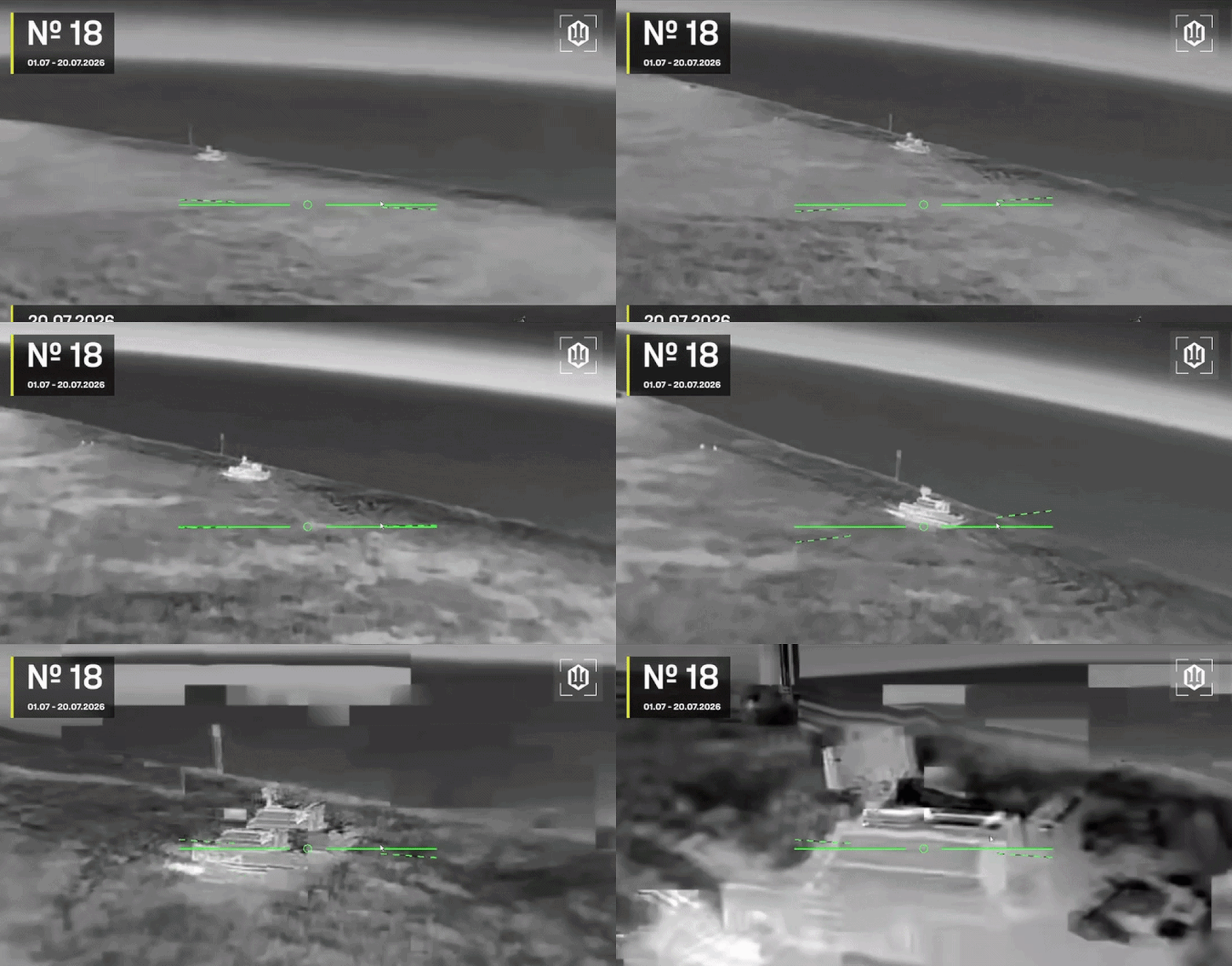
The operation’s most significant engagement occurred in the vicinity of Yeysk, located within Russia’s Krasnodar Krai. Here, Ukrainian soldiers employed FPV drones to meticulously target and destroy a Tor-M2 air defense vehicle. This particular engagement was highlighted in a video released by the Ukrainian military, showcasing the drone’s descent onto the stationary air defense system, which was positioned perilously close to the coastline. Prior to the successful strike on the Tor-M2, the FPV drones captured footage of at least two Russian personnel in the immediate vicinity of the target.
Beyond the destruction of the Tor-M2, the broader offensive campaign saw the neutralization of four additional radar systems. These included one Kasta-2E2, one Gamma-S1M, and two Nebo-SV radar systems. The systematic dismantling of these assets represents a significant blow to Russia’s battlefield awareness and air defense capabilities in the region.
Background and Strategic Significance
The deployment of FPV drones, often referred to as "kamikaze" or "suicide" drones, has become a hallmark of modern asymmetrical warfare. These relatively inexpensive yet highly effective unmanned aerial vehicles can be guided with remarkable precision by an operator using a headset, offering a real-time, immersive view of the target area. Their ability to carry explosive payloads and deliver them directly onto enemy hardware has made them a formidable weapon in the ongoing conflict.
The Tor-M2, a sophisticated Russian short-range air defense system, is designed to counter low-flying targets, including cruise missiles, drones, and helicopters. Its successful destruction indicates a significant tactical victory for Ukraine, potentially degrading Russia’s ability to protect its forces and infrastructure from low-altitude aerial threats. The system is known for its high mobility and rapid engagement capabilities, making its neutralization a notable achievement.
Similarly, the targeted radar systems play a crucial role in Russia’s military operations. The Kasta-2E2 is a mobile radar designed for air traffic control and surveillance, capable of detecting aircraft and drones at various altitudes. The Gamma-S1M is a battlefield reconnaissance radar used for detecting ground targets, while the Nebo-SV is a long-range surveillance radar system, vital for early warning and target acquisition. The destruction of these varied radar systems significantly hampers Russia’s ability to track Ukrainian movements, coordinate air defense efforts, and maintain situational awareness across a wide operational area.
Timeline of Operations and Intelligence Gathering
While the specific date of the broader operation is July 20th, the intelligence gathering and planning likely preceded this by a considerable margin. The Ukrainian Center for Countering Disinformation, in conjunction with the Center for Deep Attack, would have utilized a combination of human intelligence, electronic intelligence, and open-source intelligence to identify and prioritize these high-value targets.
The video evidence released by the Ukrainian military, particularly the footage of the Tor-M2 strike, suggests meticulous reconnaissance was conducted prior to the attack. The positioning of the drone operator and the clear visual confirmation of the target before impact underscore the sophisticated nature of these operations. The fact that the Tor-M2 was located near the coast could indicate an attempt by Russian forces to bolster air defenses in areas deemed vulnerable to naval or coastal incursions, or to protect critical port infrastructure.
The multi-pronged approach, targeting both air defense platforms and the radar systems that enable them, suggests a coordinated strategy aimed at creating temporary "blind spots" in Russia’s air defense network. This allows for subsequent operations, potentially involving other aerial assets or ground forces, with reduced risk of detection and interception.
Supporting Data and Technological Advancements
The increasing reliance on FPV drones by both sides of the conflict highlights a broader trend in modern warfare. These drones, often adapted from commercial or hobbyist models, are equipped with small but potent explosive charges. Their relatively low cost of production and deployment, compared to traditional missiles or aircraft, makes them an attractive option for attritional warfare.
Data from various conflict monitoring groups suggests that thousands of FPV drones have been deployed by Ukrainian forces since the full-scale invasion began. Their effectiveness has been widely documented in numerous videos shared across social media and military intelligence channels. The ability to rapidly adapt and deploy these drones in response to evolving battlefield conditions is a testament to Ukraine’s innovative approach to defense.
The Russian military has also been actively developing and deploying its own FPV drone capabilities, as well as countermeasures such as electronic warfare systems designed to disrupt drone control signals. However, the success of the Ukrainian strikes on July 20th indicates that these countermeasures are not always sufficient to protect critical assets.
Official Responses and Reactions
While no direct official statements from the Russian Ministry of Defense regarding these specific losses on July 20th have been widely reported in English-language media, the targeting of such critical assets would undoubtedly be a significant concern for Russian military leadership. The loss of multiple radar systems and a sophisticated air defense vehicle represents a tangible degradation of their operational capacity.
The Ukrainian military, through its official channels and the release of the FPV drone footage, has clearly aimed to demonstrate its offensive capabilities and the effectiveness of its drone warfare program. This serves not only as a morale booster for Ukrainian forces and their supporters but also as a deterrent to Russian military operations. The proactive neutralization of air defense assets is a key component of Ukraine’s strategy to regain air superiority and protect its territory from aerial bombardment.
The U.S. Special Operations Forces’ (USF) involvement, as stated by the source, likely pertains to intelligence sharing, training, or advisory roles. The United States has been a significant provider of military aid to Ukraine, including advanced drone technology and training, and this operation could reflect the successful integration of these capabilities.
Broader Impact and Implications
The successful strikes on July 20th have several significant implications for the ongoing conflict:
- Degradation of Russian Air Defense: The loss of the Tor-M2 and multiple radar systems directly weakens Russia’s ability to defend against Ukrainian aerial attacks, including drone strikes and potentially manned aircraft. This could lead to increased opportunities for Ukrainian air operations.
- Enhanced Ukrainian Battlefield Awareness: By neutralizing key radar systems, Ukraine can potentially operate with greater impunity, improving its intelligence gathering and operational planning.
- Psychological Impact: The successful targeting of Russian military assets within Russian territory can have a significant psychological impact on both sides, demonstrating Ukraine’s reach and capability.
- Evolution of Drone Warfare: This operation further underscores the evolving role of FPV drones as a primary offensive weapon system, capable of inflicting significant damage on high-value military targets. It highlights the importance of agility, precision, and cost-effectiveness in modern aerial combat.
- Technological Arms Race: The continuous development and deployment of advanced drone technology and countermeasures suggest an ongoing technological arms race between Ukraine and Russia, with significant implications for future conflicts.
The coordinated efforts by specialized Ukrainian units, leveraging advanced FPV drone technology and robust intelligence, demonstrate a sophisticated and evolving approach to warfare. The systematic dismantling of critical Russian air defense and radar infrastructure represents a significant tactical victory and a harbinger of continued innovation in the Ukrainian military’s efforts to defend its sovereignty.