Vietnam’s Ministry of Information and Communications Urges CMC to Spearhead Digital Transformation, Propelling the Nation into a Powerful Era


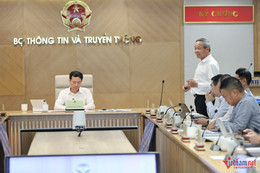
In a landmark meeting held on the afternoon of October 25th at the headquarters of the Ministry of Information and Communications (MIC), Minister Nguyen Manh Hung presided over a high-level working session with the leadership and key personnel of CMC Corporation, a prominent Vietnamese technology enterprise with 31 years of operation. This unprecedented direct engagement, the first of its kind for CMC’s core leadership with the MIC, underscores the government’s recognition of CMC’s significant contributions to the nation’s technological landscape and its strategic importance in driving Vietnam’s ambitious digital transformation agenda. Deputy Ministers Nguyen Thanh Lam and Bui Hoang Phuong, along with leaders from several MIC units, also participated, signaling the collaborative spirit and comprehensive support from the ministry.
The invitation extended by the MIC to discuss CMC’s future development path and strategic orientation reflects a profound appreciation for the corporation’s role in the industry and the nation. It simultaneously conveys a strong belief in CMC’s potential to evolve into a large, reputable digital technology enterprise, not only within Vietnam but also on the international stage. This strategic dialogue is a testament to the Vietnamese government’s commitment to fostering a robust domestic technology ecosystem capable of competing globally and contributing decisively to national prosperity.
CMC’s Ambitious Vision for Global Tech Leadership
The meeting commenced with a compelling presentation from CMC, beginning with a concise video clip highlighting the key milestones of its three-decade journey. Mr. Dang Tung Son, Vice Chairman of Strategy at CMC, then presented a comprehensive report on the corporation’s business performance and production results, detailing key activities during the first half of the fiscal year 2024. Crucially, he outlined CMC’s ambitious development strategy leading up to 2028.

According to Mr. Son, CMC has set an audacious goal to transform into a global digital and artificial intelligence (AI) corporation, adhering to international standards, by 2028. This vision entails a more than threefold increase in revenue and a significant expansion of its workforce to over 10,000 employees, doubling its current size. A substantial portion of this growth, specifically 40% of the human resources, will be dedicated to advancing AI capabilities, signaling CMC’s commitment to becoming a leader in this transformative technology. This strategic pivot towards AI and global expansion aligns perfectly with Vietnam’s national directives to embrace the Fourth Industrial Revolution and leverage digital technologies for accelerated growth.
Ministerial Directives: Mastering Technology for National Prosperity
Minister Nguyen Manh Hung expressed his high hopes for CMC, envisioning it as a pioneering Vietnamese digital technology enterprise. He urged CMC’s leadership and key personnel to adopt a new mindset, demonstrating unwavering determination to contribute actively to Vietnam’s digital transformation revolution. The ultimate objective, as articulated by the Minister, is to propel Vietnam into a powerful era, a vision deeply rooted in the nation’s long-term development aspirations.
A central theme of the Minister’s address was the imperative for Vietnam to achieve technological mastery. He underscored a recent declaration by Party General Secretary To Lam, who unequivocally stated that "Vietnam must master technology," particularly as digital transformation has been identified as the definitive pathway for Vietnam to become a developed nation. This national mandate serves as a powerful call to action for all Vietnamese technology companies, including CMC, to invest heavily in innovation and indigenous development.
To achieve this mastery over technology and the national digital transformation process, Minister Hung recommended a clear strategic approach for CMC and other Vietnamese digital technology enterprises. This involves significant investment in research and development (R&D), focusing on mastering applications initially, and progressively moving towards mastering core technologies. He emphasized that now is the opportune moment for CMC to boldly declare itself as one of Vietnam’s leading, large-scale digital technology enterprises, not only domestically influential but also internationally competitive.
He further stressed that realizing these "leading, large, international" objectives necessitates CMC undertaking significant projects aligned with national missions and executing them with utmost diligence. Minister Hung articulated a profound philosophy: "If an enterprise wants to grow and endure with the nation, it must link itself with national missions." This statement highlights the symbiotic relationship between corporate success and national development, urging companies to view their growth through the lens of national service and strategic contribution.
Detailed Guidance and Strategic Recommendations from MIC
The four-hour working session was highly interactive, with Minister Nguyen Manh Hung, the Deputy Ministers, and other MIC leaders dedicating a substantial portion of their time to thoroughly address CMC’s recommendations and concerns. They offered insightful guidance and proposed specific areas for CMC’s focus in the coming period.
One practical challenge discussed was the process of obtaining land for new submarine fiber optic cable landing stations, crucial for enhancing the resilience and capacity of Vietnam’s international telecommunications network and ensuring national security. MIC leadership advised CMC to thoroughly study the provisions of the new Land Law and collaborate with the Department of Telecommunications. This collaboration would enable the MIC to propose to the Prime Minister a directive for provinces to integrate submarine cable landing stations into their land use plans, thereby streamlining investment procedures and bolstering national digital infrastructure. This demonstrates the MIC’s proactive role in removing regulatory bottlenecks for strategic infrastructure projects.
Regarding the scope of development, Minister Hung offered a nuanced perspective on market exploration. While acknowledging the allure of "green ocean" strategies—identifying untapped markets or pioneering new technologies—he also encouraged CMC to innovate within "red ocean" spaces, where many players already exist, by introducing new and unique approaches. He reiterated that sectors within information and communications, such as telecommunications, digital technology, digital infrastructure, and cybersecurity, are inherently dynamic and constantly evolving. Therefore, the primary concern should not be the availability of new market space, but rather the enterprise’s willingness to "dare to do" and "do it thoroughly."

For a large enterprise like CMC, the Minister suggested a focus on developing foundational infrastructure and fundamental technologies. This includes investing in robust cloud computing platforms, state-of-the-art data centers, and foundational software that other businesses and developers can build upon. This strategy positions CMC as a pillar of the national digital ecosystem, allowing smaller enterprises to "stand on its shoulders" and accelerate their own innovation.
Concerning CMC’s choice of focused technology investment, particularly in IoT, the MIC leadership recommended that artificial intelligence (AI) and semiconductor chip design be pursued as parallel, equally important branches. Specifically for AI development, the advice given to CMC and other Vietnamese digital technology enterprises was to concentrate on "narrow AI"—specialized, dedicated, and custom AI solutions tailored for individuals and businesses. This approach avoids direct competition with global giants in general AI and instead leverages Vietnam’s specific needs and data sets. The Minister even suggested that CMC could develop platforms enabling individuals and organizations to create their own virtual assistants by integrating their proprietary data.
Furthermore, Minister Hung emphasized the necessity for CMC to develop proprietary technological products that define its brand identity and establish it as a leader. Before embarking on digital transformation initiatives for other enterprises, CMC was urged to undergo its own internal digital transformation. This "eating your own dog food" approach would provide CMC with invaluable firsthand experience, a deeper understanding of the complexities involved, and greater credibility when advising external clients.
Throughout the session, Minister Hung reiterated the MIC’s unwavering commitment to supporting Vietnamese digital technology enterprises. He characterized the Ministry as the "home" for these companies, a place where they can seek counsel, share difficulties, and receive support when facing challenges. He underscored the fundamental belief that "if digital technology enterprises do not develop, the Ministry and the industry will not develop, and the national digital transformation story cannot be achieved." This statement powerfully conveys the symbiotic relationship between government policy and private sector innovation in achieving national strategic objectives.

CMC’s Commitment to National Growth and Global Reach
Responding to the comprehensive guidance and enthusiastic support from Minister Nguyen Manh Hung, the Deputy Ministers, and other MIC leaders, Mr. Nguyen Trung Chinh, Chairman of CMC, expressed profound gratitude. He affirmed that, beyond its corporate development objectives, the entire CMC team is deeply committed to contributing to the nation’s development, with a specific aspiration to project Vietnamese intellect onto the global stage, thereby solidifying Vietnam’s position internationally.
Mr. Chinh acknowledged the challenging nature of the development goals and strategic directions that have been set. He emphasized that to realize these ambitious objectives, CMC would require not only its internal efforts but also the continued partnership, guidance, support, and assistance from the Ministry of Information and Communications. This sentiment highlights the collaborative spirit essential for navigating the complexities of technological advancement and international expansion.
As a symbolic gesture of partnership and shared vision, Minister Nguyen Manh Hung presented Chairman Nguyen Trung Chinh with two significant books: "Information and Communications Sector" and "Digital Transformation Overview: Strategy & Roadmap." These gifts serve as both a source of knowledge and a powerful symbol of the strategic alignment between the government and a leading private sector player in shaping Vietnam’s digital future.
Broader Implications: Forging Vietnam’s Digital Future
This high-level engagement between the MIC and CMC Corporation is more than just a corporate strategy session; it is a critical example of the public-private partnership model essential for driving Vietnam’s ambitious digital transformation. The Vietnamese government has set clear national goals, aiming for the digital economy to contribute 20% of its GDP by 2025 and envisioning a fully digital society by 2030. Achieving these targets hinges on the robust growth and innovation of domestic technology enterprises like CMC.

The Minister’s directives, particularly the emphasis on mastering core technologies, investing in R&D, and focusing on specialized AI, offer a pragmatic roadmap for Vietnamese companies. Instead of attempting to replicate the broad AI capabilities of global tech giants, the strategy of "narrow AI" allows for targeted innovation that addresses specific national and regional needs, potentially creating niche markets where Vietnamese firms can excel. Furthermore, the call for foundational infrastructure development (Cloud, Data Centers) ensures that the underlying architecture for a digital economy is robust and secure, benefiting the entire ecosystem.
However, realizing these aspirations comes with inherent challenges. Vietnam needs to continuously cultivate a highly skilled tech talent pool, attract substantial domestic and foreign investment into R&D, and maintain a supportive regulatory environment that encourages innovation while ensuring cybersecurity and data privacy. The competitive global technology landscape demands agility, continuous learning, and a willingness to take calculated risks.
The MIC’s explicit stance as a "home" and supportive partner for digital enterprises is crucial. This collaborative approach, where the government actively listens to, guides, and supports leading tech firms, creates a fertile ground for innovation and growth. By aligning corporate strategies with national missions, as Minister Hung advocated, companies like CMC can not only achieve commercial success but also become pivotal drivers of Vietnam’s socio-economic development and global standing. This meeting signals a renewed commitment to leveraging the power of domestic technology firms to secure a prosperous and technologically advanced future for Vietnam.