Vietnam’s Ministry of Information and Communications Holds Crucial Consultation for Draft Law on Industrial Production of Information Technology


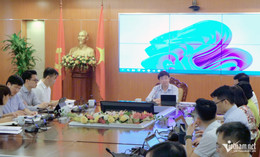
Hanoi, Vietnam – On August 12, 2024, the Ministry of Information and Communications (MIC) convened a vital working session with representatives from various ministries, sectors, and related industries to gather feedback and refine the draft Law on Industrial Production of Information Technology (IT). This strategic consultation aims to ensure the draft law is comprehensive and well-structured before its presentation to the Prime Minister and the National Assembly.
The meeting, hosted at the MIC’s headquarters, was presided over by Minister of Information and Communications, Mr. Boi Hoang Phuong. In attendance were key delegates from the Office of the Government, the Ministry of Planning and Investment (MPI), the Ministry of Finance, and the MIC itself, underscoring the multi-sectoral importance of the legislation.
This proactive engagement follows a directive from the Prime Minister, which tasked the MIC with leading the development of the draft Law on Industrial Production of IT in close collaboration with relevant ministries, central agencies, and local authorities. The initiative signifies a concerted effort to establish a robust legal framework for a sector poised for significant national contribution.
Addressing Gaps and Fostering Growth in the IT Sector
The draft Law on Industrial Production of IT is being meticulously crafted to address existing inefficiencies and disparities within the current legal framework governing IT industrial production, as outlined in the broader Law on Information Technology. Its primary objective is to create a clear and comprehensive set of regulations that will not only stimulate the development of the IT industry but also drive innovation and enhance competitiveness. Furthermore, the law seeks to proactively identify and mitigate potential risks associated with IT industrial production activities.
The proposed legislation is envisioned to create a conducive legal environment that propels the growth of the IT industrial production sector, transforming it into a significant contributor to the national economy. A key ambition of the law is to facilitate the transition of Vietnamese IT enterprises from basic assembly and component integration towards higher value-added activities such as original design, manufacturing, and integration. This strategic shift aims to elevate Vietnam’s position in the global IT value chain.

Scope and Key Provisions of the Draft Law
The draft law’s purview encompasses a broad spectrum of activities related to IT industrial production. This includes the production of IT goods, products, and services, alongside ensuring the sustainable development of the IT industrial production sector. Crucially, it also defines the rights and responsibilities of all involved entities and individuals participating in or associated with IT industrial production.
A significant provision within the draft law is its exclusion of IT production, supply, and services specifically designated for national defense, security, and essential medical purposes. The scope of the law is designed to apply broadly to all agencies, organizations, and individuals involved in or connected to IT industrial production, ensuring a wide reach and comprehensive coverage.
A Strategic Vision for National Development
Minister Boi Hoang Phuong emphasized the Ministry’s commitment to fostering a dynamic and competitive IT industrial production sector. He highlighted that the law aims to create an enabling environment for businesses, encourage investment, and promote technological advancement. "Our goal is to lay a solid foundation for Vietnam’s IT industry to not only meet domestic demand but also to become a significant player in the global market," stated Minister Phuong. He added that the Ministry is keen to hear directly from industry stakeholders to ensure the law reflects the realities and aspirations of the sector.
Expert Perspectives and Key Policy Directions
The consultation process provided a platform for in-depth discussions on the critical policy directions for the draft law. Ms. Pham Thu Ha, Deputy Director of the Legal Department at the Office of the Government, articulated that the draft law needs to focus on two major policy pillars: investment incentives and the establishment of a sound legal framework.
"To foster the development of the IT industrial production sector, the most crucial aspect is investment," Ms. Ha explained. "This includes strategic and long-term investment, technological investment, and related policies. The Ministry of Information and Communications has proposed various investment incentives aimed at the highest level, recognizing that these are the foundational elements for development and critical during this current phase."
Stimulating Investment and Building a Competitive Landscape
Mr. Vu Van Sieu, Deputy Director General of the Foreign Investment Agency Department under the Ministry of Planning and Investment (MPI), stressed the importance of establishing "IT industrial zones" within the legal framework. He suggested that these zones should align with the Law on Industrial Zones and Economic Zones, which is also under the purview of the MPI. This alignment would ensure consistency and efficiency in planning and management.
"We need to create policies that are synchronized with existing laws, particularly the Law on Industrial Zones and Economic Zones," Mr. Sieu commented. "This will create a streamlined and attractive environment for both domestic and foreign investment in the IT sector."
Representing the MPI, a proposal was made to the MIC to consider including specialized IT industrial parks within the draft law. These parks, according to the MPI, should facilitate the attraction of foreign-invested enterprises with expertise in relevant fields to conduct comparative studies and ensure compliance with legal regulations.
Addressing Specific Concerns and Future Outlook
During the working session, representatives from various ministries and related industries provided valuable input on several key issues. These included investment incentives for the IT industry, particularly for the production of "semiconductor IT" products, and VAT regulations for IT products. Discussions also touched upon the need for clear policies regarding research and development, as well as tax policies for the production of IT products.

The insights shared by the experts during the meeting have been instrumental in clarifying numerous aspects related to the Law on Industrial Production of IT. The collaborative approach adopted by the MIC aims to ensure that the final legislation is not only legally sound but also practical and effective in driving the growth and competitiveness of Vietnam’s IT industrial sector.
Broader Implications for Vietnam’s Economic Trajectory
The development of this dedicated law signifies Vietnam’s strategic commitment to enhancing its position in the global technology landscape. By focusing on industrial production of IT, the government aims to foster a more self-reliant and innovative domestic IT ecosystem. This initiative is expected to attract further foreign direct investment, create high-skilled employment opportunities, and contribute significantly to the nation’s economic diversification and technological advancement.
The emphasis on moving up the value chain, from assembly to design and manufacturing, is a critical step in Vietnam’s long-term industrial development strategy. The law is anticipated to provide the necessary legal and policy support to achieve this transformation, positioning Vietnam as a more significant hub for IT innovation and production in the ASEAN region and beyond. The consultation process, involving a wide array of stakeholders, underscores the government’s commitment to a transparent and inclusive legislative process, ensuring the law effectively serves the interests of the nation and its burgeoning IT sector. The next steps will involve further refinement of the draft based on the feedback received, with the ultimate goal of presenting a robust and forward-looking legal framework to the National Assembly.
Related posts: