Detailed Legal Frameworks Needed for Urban Redevelopment of Aging Apartment Complexes in Vietnam

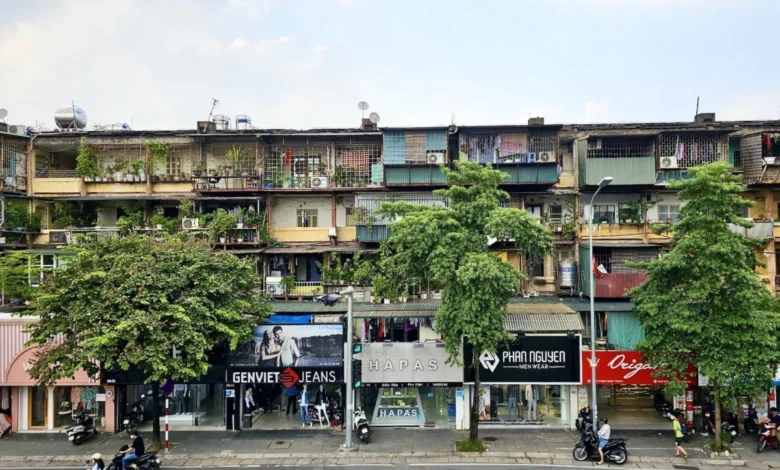
The ongoing revisions to Vietnam’s Housing Law have brought the pressing issue of urban renewal, particularly regarding aging apartment buildings and collective housing blocks constructed decades ago, to the forefront of national policy discussions. As metropolitan centers like Hanoi and Ho Chi Minh City grapple with aging infrastructure, structural degradation, and the safety hazards posed by deteriorated multi-story housing, lawmakers are working to refine the legal mechanisms governing compensation, resettlement, and reconstruction. Recent drafts of the revised Housing Law have introduced specific definitions for older apartment complexes, notably distinguishing buildings constructed before 1994 to streamline compensation and resettlement processes. However, real estate legal experts have pointed out significant gaps in the legislative framework, particularly concerning consensus thresholds among apartment owners, the legal validity of approved redevelopment plans for dissenting residents, and clear protocols for unresolved disputes. These regulatory ambiguities risk stalling critical urban renewal initiatives, prompting calls for more comprehensive, multi-layered statutory mechanisms to protect property rights while accelerating modernization.
Historical Background and the Evolution of Urban Renewal Policy
Urban renewal in Vietnam’s major urban centers has historically been a complex, protracted endeavor. Following rapid urbanization and housing development in the late 20th century, thousands of collective housing blocks—locally known as "nhà tập thể"—were constructed across cities like Hanoi and Ho Chi Minh City. Many of these structures, built primarily during the 1970s, 1980s, and early 1990s, have long exceeded their structural design lifespans. Decades of unauthorized alterations, structural modifications, lack of systematic maintenance, and the immense pressure of population growth have left these buildings severely degraded, frequently classified as Class D dangerous structures that pose immediate safety risks to their occupants.
For years, the redevelopment of these aging blocks faced severe bottlenecks due to conflicting property rights, rigid compensation frameworks, and the challenge of securing absolute consensus among hundreds of private apartment owners within a single building. Under previous legislative frameworks, developers and local authorities often found themselves trapped in prolonged negotiations. Every single homeowner held virtual veto power over redevelopment plans, rendering projects economically unviable and leaving residents living in deteriorating, hazardous conditions. Recognizing these systemic failures, the Vietnamese government has progressively updated housing legislation, striving to balance public safety, urban beautification, and the constitutional protection of private property rights. The latest iterations of the Housing Law and subsequent guiding decrees, such as Decree 98/2024/ND-CP, represent concerted efforts by the Ministry of Construction to establish transparent, predictable pathways for demolition and reconstruction.
Categorizing Aging Housing and the Application of the K-Coefficient

At the core of the latest legislative drafts is the formal inclusion and categorization of "old apartment buildings," specifically defined as those constructed in or before 1994. This temporal distinction serves as the fundamental legal basis for applying specialized compensation and resettlement policies, setting them apart from newer housing developments.
When an older apartment building is slated for demolition and reconstruction due to severe degradation or safety hazards, property owners are generally granted several options under the draft legislation: they may choose resettlement housing, social housing, financial compensation, or land use rights of equivalent value to the designated resettlement property. In instances where urban planning dictates that residential buildings must continue on the same land parcel, residents are typically arranged for on-site resettlement. In these scenarios, compensation for apartment floor area is calculated using a specialized multiplier known as the K-coefficient.
According to the regulatory details outlined in Decree 98/2024/ND-CP, the K-coefficient varies depending on the floor level of the original property. For ground-floor apartments—historically valued higher due to commercial potential and ease of access—the K-coefficient typically ranges from 1 to 2 times the original usable floor area recorded on the Certificate of Land Use Rights and Ownership of Residential Housing. For apartments located on the second floor and above, the K-coefficient generally ranges between 1 and 1.5 times the original usable area.
Furthermore, comprehensive compensation plans must explicitly itemize several critical components: the applied K-coefficient, the land price used for calculating compensation (if applicable), the monetary value of the resettlement apartment, any financial differentials requiring settlement, as well as relocation assistance allowances and temporary housing rental subsidies. Crucially, the draft mandates that the usable area of the new resettlement apartment must not fall below the minimum technical standards stipulated in national technical regulations for apartment buildings. Throughout the construction phase, local authorities or designated project investors are legally mandated to arrange temporary accommodation or provide direct financial support for residents to rent temporary housing.
Legal Status of Non-Classified Buildings and Land Rights
For multi-story residential buildings that do not meet the legal criteria of "old apartment buildings"—such as newer commercial developments nearing the end of their operational lifespan—the draft law establishes a distinct set of procedures. In these instances, apartment owners retain the right to continue utilizing the underlying land area upon contributing to the reconstruction costs of the new structure.

This financial contribution is calculated proportionally, based on the usable floor area of the individual apartment multiplied by the new construction investment rate per square meter of residential floor space at the time of demolition. If a property owner declines or is unable to contribute financially to the rebuilding effort, they are compensated for the value of their land use rights corresponding to their proportional share at the time of demolition, effectively handing over their land rights back to the State. Alternatively, if subsequent urban planning dictates that residential housing will not be rebuilt on the specific land parcel, all property owners are compensated for their land use rights based on prevailing land laws at the time the compensation decision is officially issued.
Expert Analysis: Identifying Regulatory Loopholes in Consensus Thresholds
Despite these detailed structural provisions, legal experts have raised concerns regarding critical loopholes within the draft legislation, particularly concerning the mechanism for securing owner approval, the enforcement of compensation plans, and the legal treatment of dissenting minority owners.
Real estate legal specialist Pham Thanh Tuan pointed out in recent analyses that the draft law currently lacks a comprehensive framework detailing how property owners must approve compensation and resettlement plans. Specifically, the legislation omits clear statutory thresholds for minimum consensus rates, the legal enforceability of approved plans over non-consenting owners, and explicit administrative or legal procedures for handling situations where a project fails to achieve the required approval rates.
"The consensus rate is not merely an administrative hurdle; it is directly tied to property rights, resettlement entitlements, and the financial obligations of every individual homeowner," Mr. Tuan noted. Because these elements form the bedrock of property ownership, they must be fundamentally anchored within the primary text of the Housing Law, leaving detailed procedures regarding opinion-polling, town hall meetings, result verification, and administrative execution to governmental implementing decrees.
Analyzing the structural alignment within the draft, legal commentators highlight potential friction between Articles 91, 92, and Article 94. Under Article 94, once a compensation and resettlement plan has been officially approved, competent state authorities are empowered to issue relocation orders. If property owners or users fail to relocate by the specified deadline, enforcement and compulsory eviction measures may be legally initiated.
Consequently, the legislative sequence implies a logical progression: drafting a plan, securing approval, issuing a relocation order, and enforcing compliance if necessary. However, the draft fails to clearly define the precise mechanism and threshold through which a plan must be endorsed by property owners before it can legally proceed to official approval. This omission creates severe legal ambiguity for subsequent administrative enforcement steps.
Comparative Frameworks: Lessons from Transit-Oriented Development Policies
To bridge these regulatory gaps, legal professionals have suggested examining successful regional models implemented within domestic jurisdictions, pointing to specialized mechanisms like those applied to Transit-Oriented Development (TOD) urban renewal zones in Hanoi, specifically under Resolution 66/2026/NQ-HĐND.
Under Resolution 66, a compensation and resettlement plan is deemed officially approved when it receives affirmative votes from at least 51% of the total number of apartment owners and lawful land users, authenticated directly by communal-level People’s Committees. Every legal homeowner and land user within the project scope is granted a single vote.
Proponents of this approach argue that studying such localized precedents provides invaluable insight not only into establishing a reasonable threshold for consensus but also into defining the legal validity of a plan once adopted, alongside systematic protocols for handling non-compliant minorities. Establishing a defined statutory threshold prevents protracted project delays caused by a small fraction of homeowners holding absolute veto power over vital infrastructure modernization.
Policy Recommendations for Legislative Refinement
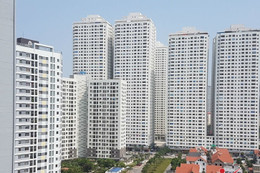
To ensure legal certainty and prevent prolonged stagnation in apartment reconstruction projects, legal experts recommend introducing core amendments to the draft Housing Law. Specifically, Articles 91 and 92 should explicitly incorporate the foundational principles of opinion-polling and minimum consensus thresholds required prior to official plan approval.
Furthermore, the law must explicitly clarify whether a plan achieving a statutory majority—such as 51%—and receiving official approval from competent state authorities holds binding legal force over remaining dissenting owners. Resolving this question is paramount for establishing a sound legal foundation for subsequent relocation and enforcement proceedings.
In scenarios where consensus cannot be reached despite extensive dialogue, stakeholder consultations, and plan adjustments within a stipulated timeframe, alternative mechanisms must be provisioned. Experts suggest transitioning such stalled initiatives to state-backed recovery mechanisms, where the State revokes the land to execute the project using public investment capital or conducts auctions for the land use rights. Implementing these transparent legal backstops would safeguard public safety, modernize deteriorating urban landscapes, and ensure that vital redevelopment projects are not indefinitely paralyzed by administrative deadlocks.