CENTCOM announced on July 20th that U.S. forces have resumed airstrikes targeting locations in southern Iran, a move initiated under the directive of U.S. President Donald Trump, with the stated objective of deterring maritime traffic through the Strait of Hormuz. Multiple explosions were reportedly observed in Iran’s Hormozgan province, prompting Iran’s air defense forces to go on high alert in the vicinity of the Bushehr nuclear power plant.
The same day, Iranian President Masoud Pezeshkian declared that Iran would not be drawn into an "escalation of forces" with the United States, suggesting an agreement to de-escalate tensions. Concurrently, the Houthi movement in Yemen issued its own statement, announcing a maritime blockade against the United States. This action is reportedly intended to counter what they describe as "aggressive actions" by the U.S. and its allies.
Background and Escalating Tensions in the Strait of Hormuz
The recent U.S. airstrikes in southern Iran represent a significant escalation in the ongoing tensions between the two nations, particularly concerning maritime security in the vital Strait of Hormuz. This narrow waterway, a chokepoint for a substantial portion of global oil exports, has been a focal point of geopolitical friction for decades. The U.S. Central Command (CENTCOM) justification for these strikes, as stated by President Trump, is to deter what it perceives as Iranian threats to international shipping. This follows a pattern of increasing assertiveness from Iran in the region, including alleged attacks on oil tankers and the seizure of vessels.
The Strait of Hormuz is crucial for the global energy market, with approximately 20-30% of the world’s oil supply passing through it daily. Any disruption to this traffic can have immediate and far-reaching consequences for global energy prices and supply chains. Iran has historically viewed the presence of foreign naval forces in the Persian Gulf as a provocation and has often threatened to close the strait in response to perceived threats to its security or sovereignty.
The U.S. response, through these targeted airstrikes, signals a willingness to directly confront Iranian actions deemed destabilizing. The reported explosions in Hormozgan province and the subsequent activation of Iranian air defenses near Bushehr indicate that these strikes have direct operational implications within Iranian territory. The Bushehr nuclear power plant, while not directly targeted according to initial reports, represents a sensitive strategic location, and any heightened military activity in its vicinity raises concerns about regional stability.
Iranian President’s Call for De-escalation Amidst Regional Instability
President Masoud Pezeshkian’s statement regarding Iran’s refusal to engage in an "escalation of forces" with the United States appears to be a diplomatic maneuver aimed at averting a wider conflict. This declaration, made on the same day as the CENTCOM announcement of new strikes, suggests an internal debate within Iran regarding its response to U.S. actions. While hardliners within the Iranian regime may advocate for a more forceful retaliation, the presidency’s stance signals a desire to de-escalate, at least publicly.
This cautious approach from Tehran might be influenced by several factors, including the economic pressures Iran faces due to international sanctions and the potential for a devastating military confrontation. However, the effectiveness of such calls for de-escalation is often tested by the actions on the ground and the rhetoric from other influential actors.
The concurrent announcement from the Houthi movement in Yemen regarding a maritime blockade against the United States adds another layer of complexity to the regional security landscape. The Houthi, an Iran-aligned group, have been engaged in a protracted conflict in Yemen, and their actions are often seen as proxies for broader regional power struggles. Their declaration of a blockade, while potentially symbolic or aimed at demonstrating solidarity with Iran, could further complicate maritime operations in the Red Sea and the Bab al-Mandab Strait, another critical maritime chokepoint. This synchronized escalation of rhetoric and action from non-state actors aligned with Iran suggests a coordinated effort to exert pressure on the U.S. and its allies.
Ukrainian Protests Issue Ultimatum to President Zelensky
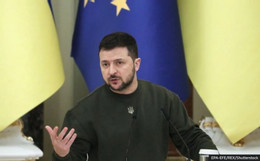
In a separate development, Ukrainian protesters have issued an ultimatum to President Volodymyr Zelensky, demanding the dismissal of former Defense Minister Mykhailo Fedorov and the removal of General Oleksandr Syrskyi from his command. The protests, which began on July 16th, are reportedly in response to the dismissal of a brigade commander.
According to recent reports, Fedorov has been assigned a new role focusing on military industry and optimizing the Ministry of Defense’s technological advancements. However, sources suggest that Fedorov himself wishes to remain as Minister of Defense. This internal political maneuvering within Ukraine’s military leadership comes at a critical juncture in the ongoing conflict with Russia.
The differing approaches to military command are also highlighted. General Syrskyi is reportedly in favor of a more centralized command structure, a model that contrasts with Fedorov’s purported preference for a more decentralized, modern approach to military operations. This internal dissent and public protest within Ukraine could potentially impact its war effort and its standing with international partners who are providing significant military and financial aid.
The ultimatum, set for July 24th, underscores the domestic pressures President Zelensky is facing. Managing internal political dissent while simultaneously prosecuting a full-scale war against a larger adversary presents a significant challenge. The international community, particularly the United States and its European allies, will be closely watching how these internal dynamics unfold, as stability and effective leadership in Kyiv are crucial for sustained support.
U.S. Navy Reports Casualties, Merchant Vessel Reported Near Oman
U.S. spokesperson Sean Parnell disclosed on July 21st that nearly 100 U.S. Navy personnel sustained injuries of varying degrees on July 7th during operations against Iran. Parnell stated that the majority of these injured personnel, specifically 96%, have returned to duty. This disclosure was made in an effort to counter what he described as "misinformation" circulating, suggesting a deliberate attempt to downplay casualties. The New York Times had previously raised questions about the transparency of casualty reporting in the context of these operations.
Adding to the maritime concerns, the United Kingdom Maritime Trade Operations (UKMTO) reported on July 21st that a merchant vessel of unknown nationality was detected in the Strait of Hormuz, approximately eight nautical miles from Limah, Oman. The vessel was reportedly proceeding at a slow speed and required towing assistance. This incident occurred shortly after the Islamic Revolutionary Guard Corps (IRGC) announced the cessation of a large-scale naval exercise that had been conducted in the southern waters of the strait.
The incident involving the merchant vessel, even if attributed to mechanical failure, occurs against a backdrop of heightened tensions and previous allegations of Iranian interference with shipping. The IRGC’s announcement of concluding its naval exercises might be an attempt to de-escalate the immediate situation, but the presence of a disabled vessel in such a critical waterway underscores the inherent risks and vulnerabilities in this volatile region. The slow speed and need for towing suggest a potential mechanical issue, but in the current geopolitical climate, any unusual maritime activity in the Strait of Hormuz warrants close scrutiny.
Broader Implications and Analysis
The U.S. airstrikes in Iran and Tehran’s subsequent warnings of escalation represent a dangerous spiral that could have profound implications for regional and global stability. The continued military engagements, even if limited in scope, increase the risk of miscalculation and accidental conflict. The involvement of non-state actors like the Houthi in Yemen further complicates the situation, potentially drawing more nations into a wider regional conflagration.
The U.S. strategy, as articulated by President Trump, appears to be one of deterrence through direct action. The objective is to make the cost of any perceived Iranian aggression too high. However, such strategies can be a double-edged sword, potentially provoking retaliatory actions that could escalate beyond the intended scope. The reported U.S. casualties, even if mostly recovered, highlight the inherent dangers of these operations.
For Iran, the decision to warn against escalation while its territory is being targeted suggests a strategic calculus aimed at avoiding a direct, all-out war while still projecting defiance. The internal political dynamics within Iran, particularly between pragmatic and hardline factions, will be crucial in determining the country’s next steps.
The situation in Ukraine, while seemingly separate, underscores the interconnectedness of global security. Internal political instability within a key U.S. ally at a time of heightened international tensions could be seen as an opportunity by adversaries. The effective functioning of Ukraine’s defense apparatus and its leadership’s ability to manage domestic challenges are critical for the continued flow of Western support.
The maritime incidents in the Strait of Hormuz and near Oman serve as a stark reminder of the fragility of global trade routes. Any disruption, whether intentional or accidental, can have immediate and severe economic consequences. The ongoing military posturing in this vital waterway underscores the need for de-escalation and robust diplomatic engagement to prevent a further slide into conflict. The coming days and weeks will be critical in observing whether diplomatic channels can prevail over military action and de-escalate the rising tensions in the Middle East.