Apple iPhone 18 Pro Debuts Pro Controls with Physical Aperture Adjustment: A New Era for Mobile Photography

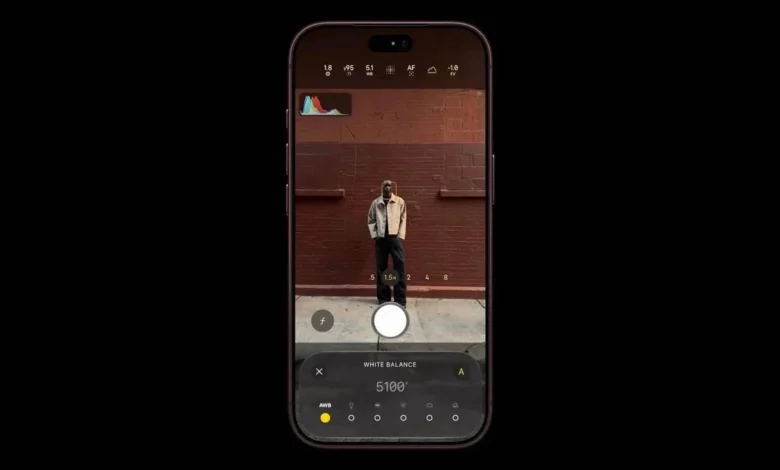
The launch of Apple Inc.’s latest flagship lineup, the iPhone 18 Pro and iPhone 18 Pro Max, has marked a significant paradigm shift in the realm of computational and mobile photography. Unveiled during Apple’s annual autumn hardware event, the new devices introduce a suite of advanced imaging features collectively known as Pro Controls. Among these, the inclusion of a physical, mechanically adjustable aperture on the primary camera sensor has generated intense industry-wide discussion, bridging the traditional gap between dedicated mirrorless cameras and pocket-sized mobile devices.
Priced starting at $1,199 for the iPhone 18 Pro and $1,299 for the iPhone 18 Pro Max, with retail availability slated for September 18, the devices are engineered explicitly for mobile creators, videographers, and photography enthusiasts who demand granular, hardware-level control over their imagery without sacrificing the convenience of a smartphone.
The Evolution of Mobile Optics: Physical Aperture Meets Computational Photography
For decades, smartphone manufacturers have relied entirely on software algorithms, multi-frame stacking, and fixed-aperture lenses to manage exposure, depth of field, and light intake. While these software-driven methods have advanced remarkably, they have historically lacked the authentic optical characteristics of physical glass, such as true optical diffraction, natural bokeh transitions, and precise shutter-speed-to-aperture trade-offs.
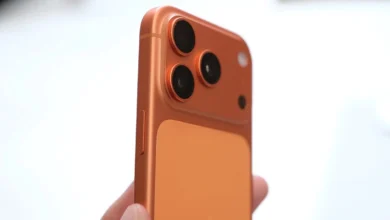
The iPhone 18 Pro disrupts this convention by integrating a true mechanical aperture into its main camera module. Featuring a four-stop variable system built with a six-blade optical diaphragm, the main sensor allows users to physically restrict or widen the passage of light. This hardware integration is complemented by a comprehensive software interface that grants direct manual control over exposure value (EV), shutter speed, ISO, and real-time histogram monitoring. Furthermore, Apple has opened the Application Programming Interface (API) for these physical controls, allowing third-party developer applications like Halide, Filmic Pro, and Adobe Lightroom to harness the hardware natively.
In addition to the physical aperture, the iPhone 18 Pro series introduces AI Smart Focus Tracking, a machine-learning-driven focusing mechanism designed to lock onto moving subjects seamlessly. The upgraded Photographic Styles now allow users to adjust fine textures and color grading at a granular level, while the post-processing pipeline has been enhanced to support full-resolution Cinematic Mode recordings at 60 frames per second.
Industry Reactions and the Great Debate
Despite Apple’s hardware innovation being lauded by content creators and mobile cinematography professionals as a long-overdue milestone, the announcement has ignited a vigorous debate across technology forums, photography communities, and social media platforms.
The discourse largely centers on the philosophical divergence between dedicated photography purists and everyday smartphone users. Long-time critics have pointed out an apparent irony in mobile marketing trends: historically, when Android manufacturers or competing brands attempted to introduce mechanical apertures or complex manual photography tools, they were often met with criticism from consumers who argued that smartphones should remain strictly "point-and-shoot" devices focused on instantaneous capture. Now that Apple has redefined these features as professional creative tools, industry observers have noted a shifting narrative among consumers and commentators alike.
Professional photographers and veterans of the craft remain divided. On one hand, purists argue that true photography requires dedicated mirrorless or DSLR hardware, asserting that manipulating mechanical apertures on a lightweight smartphone chassis introduces ergonomic challenges, risks mechanical wear over time, and complicates the quick-draw nature of mobile snapshots.
"The fundamental appeal of a smartphone camera has always been its ability to instantly capture a fleeting moment through reliable automation," noted one veteran mobile photography analyst. "Introducing complex mechanical parts, clicking apertures, and intricate manual dials risks turning a pocket communication device into an awkward hybrid that pleases neither the casual user nor the serious shooter."
Conversely, proponents of the technology argue that the integration of a physical aperture does not detract from the default "Auto" mode experience. For the average user, the camera continues to function as a seamless, high-speed point-and-shoot device. However, for mobile filmmakers and advanced enthusiasts who frequently utilize third-party manual camera apps, the presence of physical glass and hardware-level exposure control removes decades-old limitations inherent to fixed-aperture mobile sensors.
Chronology of Camera Innovations in Smartphones
To understand the weight of Apple’s latest move, it is instructive to look at the chronological evolution of mobile imaging controls over the past decade:
- 2014–2016: Early pioneers in the Android ecosystem, most notably Samsung with the Galaxy S9 series, experimented with mechanical dual-aperture lenses (switching between f/1.5 and f/2.4). However, due to mechanical complexity, thin chassis designs, and limited software ecosystems at the time, the trend was largely phased out in favor of larger physical sensors and software-based multi-frame processing.
- 2019–2021: The rise of computational photography dominated the industry. Apple introduced ProRAW and ProRes formats, empowering users to edit uncompressed data while relying entirely on software algorithms to simulate background blur (Portrait Mode) and dynamic range balancing (Smart HDR).
- 2022–2024: Dedicated hardware shortcuts became prevalent, highlighted by Apple’s introduction of the Camera Control capacitive button on the iPhone 16 lineup, designed to make launching and adjusting camera parameters faster.
- 2026: The launch of the iPhone 18 Pro marks the convergence of mechanical optics and advanced artificial intelligence, signaling that flagship smartphones are increasingly encroaching upon the domain of entry-level dedicated mirrorless cameras.
Market Implications and Future Outlook
The introduction of the iPhone 18 Pro’s Pro Controls is expected to trigger a broader industry response. Historically, hardware shifts by Apple—ranging from the removal of headphone jacks to the adoption of titanium chassis and dedicated action buttons—prompt swift emulation or critique across the mobile landscape. Industry insiders anticipate that competing flagship manufacturers utilizing Android operating systems will re-evaluate mechanical lens designs for their upcoming 2027 and 2028 lineups, particularly as consumer demand for mobile filmmaking tools continues to surge.
From a commercial standpoint, the pricing strategy—retaining the $1,199 and $1,299 entry points for the Pro and Pro Max models respectively—indicates that Apple is confident in the value proposition of these professional-grade upgrades. While weight-conscious consumers have occasionally expressed concerns regarding the physical heft and increasing battery size of the Pro Max variants, the target demographic for these devices remains firmly anchored in the creator economy.
Whether the physical aperture on a smartphone will ultimately be remembered as a transformative leap in mobile imaging or an over-engineered niche feature remains to be seen. However, by daring to alter the physical properties of smartphone glass, Apple has undeniably forced the technology sector to re-examine the physical boundaries of what a pocket-sized camera can achieve.