The Vietnamese industrial real estate sector is witnessing a period of robust expansion, underpinned by a historic surge in foreign direct investment (FDI) disbursements. As global supply chains continue to realign and diversify, Vietnam has emerged as a primary beneficiary, particularly in the manufacturing and high-tech sectors. This shift is clearly reflected in the rapid occupancy of industrial zones in key provinces such as Tay Ninh, Dong Nai, and across the greater Ho Chi Minh City metropolitan area, where both domestic and international investors are securing land and ready-built factory space to support long-term production strategies.
Recent Momentum in Tay Ninh Province
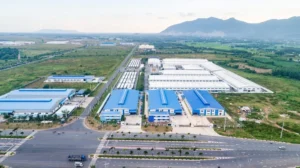
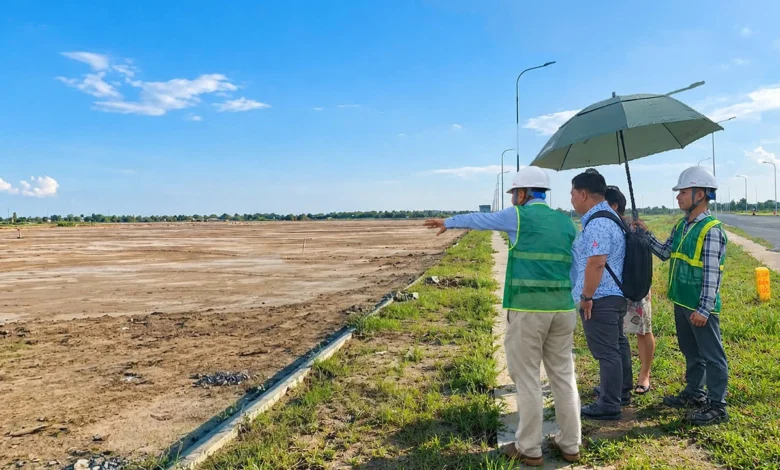
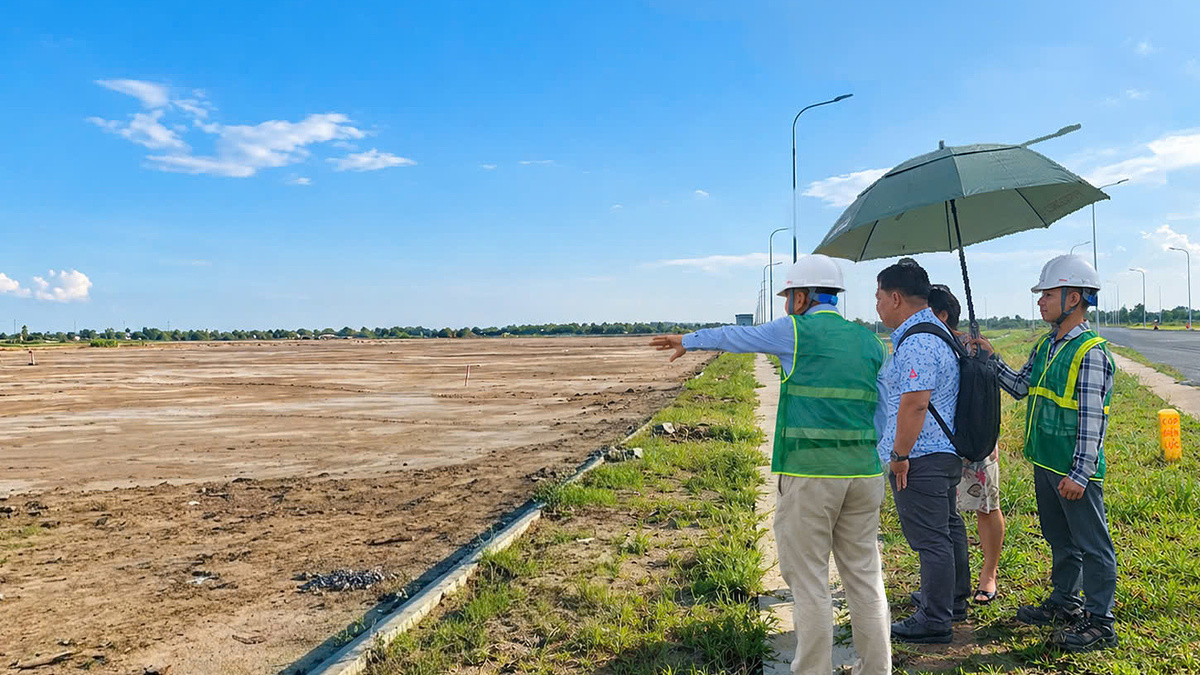
Over the past two months, the Prodezi Industrial Park in Tay Ninh has become a focal point for foreign capital, successfully securing three new investment projects with a combined value of approximately 24 million USD. Among these, a notable Singaporean investor has committed 20 million USD to develop a state-of-the-art production facility for Leachan Vietnam. The remaining projects include a 2.5 million USD investment dedicated to polycarbonate manufacturing and a 1.5 million USD venture focused on high-end industrial additives and seasoning production. These facilities are expected to be operational by the end of 2027.
The ripple effect of these developments is significant. According to management at Prodezi, the influx of new manufacturing plants inevitably stimulates demand for ancillary industries, including raw material suppliers, packaging, logistics, and technical maintenance services. By positioning itself as a hub for these diverse service providers, the industrial park is effectively creating an integrated ecosystem that enhances its attractiveness to future tenants and reinforces the resilience of the local supply chain.
National FDI Landscape and Data Insights
Data from the General Statistics Office (GSO) underscores the strength of this trend, reporting that total realized FDI for the first eight months of the year reached 17.25 billion USD. This represents a 12% increase compared to the same period in the previous year and marks the highest level of disbursement for a five-month span in the last half-decade.
The manufacturing and processing industry remains the primary driver of this growth, accounting for 82.6% of total investment capital. Northern Vietnam, in particular, has seen substantial activity, attracting 8.63 billion USD in manufacturing-related FDI—nearly 80.5% of the national total. This concentration is largely driven by massive investments from global electronics giants such as Samsung, LG, and Foxconn, which continue to expand their footprint in the region.
Regional Market Performance: South vs. North
Cushman & Wakefield’s latest market report highlights that the industrial real estate landscape in Southern Vietnam is experiencing tightening supply, leading to increased rental prices. In Dong Nai, occupancy rates have climbed to an impressive 94.3%, while Ho Chi Minh City and Tay Ninh are close behind with rates of 89.7% and 93.7%, respectively.
In the north, the market is showing equally positive signs of recovery. CBRE reports that the total land area absorbed by industrial activity across northern provinces has surpassed 217 hectares—the highest level since the first quarter of 2024. This trend is driven by the strategic expansion of major multinational producers seeking to optimize their logistics networks and access to international shipping routes. As of the second quarter, the total industrial land supply in the north exceeded 25,200 hectares, a 15.7% increase year-on-year, with over 1,200 hectares of new supply entering the market in the first half of the year alone.
Strategic Drivers of Investment
Industry experts attribute this sustained growth to three fundamental pillars: favorable government policy, massive infrastructure investment, and a strategic shift toward high-tech production.
Nguyen Phuoc Thuan, Director of Industrial and Office Leasing at Cushman & Wakefield Vietnam, emphasizes that modern investors prioritize transparency, policy stability, and the efficiency of administrative support throughout the lifecycle of their projects. "The regulatory framework, including Resolution 10 and the revised Law on Investment, has been instrumental in bolstering investor confidence," Thuan notes. "The ‘special investment procedure’ mechanisms allow for faster implementation of projects within industrial parks, economic zones, and high-tech parks, which is a major draw for capital-intensive ventures."
Infrastructure development remains the most critical enabler of this industrial boom. Major projects, including the construction of the North-South Expressway, Ring Roads 3 and 4, the Ben Luc-Long Thanh Expressway, and plans for a high-speed railway, are dramatically enhancing regional connectivity. These projects directly link industrial parks to deep-water ports and major international airports, thereby reducing logistics costs and increasing the overall competitiveness of Vietnamese exports.
The Shift Toward High-Rise and Sustainable Facilities
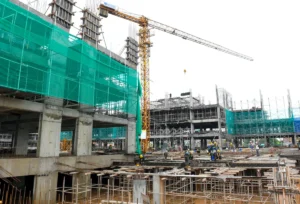
As land becomes increasingly scarce in established industrial hubs, developers are adopting innovative solutions to maximize efficiency. Ready-built, high-rise factories and warehouses are becoming the standard choice for modern enterprises. This evolution aligns with the national goal of transitioning toward high-value, high-tech manufacturing, as mandated by the government’s strategic directives.
High-rise factories are particularly well-suited for industries such as electronics, semiconductors, and medical equipment, which require precision environments but smaller footprints compared to traditional heavy industry. Similarly, multi-story warehouses are providing the necessary vertical density for e-commerce and cold-chain logistics providers operating near major consumption centers.
"In the long run, the development of high-rise warehouses and factories does not merely solve the land-scarcity equation," Thuan explains. "It also contributes to upgrading the quality of the industrial supply chain. We are seeing a move away from land-intensive, low-margin assembly toward projects with higher technological content and value-added potential."
Future Outlook and Challenges
Looking ahead, both Cushman & Wakefield and CBRE maintain an optimistic outlook for the industrial real estate sector. The ongoing integration of regional planning—such as the Ho Chi Minh City 2025-2050 master plan—is expected to further streamline land use and development.
In Northern Vietnam, the development of districts like Dong Anh, Me Linh, and Soc Son into centers for services, commerce, and high-tech industry serves as a blueprint for future growth. Coupled with the expansion of the Metro network and the planned upgrades to Noi Bai International Airport, the northern region is well-positioned to maintain its status as a global manufacturing powerhouse.
However, stakeholders acknowledge that challenges remain. As the market matures, the focus must shift from quantity to quality. This includes a transition toward "green" industrial zones, which are increasingly required by multinational corporations to meet their own ESG (Environmental, Social, and Governance) targets. Furthermore, the administrative harmonization process following the recent consolidation of several local administrative units will require careful management to ensure that the momentum of project approvals is not disrupted.
In conclusion, Vietnam’s industrial real estate sector is currently in a virtuous cycle. Strong FDI inflows, driven by global supply chain diversification, are forcing improvements in infrastructure and administrative efficiency, which in turn attract higher-quality investment. By embracing vertical construction, sustainable development, and regional connectivity, Vietnam is successfully cementing its position as a central node in the global manufacturing network, ensuring long-term stability and growth for the domestic economy.