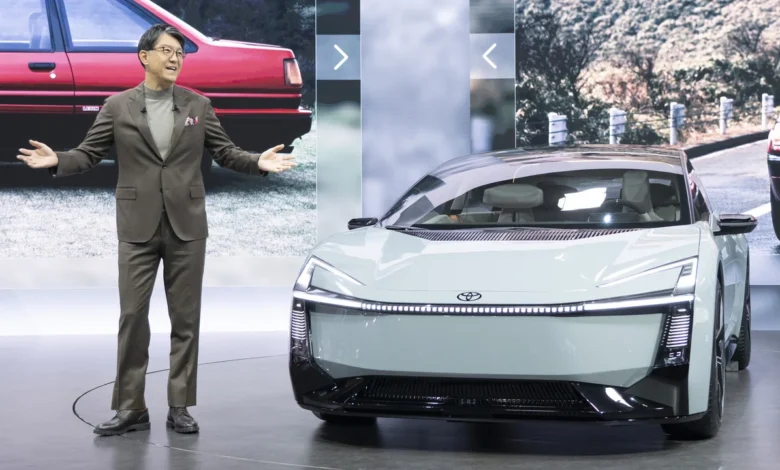
The leadership of the world’s largest automaker, Toyota Motor Corporation, has officially acknowledged that the company is confronting an unprecedented "crisis pressure" as the global automotive industry shifts rapidly toward electrification. In a series of candid disclosures, top executives admitted that Toyota’s long-standing position at the pinnacle of the industry has fostered a sense of complacency that now threatens its future competitiveness. As the industry undergoes a seismic shift driven by Tesla and Chinese powerhouse BYD, Toyota is being forced into a comprehensive transformation of its development, manufacturing, and strategic philosophies to avoid falling behind in the race for the next generation of mobility.
Internal Warnings and the Threat of Complacency
The internal alarm was sounded most prominently by Toyota’s Chairman, Akio Toyoda, during a comprehensive 50-minute interview with the Japanese national broadcaster NHK. Toyoda, who has long been a proponent of a "multi-pathway" approach to carbon neutrality rather than a singular focus on battery electric vehicles (BEVs), offered a stark assessment of the company’s current psychological state. He noted that the greatest risk facing Toyota today is not necessarily a lack of technology, but the "complacency" that comes with being the global sales leader for decades.
"New competition and evolving technology are inevitable," Toyoda stated. "The biggest risk for Toyota right now is self-satisfaction." This sentiment reflects a growing concern within the company’s headquarters in Toyota City that the organizational inertia of a legacy giant may be its undoing in an era where agility and software-driven innovation are the new currencies of success.
This internal tension was further highlighted in an NHK documentary that gained rare access to Toyota’s "top-secret" development facilities. In one segment, a Toyota engineer working on future models was remarkably blunt about the company’s standing relative to its new rivals. "I think we are losing to China," the engineer admitted, referring to the rapid advancements made by Chinese manufacturers in battery integration, software ecosystems, and cost-efficient production.
The Next-Generation Corolla: A Multi-Pathway Gamble
Central to Toyota’s strategy to regain its footing is the upcoming generation of the Toyota Corolla. As the best-selling nameplate in automotive history, the Corolla represents the heart of Toyota’s brand identity and global market share. The new generation, currently under development, is expected to be a radical departure from its predecessors.
According to CEO Koji Sato, the next-generation Corolla will be "steeped in innovation." It will be built on a entirely new, highly flexible platform designed to accommodate a wide array of powertrains. This includes:
- Battery Electric Vehicles (BEVs): Dedicated electric versions to compete directly with the Tesla Model 3 and BYD Seal.
- Plug-in Hybrid Electric Vehicles (PHEVs): Offering extended electric-only range for markets with developing charging infrastructure.
- Traditional Hybrids (HEVs): Leveraging Toyota’s industry-leading hybrid synergy drive.
- Advanced Internal Combustion Engines (ICE): High-efficiency engines designed to run on carbon-neutral fuels.
The design language for this new era was hinted at during the Japan Mobility Show 2025, where the Corolla Concept featured a low-slung, aerodynamic profile and a sportier aesthetic than previous iterations. By offering multiple drivetrain options on a single platform, Toyota aims to hedge its bets against the varying speeds of EV adoption across different global regions, from the high-adoption markets of Northern Europe and Urban China to the slower-moving markets in Southeast Asia and Africa.
The Competitive Landscape: The Tesla and BYD Factor
Toyota’s sense of urgency is driven by the meteoric rise of Tesla and BYD. While Toyota remains the volume leader—selling over 11 million vehicles globally in 2023—its share of the pure electric market remains marginal. In contrast, Tesla has redefined the profitability and software capabilities of the modern car, while BYD has utilized vertical integration to achieve a cost structure that legacy automakers find nearly impossible to match.
The scale of the challenge is reflected in the data. BYD, which ceased production of pure internal combustion engine vehicles in 2022, has moved from a regional Chinese player to the world’s sixth-largest automaker in 2025. The company has set an ambitious goal to become the world’s largest automaker by volume within the next five years. BYD’s advantage lies in its control over the battery supply chain; as a leading battery manufacturer itself, it can produce EVs at price points that directly challenge Toyota’s traditional strongholds in the budget and mid-range segments.
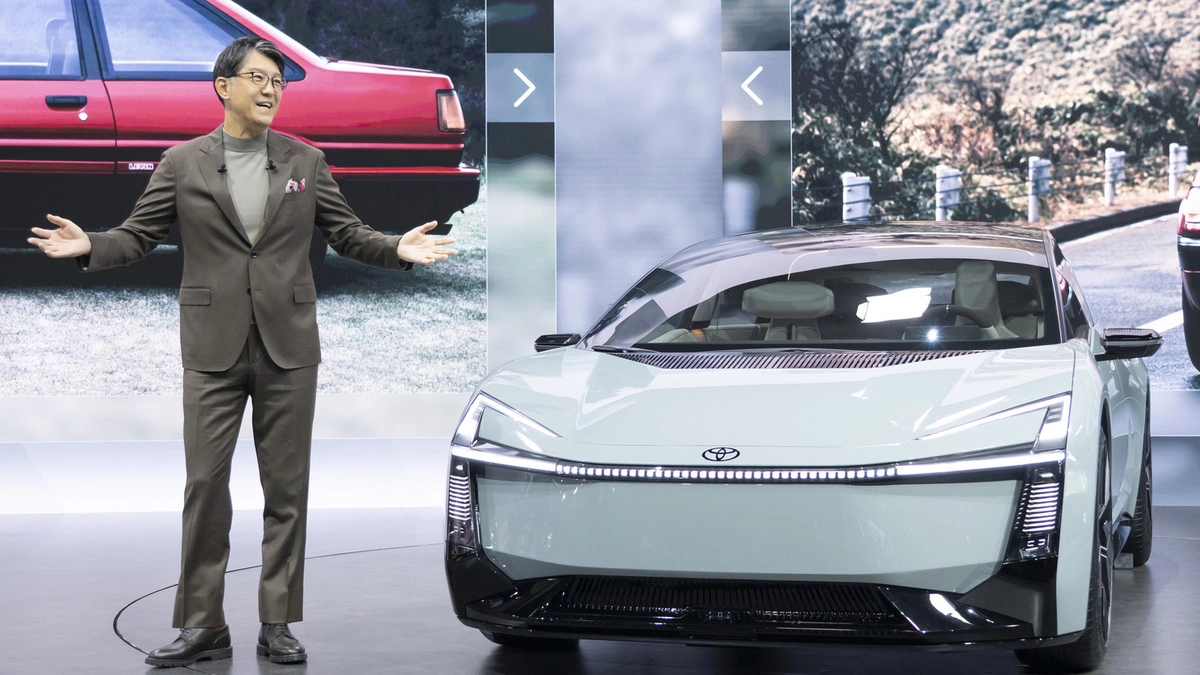
Meanwhile, Tesla’s "Giga-casting" manufacturing technique—which replaces hundreds of small parts with a few large cast components—has forced Toyota to rethink its legendary Toyota Production System (TPS). Toyota is now racing to implement its own version of large-scale casting and a "three-part" modular architecture to reduce production costs and complexity.
Strategic Setbacks and the Pivot to Software
The road to transformation has not been without its obstacles. Just last month, Toyota made the difficult decision to cancel the Lexus LF-ZC project in its original form. The LF-ZC was intended to be a flagship electric sedan that would showcase Toyota’s next-generation prismatic batteries and a new software-defined vehicle (SDV) operating system. The cancellation of such a high-profile project suggests that Toyota is struggling to meet its own ambitious targets for range, cost, and software integration.
Industry analysts point out that Toyota’s primary deficit is no longer just in hardware, but in software. Modern EVs from Tesla and Chinese brands like Xiaomi and NIO are essentially "computers on wheels," with over-the-air (OTA) updates that can improve performance, battery management, and infotainment features overnight. Toyota’s current software stack is seen as lagging, leading to a frantic effort to develop "Arene," a new proprietary operating system intended to bridge the digital gap.
Despite these hurdles, Toyota has seen some success with its updated 2026 lineup, including the bZ series, the C-HR, and the bZ Woodland. However, these models are often viewed as transitional products rather than the "Tesla-killers" the market expects from a company of Toyota’s stature.
Chronology of Toyota’s Electrification Journey
To understand the current "crisis pressure," it is necessary to look at the timeline of Toyota’s response to the EV revolution:
- 1997: Toyota launches the Prius, the world’s first mass-produced hybrid, establishing a multi-decade dominance in fuel-efficient technology.
- 2010s: While competitors begin exploring pure EVs, Toyota doubles down on hybrids and invests heavily in hydrogen fuel cell technology (the Mirai).
- 2021: Under pressure from investors and environmental groups, Toyota announces a plan to launch 30 BEV models by 2030.
- April 2023: Koji Sato takes over as CEO from Akio Toyoda, promising an "EV-first" mindset while maintaining the multi-pathway strategy.
- October 2025: Toyota unveils the Corolla Concept at the Japan Mobility Show, signaling a new design direction.
- July 2026: Internal admissions of "losing to China" surface in national media, marking a shift in the company’s public-facing narrative from confidence to "crisis mode."
Broader Implications for the Japanese Economy
The pressure on Toyota is not merely a corporate concern; it is a national one for Japan. The automotive sector and its related industries employ millions of Japanese workers and account for a significant portion of the country’s GDP. If Toyota fails to navigate the transition to EVs and software-defined vehicles, the economic ripple effects could be devastating for the Japanese manufacturing base.
The "crisis pressure" described by Sato and Toyoda is therefore a call to action for the entire Japanese supply chain. Suppliers who have spent decades perfecting components for internal combustion engines—such as transmissions, fuel injectors, and exhaust systems—are now being forced to pivot to electric motors, power electronics, and thermal management systems for batteries.
Analysis: Can the Giant Pivot in Time?
The central question remains: can Toyota’s "multi-pathway" strategy succeed against the "EV-only" focus of its rivals? Toyota’s logic is based on the reality that large parts of the world lack the electrical grid infrastructure to support 100% BEV adoption in the near term. By offering hybrids and efficient ICE vehicles, Toyota remains profitable and provides solutions for all customers, not just those in wealthy, urban areas.
However, the risk is that by spreading its resources across four or five different powertrain technologies, Toyota may fail to achieve the "best-in-class" status in any single one. Tesla and BYD’s singular focus on electric drivetrains allows them to iterate faster and achieve economies of scale that Toyota’s fragmented approach may struggle to match.
The admission of "crisis pressure" is a double-edged sword. On one hand, it acknowledges a dangerous lag in innovation. On the other, it serves as a powerful tool to break down the internal bureaucracy and "silo" thinking that often plagues large, successful corporations. For Toyota, the next three years will be the most critical in its nearly 90-year history. The success or failure of the next-generation Corolla and the Arene software platform will likely determine whether Toyota remains the king of the road or becomes a cautionary tale of a market leader that stayed at the top for "too long."