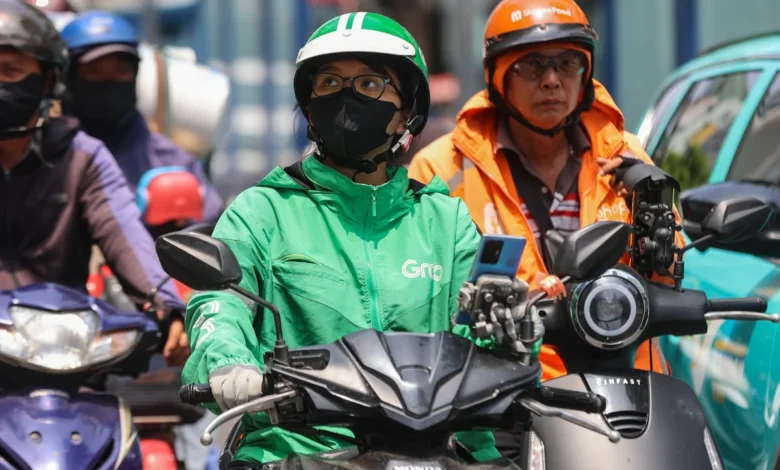
The landscape of ride-hailing services in Vietnam is currently undergoing a period of intense scrutiny as drivers, platforms, and regulators grapple with the complexities of revenue-sharing models. While industry giants like Grab employ a dynamic "flexible application usage fee" structure, domestic competitors such as Be Group and GreenSM have maintained a more static revenue-sharing approach. This divergence in business models has sparked significant debate, leading to recent protests by drivers and a formal investigation by the National Competition Commission.
The Anatomy of Revenue Sharing and Driver Discontent
For many drivers, the core issue is the erosion of their net income. In recent weeks, a segment of the Grab driver community in major cities took the unprecedented step of logging off their applications to protest the company’s "flexible fee" policy. Under this model, the commission rates applied to each trip are not fixed, often fluctuating between 50% and 75%. This is a significant departure from the previous standard, where drivers could anticipate a consistent commission share of 67% to 73%.
Ride-hailing platforms traditionally retain a portion of the total fare—known as a commission or service fee—to maintain the technological infrastructure, process taxes, and support system operations. However, the lack of transparency in how these fees are calculated has created a climate of uncertainty. When drivers see their take-home pay decrease due to opaque algorithmic adjustments, the perception of fairness diminishes, leading to increased churn and labor unrest.
Comparative Analysis of Major Platforms
The current market environment in Vietnam is characterized by three primary players, each utilizing distinct methodologies for compensating their partners.
Be Group has positioned itself as a transparent alternative by utilizing a fixed revenue-sharing mechanism. According to representatives, the driver’s share of the total fare is set at approximately 63.6% in Hanoi and 69.4% in Ho Chi Minh City. These percentages have remained stable since the beginning of 2024. For the drivers, this provides a predictable baseline for financial planning. For instance, on a 2km trip in Hanoi priced at 20,000 VND, a driver can clearly calculate their share of approximately 12,700 VND, as the platform provides a breakdown of service fees and personal income tax for every transaction.
GreenSM, which has seen rapid growth to capture an estimated 46.4% market share by 2025, employs a high-retention model. They offer up to 90% revenue sharing for two-wheeled vehicles and 85% for four-wheeled vehicles (excluding VAT). Even for drivers who joined the platform later in the year, the take-home pay remains competitive at 73%-83% of the total fare. Furthermore, GreenSM operates a fleet-based model where drivers can opt to drive company-owned vehicles for a monthly salary of 4.1 to 5.3 million VND, plus a revenue-sharing bonus of up to 60%.
Grab, the market pioneer, maintains its "flexible application usage fee" policy. This fee is calculated based on the specific route, time of day, demand-supply equilibrium, and other operational variables. Consequently, the actual percentage a driver receives relative to the total fare can be significantly higher or lower depending on the specific circumstances of the trip. Data gathered from a survey conducted between September 10 and 12, 2026, indicated that after excluding insurance and carbon neutrality fees, the average take-home rate for Grab drivers was approximately 64.6% for motorcycles and 65.6% for cars.
The Hidden Impact of Service Fees
A critical point of contention involves the sheer number of fees deducted from the gross fare before the driver’s share is calculated. Grab currently applies up to 13 different types of fees and surcharges, which scale with the volume of services provided. In contrast, Be Group and GreenSM generally maintain a much leaner structure of 5 to 6 fees.
Many of these deductions—including insurance, platform-to-customer communication fees, and carbon neutrality contributions—are often not included in the revenue-sharing pool. For shorter trips, these fixed-cost deductions can disproportionately impact the driver’s earnings, sometimes reducing their take-home pay by up to 50% for a single journey. Drivers like Mr. Nhuan, a partner with GreenSM, have noted that even with fixed-rate policies, the lack of clarity regarding how specific surcharges (such as waiting fees or multi-stop fees) are distributed remains a significant hurdle.
Chronology and Regulatory Intervention
The regulatory focus on this issue intensified in September 2026, when the National Competition Commission under the Ministry of Industry and Trade issued a formal request for all ride-hailing platforms to submit comprehensive documentation regarding their pricing policies, commission structures, and fee deductions.
This move followed a series of grievances aired by driver unions and individual operators who argued that the current lack of transparency creates an unfair playing field. The government’s intervention aims to ensure that the "gig economy" in Vietnam, which is projected to reach a market value of 1.2 billion USD by 2025, operates in a manner that protects the rights of independent contractors while allowing businesses to remain competitive.
Expert Perspectives on Market Fairness
Dr. Duong Quang Dung, a lecturer in supply chain management and logistics at RMIT University Vietnam, suggests that there is no "one-size-fits-all" percentage for revenue sharing. "The fundamental tension lies in the objectives," Dr. Dung explains. "Drivers prioritize a stable and predictable income, whereas platforms must balance revenue to sustain the technological backbone and remain competitive in an aggressive market."
Sana Ur Rehman, a senior market analyst at EBC Financial Group, recommends that stakeholders move toward an "effective take rate" metric—calculating the driver’s share against every 100 VND paid by the customer—to measure efficiency and fairness accurately. "Transparency is the only path forward to prevent further labor volatility," Rehman noted.
Global Comparisons and Future Implications
Vietnam’s situation is not unique. Globally, ride-hailing platforms have faced similar pressures. In Indonesia, for example, the government enforced a cap on commission rates for two-wheeled vehicles at 8% (after platform fees) starting in July to protect driver welfare. In the United States, states like Massachusetts have implemented minimum hourly earnings for drivers, while Singapore has mandated that platforms provide accident insurance and contribute to retirement funds, while also allowing driver associations to negotiate with companies.
As Vietnam’s ride-hailing market matures, the demand for standardized reporting is reaching a boiling point. Be Group has publicly advocated for a shared industry standard, proposing that all platforms be required to disclose their full cost-revenue structure for every trip—clearly delineating the platform’s cut, the driver’s share, and the taxes submitted to the State.
For the millions of Vietnamese citizens who rely on these platforms for their daily income, the outcome of the current regulatory review will be pivotal. Whether through mandatory fee caps or strict transparency requirements, the industry is clearly moving toward a new chapter where the "black box" of algorithmic pricing must be opened to ensure the sustainability of the digital economy. The coming months will likely see further negotiations between the Ministry of Industry and Trade and the primary stakeholders, setting a precedent for how Vietnam regulates the future of work in the digital age.