Historic Bãi Cháy Ferry Terminal Set for Transformation into Cultural and Tourism Landmark in Hạ Long

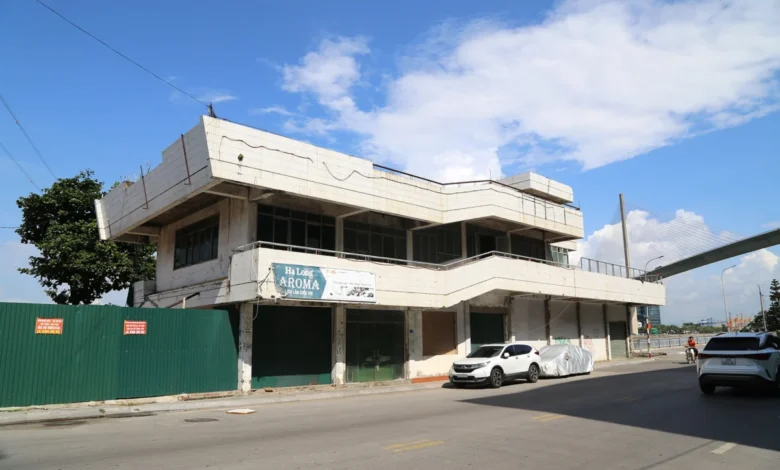
Hạ Long City is preparing to breathe new life into one of its most storied architectural landmarks, the former Bãi Cháy Ferry Terminal. Situated along Lê Thánh Tông Street in Hồng Gai Ward, Quảng Ninh Province, this historic transport hub—long abandoned and severely degraded—has been slated for a comprehensive restoration and upgrade project. Local authorities intend to transform the derelict site into a vibrant public promenade, cultural touchstone, and culinary destination that honors the region’s rich maritime heritage.

Decades of Neglect and Current Structural Realities
Once a bustling gateway connecting millions of passengers and vehicles across the waters of Quảng Ninh, the Bãi Cháy Ferry Terminal now stands as a ghost of its former self. Years of abandonment have taken a heavy toll on the infrastructure. Large cracks streak the weathered walls, aggressive vines and wild vegetation thrive unchecked across the rooftops, and shattered glass litters the interior corridors. Administrative offices lie in disarray, blanketed by thick layers of dust and shielded behind locked doors that have remained sealed for over a decade.

For older generations of residents and frequent travelers to Hạ Long, the sight of the decaying terminal evokes a profound sense of nostalgia. The facility once operated as a symbol of modernity, order, and regional connectivity, closely tied to the socio-economic evolution of Hòn Gai and the wider Quảng Ninh province. Today, however, the site presents a stark contrast to the modern tourism-driven infrastructure that surrounds it, prompting local officials to prioritize its rehabilitation within municipal planning frameworks.
A Rich Chronology: From Wartime Valor to Retirement

The history of the Bãi Cháy Ferry Terminal spans over half a century of dramatic transformation, defined by both peacetime commerce and wartime heroism. Established in 1955, the terminal served as a critical transport link for 51 years, facilitating the movement of people and goods during the formative decades of northern Vietnam’s economic development.
During the intense escalation of the American air and naval bombing campaigns between 1964 and 1972, the staff, workers, and self-defense forces of the Bãi Cháy Ferry Terminal demonstrated extraordinary resilience. Beyond maintaining vital transport lifelines under constant threat of enemy fire, the personnel actively participated in combat operations. Collaborating with regular military units, the terminal’s defense forces successfully shot down one U.S. aircraft and severely damaged another. In recognition of their exceptional contributions to national defense and labor, the collective of workers and self-defense forces was twice honored by the Party and State, receiving the title of Labor Hero in 1985 and 1996.

The operational era of the ferry terminal formally concluded on December 2, 2006, following the inauguration of the Bãi Cháy Bridge. The new bridge rendered the ferry service obsolete, leading to the "retirement" of the facility. Management of the property was initially transferred to the former People’s Committee of Hạ Long City. Following administrative restructuring and the implementation of a two-tier local government model, stewardship of the site was handed over to the People’s Committee of Hồng Gai Ward. An attempt to revitalize the route occurred in 2014, when the Bãi Cháy – Hòn Gai passenger route was test-operated, though fading informational notices from that period still linger on the walls as relics of past revival efforts.
Official Restoration Plans and Investment Scope

Recognizing both the architectural heritage and tourism potential of the site, the People’s Committee of Hồng Gai Ward has completed a comprehensive review of plans to restore the terminal. According to ward leadership, the revitalization project has been incorporated into the medium-term public investment plan for the 2027–2030 period.
The master plan encompasses three primary structures within the Bãi Cháy Ferry Terminal complex: a two-story passenger terminal spanning 242 square meters, a single-story passenger building covering 163 square meters, and a two-story administrative office building measuring 167 square meters. In addition to these structures, adjacent historical features such as wartime bomb shelters and the slopes of Bãi Thơ Mountain will undergo professional restoration. These elements will be integrated into a newly designed pedestrian promenade intended for public exploration and tourism.

Preliminary financial estimates place the total investment for the restoration project at approximately 15 billion VND. Local authorities have emphasized that the historical integrity of the terminal buildings will be strictly preserved. Representatives from the Hồng Gai Ward Party Committee have held collaborative discussions with the Quảng Ninh Provincial Department of Culture, Sports, and Tourism to finalize architectural and urban design guidelines. Ward leaders have also conducted direct field surveys to evaluate the current structural integrity of the facilities ahead of engineering interventions.
Economic and Cultural Implications for Hạ Long Tourism

The decision to restore the Bãi Cháy Ferry Terminal aligns with Quảng Ninh’s broader strategy to diversify its tourism offerings beyond traditional natural landscapes like Hạ Long Bay. By converting an industrial heritage site into a modern cultural and commercial hub, municipal planners aim to create a multi-functional space that caters to both domestic and international travelers.
Urban planning experts note that adaptive reuse projects of this nature offer significant value to contemporary cities. Rather than demolishing aging infrastructure, preserving buildings with historical resonance helps maintain a continuous narrative of urban development. For Hạ Long, a city experiencing rapid modernization and high-rise commercial development, retaining connection points to its mid-20th-century maritime history provides an important counterweight to modern expansion.

Once completed, the upgraded complex is expected to fulfill multiple civic and economic functions. Beyond acting as a sightseeing destination and educational landmark for younger generations, the facility will incorporate food and beverage services, local artisan displays, and spaces for cultural exhibitions. This infusion of commercial activity is projected to stimulate foot traffic along the Hồng Gai coastline, creating a balanced tourist circuit that integrates maritime heritage with modern leisure.
As the 2027–2030 implementation window approaches, the local government intends to finalize engineering studies, secure structural reinforcements, and issue public tenders for the architectural restoration. For the residents of Hồng Gai and the broader community of Quảng Ninh, the project represents a welcome resurrection of a long-forgotten landmark—turning a symbol of past obsolescence into a dynamic cornerstone for future cultural tourism.