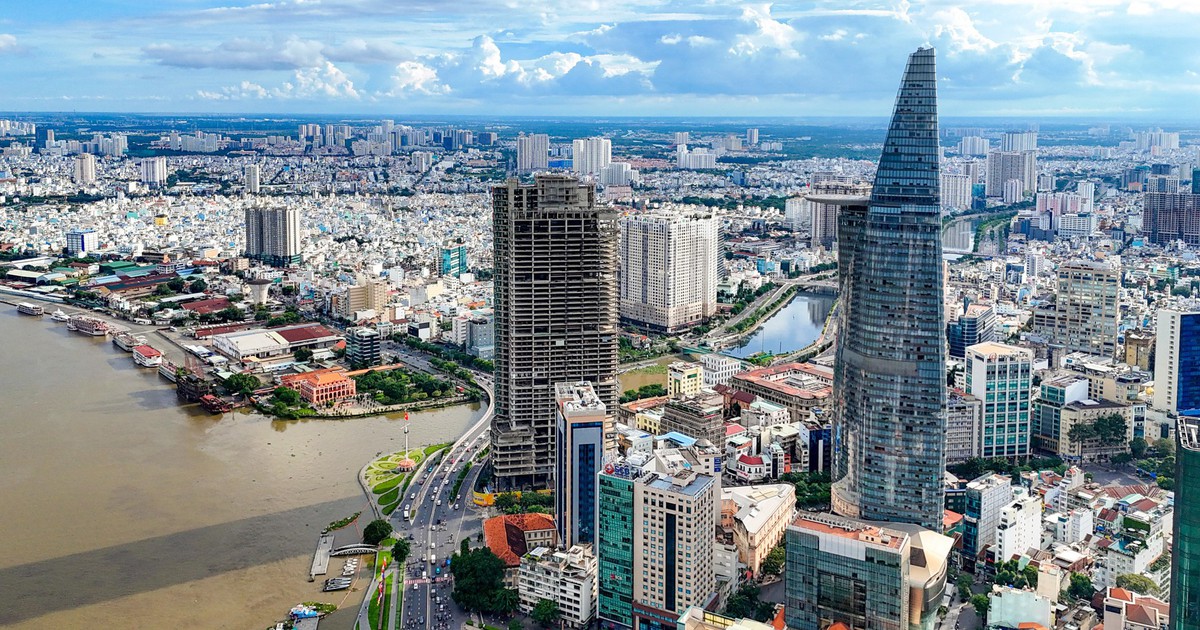
Ho Chi Minh City has officially laid out an ambitious economic roadmap, aiming for a gross regional domestic product (GRDP) growth rate of 10% or higher for the full year of 2026. This decisive policy directive comes as municipal authorities ramp up efforts to resolve lingering bottlenecks in production, business operations, and public investment while simultaneously accelerating the disbursement of public funds to stimulate broader economic recovery and sustained momentum.
Strategic Growth Targets and Quarterly Trajectories
In accordance with the directives outlined in Government Resolution 262, the Ho Chi Minh City People’s Committee has set strict economic benchmarks across the remaining quarters of the year. The municipal government has targeted a GRDP growth rate of 11.07% for the third quarter, a cumulative growth rate of 9.43% for the first nine months, and an aggressive 12.3% surge for the final quarter of 2026.
To achieve these benchmarks, municipal departments, local authorities, and sector leaders have been instructed to closely monitor GRDP progress in real time. Officials failing to meet designated targets will face accountability reviews to identify root causes and assign responsibility. Furthermore, local leadership has emphasized the need for proactive troubleshooting to eliminate bureaucratic bottlenecks and unlock dormant capital reserves. Concurrently, the city is intensifying its investment promotion campaigns, assisting local enterprises in expanding production lines, diversifying commercial markets, and attracting high-quality foreign direct investment (FDI).
As part of the execution strategy, the Department of Finance has been tasked with reviewing delayed, stalled, and problematic public projects to expedite the investment pace for initiatives that have already received capital allocations. Other relevant departments are simultaneously directed to untangle complex regulatory hurdles involving land acquisition, construction materials supply, and site clearance, thereby ensuring that critical infrastructure projects remain on schedule.
Financial discipline and revenue optimization are also central to the city’s strategy. Authorities have mandated stronger measures to prevent tax collection losses, monitor industrial manufacturing outputs, supervise export shipments, and closely track underperforming factories and assembly lines. The Department of Finance serves as the primary coordinator for aggregating these results, with a comprehensive compliance and performance report scheduled for submission to the municipal People’s Committee.
Strengthening Consumer Rights and Protections
In a parallel development aimed at fortifying the city’s socioeconomic framework, the Ho Chi Minh City People’s Committee has officially approved a new charter empowering the Ho Chi Minh City Consumer Rights Protection Association. Operating on a voluntary, non-profit basis from its headquarters at 61 Ly Tu Trong Street in Saigon Ward, the association is mandated to provide vital advisory services, protect consumer interests, and participate directly in dispute resolution between buyers and commercial entities.
Under the newly approved charter, the association’s core responsibilities include guiding consumers through complex disputes, disseminating legal frameworks related to consumer rights, and conducting independent market surveys, evaluations, and product warnings. Additionally, the organization holds the authority to contribute policy critiques, collaborate with regulatory bodies, and execute research and advisory programs commissioned by state agencies. The association is sustained financially through membership dues and other legal revenue streams.
Workforce Development: Upskilling the Industrial Labor Force
Addressing the evolving demands of a modernizing economy, Ho Chi Minh City has established a comprehensive human capital target: ensuring that by 2030, at least 75% of industrial workers and laborers employed within the city’s enterprises participate in programs designed to upgrade their professional skills and trade proficiency. Furthermore, the city aims to ensure that 65% of its workforce attains functional proficiency in information technology and digital economy tools.
According to the municipal People’s Committee’s implementation plan for the 2026–2030 lifelong learning initiative, the city also aims to disseminate foundational Party directives and labor laws to 90% of its workforce. Priority will be directed toward laborers stationed within export processing zones, industrial parks, high-tech zones, industrial clusters, and major manufacturing enterprises. Achieving these goals will require coordinated efforts between regulatory agencies, labor unions, corporate management bodies, and educational institutions to systematically expand access to continuing education, vocational training, life skills, and technological literacy.
Regulatory Crackdown on Unsolicited Telemarketing and Spam
To combat the rising tide of digital fraud and consumer harassment, the Ministry of Public Security is currently gathering public feedback on a draft decree designed to curb spam text messages, unsolicited electronic mail, and automated telemarketing calls. The regulatory initiative seeks to establish a rigorous legal framework for advertising and commercial operations in cyberspace, effectively mitigating illegal activities across digital networks.
Under the proposed guidelines, enterprises will be strictly prohibited from concealing their calling identities when conducting commercial activities or reaching out to telecommunications users. Organizations and businesses will be granted the right to register and utilize specific brand names for legitimate outreach operations, subject to administrative fees and maintenance costs. These brand names will be issued by the Ministry of Public Security, integrated into the national brand management database, and granted a standard validity period of three years from issuance.

The draft mandate explicitly stipulates that any enterprise or organization executing bulk text messaging, electronic mailing, or telemarketing for commercial purposes within Vietnam must do so exclusively through officially registered brand names. The use of standard mobile phone numbers to dispatch promotional text messages or conduct sales calls will be outlawed. Furthermore, individuals conducting promotional calls must explicitly introduce their full name, professional title, and organizational affiliation, while clearly stating any associated service pricing at the very beginning of the interaction.
Strict frequency limits have also been proposed to protect consumer privacy: individual advertising entities will be restricted to sending a maximum of three promotional text messages to a single phone number, three electronic mails to a single address, and one promotional phone call to a single number within any 24-hour window. Permitted operational hours are similarly constrained, with text messaging restricted between 7:00 AM and 10:00 PM daily, and promotional voice calls restricted to the hours between 8:00 AM and 5:00 PM.
Administrative Penalties Imposed on Pacific Bridge Fund Management
In the financial sector, the State Securities Commission of Vietnam (SSC) has issued formal administrative penalties totaling 170 million VND against the Pacific Bridge Investment Fund Management Joint Stock Company due to repeated regulatory violations.
The enforcement action is divided into two primary infractions, each carrying an 85 million VND fine. The first penalty stems from systematic disclosure violations, characterized by the company delaying the publication of mandatory corporate filings on the SSC disclosure system by 15 days or more across a broad range of documents. The second penalty addresses parallel delays exceeding the 15-day threshold regarding mandatory reporting schedules. Specifically, Pacific Bridge failed to submit its audited 2025 financial statements, its 2025 money laundering risk assessment reports, and its internal audit reports on anti-money laundering within the legally mandated timeframes.

Regulatory bodies continue to stress that strict adherence to disclosure norms is critical for maintaining transparency, protecting investor confidence, and ensuring the stability of Vietnam’s developing capital markets.