Tiếp nối truyền thống đi đầu của ngành thông tin và truyền thông trong kỷ nguyên số

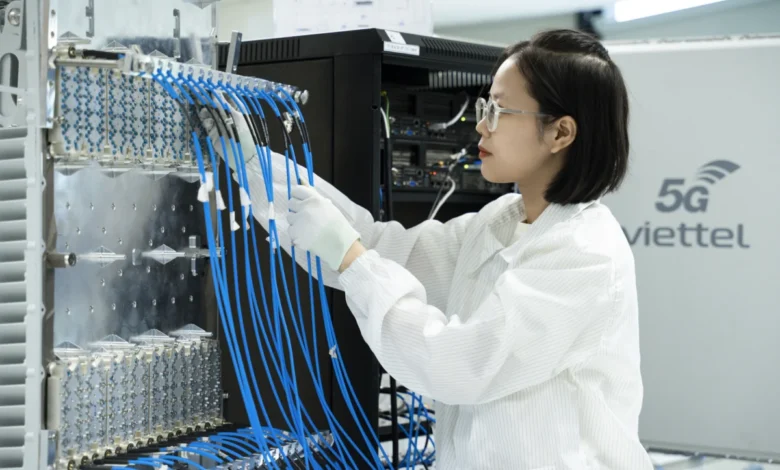
The Vietnamese information and communications sector is currently witnessing a transformative era, characterized by a fusion of historical legacy and cutting-edge innovation. Recent developments, including the implementation of AI-driven administrative management tools and the deployment of "Made in Vietnam" 5G base stations, underscore the industry’s commitment to self-reliance and technological sovereignty. These advancements were prominently showcased during a recent gathering of veteran officials from the Ministry of Information and Communications (MIC), serving as a bridge between the pioneers of the past and the innovators of the present.
A Legacy of Pioneering Spirit
To understand the current trajectory of Vietnam’s digital transformation, one must look back to the late 1980s. At a time when the sector faced immense logistical and financial hurdles, leaders such as former General Director of the General Department of Post and Telecommunications, Dang Van Than, introduced radical policy shifts. These included bypassing intermediary technologies to invest directly in digital infrastructure, as well as securing financial independence through self-financing and foreign direct investment rather than relying solely on the state budget.

This "daring to think, daring to do" approach transformed a formerly stagnant sector into a spearhead for the nation’s modernization. The spirit of those years—defined by the core values of "Loyalty, Courage, Integrity, Creativity, and Compassion"—remains the foundational blueprint for today’s leadership. Current Minister Nguyen Manh Hung has institutionalized these values, emphasizing that honoring the past is the most effective way to inspire the next generation to carry the mantle of national development.
Technological Sovereignty: The 5G Milestone
A primary highlight of the ministry’s recent progress is the successful development and deployment of 5G base stations. By adopting the Open RAN (Radio Access Network) standard, Vietnamese enterprises, led by Viettel, have demonstrated the capacity to master complex telecommunications technology.
Vietnam has now joined an elite group of only five nations globally capable of producing 5G infrastructure, following in the footsteps of Taiwan, Finland, South Korea, and China. These base stations are currently operational in major hubs, including Hanoi, Ha Nam, and Ninh Thuan, with expansion plans slated for Ho Chi Minh City and Da Nang by the end of 2024. Furthermore, initial export contracts for this technology have already been signed, signaling a shift from a consumer of global technology to a provider.

AI and Administrative Modernization
Beyond physical infrastructure, the MIC is aggressively modernizing its internal governance. The ministry is currently piloting an AI-integrated administrative management system designed to streamline internal operations and enhance responsiveness across its 34 subordinate agencies and departments.
This system represents a synergy between human expertise and machine learning. By automating routine workflows, the ministry expects a significant increase in efficiency, allowing staff to focus on high-level policy design and strategic oversight. The success of this pilot phase will serve as a template for other government bodies, with the long-term goal of enabling personalized digital administrative tools for individual public servants.
Supporting Data and Economic Impact
The shift toward a digital economy is substantiated by significant growth in the technology sector. As of July 2024, the number of digital technology enterprises operating in Vietnam reached approximately 51,038—an increase of nearly 6,000 companies compared to August 2023. Of these, 1,500 companies have successfully generated revenue from international markets.

In 2023, the total revenue from international markets for the digital tech sector reached $7.5 billion, with projections for the current year estimated at $10 billion, representing a robust year-on-year growth rate of approximately 30%. Minister Nguyen Manh Hung has noted that this $10 billion inflow is vastly superior to the capital outflows previously required for purchasing foreign telecommunications equipment. This reversal of the trade balance—moving from "depending on them" to "competing with them"—is a critical indicator of Vietnam’s industrial maturity.
Strategic Goals: The Path to 2035
The Ministry’s long-term vision is clear: by 2035, the international revenue of Vietnam’s digital technology sector must exceed the export value of the country’s agricultural products. Achieving this milestone would formally categorize Vietnam as an industrial nation.
To support this objective, the MIC has established the Department of Information and Communications Technology Industry. This body is tasked with refining the legal and policy frameworks necessary to foster growth. Key initiatives include:

- The Law on Digital Technology Industry: A legislative effort to provide a comprehensive regulatory framework.
- Semiconductor Development Strategy: A roadmap through 2030, with a vision toward 2050, aiming to integrate Vietnam into the global semiconductor supply chain.
- Make in Vietnam Forum: An annual event designed to catalyze domestic innovation and encourage companies to solve local challenges while scaling solutions globally.
Reflections from the Old Guard
During the recent meeting with veteran officials, former Minister of Posts and Telecommunications Do Trung Ta expressed confidence in the current generation’s direction. Recalling a 1991 visit by then-General Secretary Do Muoi to the Vietnam Post and Telecommunications Corporation, Mr. Ta noted that the industry was then heavily reliant on foreign equipment.
"We are deeply moved to see that the leadership and the nation highly value the self-reliance in technology that is being realized today," Mr. Ta stated. "Building a digital technology industry in Vietnam is not just an economic goal; it is a matter of national pride and survival."
Broader Implications and Future Challenges
While the progress is undeniable, the road ahead involves complex challenges. The rapid evolution of AI and the shifting dynamics of global trade require a nimble regulatory environment. The Ministry’s focus on cybersecurity, digital government, and digital society remains at the core of its mission to ensure that technology serves as a tool for national empowerment rather than a source of vulnerability.

Furthermore, the government’s commitment to "Make in Vietnam" is not merely about domestic production; it is about creating an ecosystem where Vietnamese products can compete on quality, reliability, and price in the global marketplace. By fostering a culture of innovation—encouraging staff to "dare to think, dare to do"—the MIC is effectively creating a pipeline of talent and intellectual property that will secure Vietnam’s place in the Fourth Industrial Revolution.
The integration of history with high-tech ambition creates a unique narrative for Vietnam. By balancing the traditional virtues of the past with the technological demands of the future, the information and communications sector is not just keeping pace with global trends—it is defining the path forward for the country’s digital identity on the world stage.