Thanh Hoa Sour Fermented Pork Roll: The Humble Banana Leaf-Wrapped Culinary Legacy of Central Vietnam

Mention the province of Thanh Hoa in north-central Vietnam, and one specific delicacy immediately comes to mind: nem chua (sour fermented pork roll). For expatriates and travelers hailing from this historic region, the mere mention of the snack evokes an instant wave of nostalgia and salivary anticipation. For those yet to experience it, the curiosity is invariably palpable. Yet, behind this seemingly modest, bite-sized cylindrical morsel lies a centuries-old culinary tradition, an intricate preparation process, and an enduring cultural symbol that connects millions of Vietnamese to their ancestral roots.
Unwrapping the Layers: The Anatomy and Evolution of Nem Chua
To the uninitiated observer, particularly visitors from northern urban centers like Hanoi, Thanh Hoa’s nem chua often attracts playful jests. Friends from the capital frequently joke about how travelers from Thanh Hoa haul bundles of banana leaves out of their home province only to discard piles of green packaging on the pavement, leaving behind a surprisingly small pork roll wrapped in an excessive amount of foliage.
However, culinary purists understand that this critique is entirely unfounded. Without multiple layers of fresh banana leaves, it is virtually impossible to produce an authentic nem chua that achieves the ideal balance of delicate sourness, rich aroma, and savory depth. Traditionally, iconic brands such as the famous Cây Đa nem—historically located at the intersection of Truong Thi Street in Thanh Hoa City—wrapped each individual roll in up to six or seven distinct layers of leaves. This meticulous layering serves a vital biochemical purpose: it provides the precise insulation required for natural lactic acid fermentation while sealing in the complex herbal aromas. The outermost leaf is tightly bound with golden splits of giang bamboo bark, creating a neat, aesthetically refined package.
In contemporary times, economic shifts and material scarcity have slightly altered this physical presentation. Due to the increasing difficulty of sourcing abundant banana leaves alongside modern refrigeration advancements, contemporary nem chua uses fewer outer layers than it did decades ago. Nevertheless, the sensory experience of unravelling those thick, rustic layers, inhaling the sharp, pungent scent of fermented pork intertwined with the earthy aroma of fresh foliage, remains a defining ritual for connoisseurs.
Historical anecdotes highlight the product’s elite status within the local food ecosystem. During the late 20th century, purchasing the highest-grade nem chua from renowned establishments like Cây Đa and presenting it as a gift to out-of-town guests—such as friends from neighboring Nam Dinh province—was regarded as a gesture of profound hospitality. Culinary experts note that achieving this level of quality requires strict adherence to traditional sourcing; highway-side vendors catering hastily to passing motorists rarely capture the nuanced profile of properly aged, meticulously sourced artisanal batches.
The Art of Crafting Nem Chua: Patience, Precision, and Heritage
Producing a masterclass batch of nem chua requires not merely culinary proficiency, but deep emotional dedication and physical stamina. The foundational ingredient must be fresh pork rump, harvested immediately after slaughter while still warm, ensuring that the meat retains its natural resilience and sticky elasticity.
The preparation of the pork skin (bì lợn) is equally rigorous. Typically sourced from the animal’s back or flank, the skin must be scraped thoroughly to remove all impurities, boiled to precise tenderness, and then hand-sliced into strands as fine as human hair. Meanwhile, roasted rice powder (thính gạo) must be meticulously toasted until it turns a vibrant golden hue—avoiding any burnt bitterness while preserving a deeply concentrated, nutty fragrance.
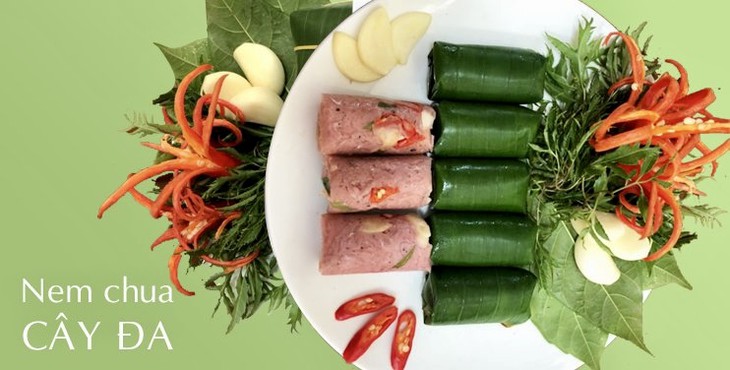
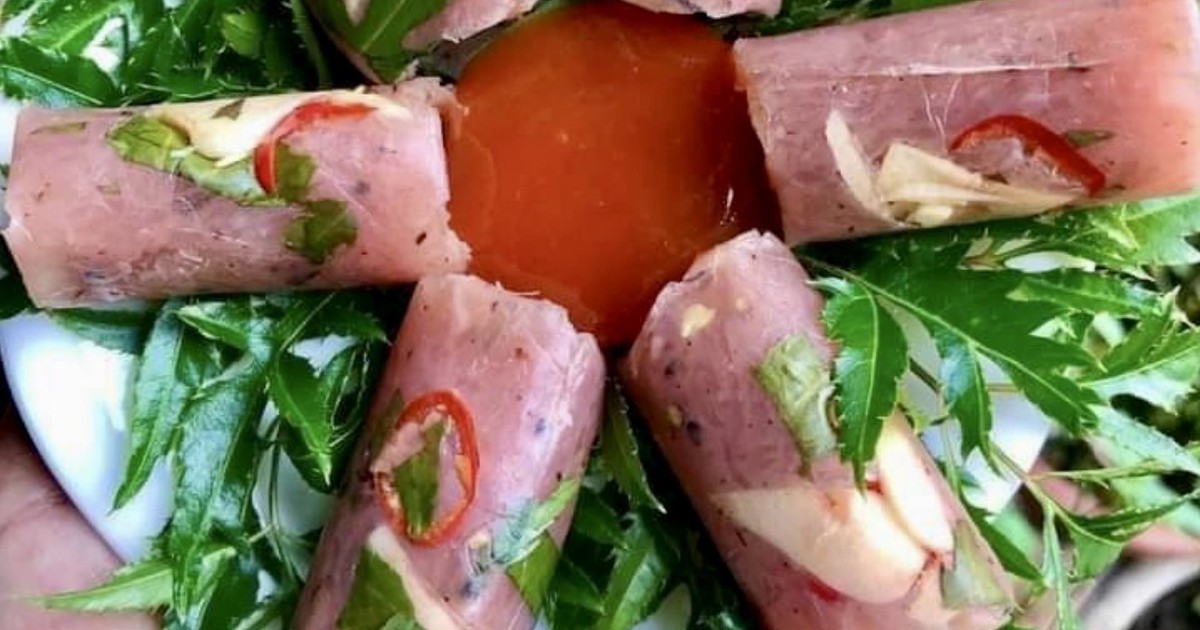
Once prepared, the core ingredients—lean pork, finely shredded skin, roasted rice powder, and a balanced proportion of salt and sugar—are thoroughly blended. The mixture is compressed firmly into individual portions, accompanied by a slice of raw bird’s eye chili and a sliver of fresh garlic, before being tightly swaddled in multiple layers of banana leaves.
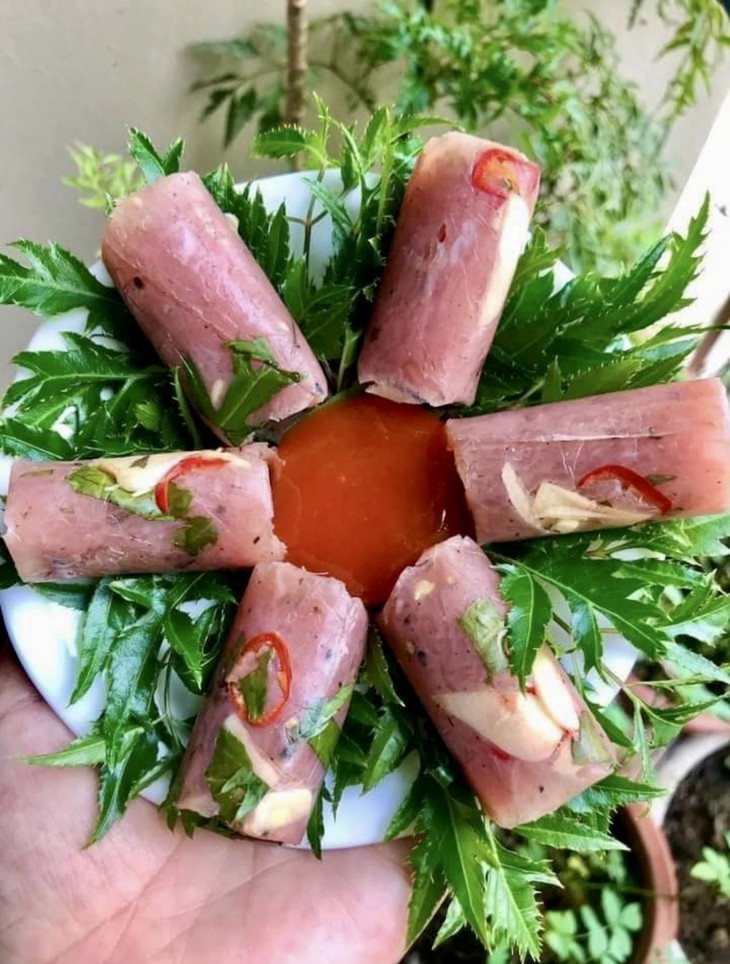
The transformation occurs over the subsequent three to five days. During this window, natural fermentation takes place without chemical preservatives. Upon unwrap, the mature roll reveals a pale pink interior highlighted by the translucent strands of pork skin. The release of aromatic notes from the roasted rice, fermented pork, garlic, and chili immediately stimulates the palate. When dipped into thick, fiery local chili sauce (tương ớt), the resulting flavor profile delivers a masterclass in sensory harmony: the sharp, clean acidity dances across the tongue, seamlessly merging with the natural sweetness of the meat, the crunch of the pork skin, and the warmth of the chili.
A Symbiosis of Local Flavors: Nem Chua and Bia Hơi
While nem chua can be enjoyed on its own as a midday snack, its culinary partnership with Thanh Hoa’s local bia hơi (fresh draft beer) elevates the experience to a regional institution. On sweltering summer afternoons, sitting at a humble curbside establishment while the gentle sea breeze from the Ma River sweeps across the pavement, patrons frequently pair chilled, frothy glasses of draft beer with plates of freshly unwrapped sour rolls.
The contrast is striking: the fiery, fermented tang of the pork roll cuts cleanly through the crisp, effervescent bitterness of the cold beer. When groups of friends gather to toast their glasses—the resulting ceramic clink echoing like the sound of river waves crashing against the shore—the culinary experience transcends simple eating. It transforms into an authentic expression of coastal Vietnamese working-class culture, capturing an unpretentious yet deeply sophisticated local identity.
Cultural Significance and the Expatriate Connection
Beyond its function as a regional delicacy, nem chua serves as an emotional anchor for the global Thanh Hoa diaspora. Members of the community residing in Ho Chi Minh City, across the Central Highlands, or even overseas in foreign countries frequently arrange for family members to ship hundreds of rolls during the Lunar New Year (Tet) or other major milestones.
For many expatriates, simply opening a package of nem chua can evoke overwhelming nostalgia. The distinct sour aroma immediately conjures memories of youth, the sight of family members wrapping rolls on brisk winter afternoons, and the communal laughter shared around hearths in rural villages.
Tourism statistics underscore this cultural weight. For visitors exploring Thanh Hoa province—alongside prominent landmarks such as Sam Son Beach, the Fish Stream of Cam Luong, and the UNESCO-recognized Ho Dynasty Citadel—sampling nem chua is considered an absolute prerequisite. Local adage suggests that visiting Thanh Hoa without tasting its signature sour roll is equivalent to never having set foot on its soil at all. Within this tiny, unassuming package lies the concentrated essence of the land, the dedication of its people, and the quiet pride of a hardworking rural community whose culinary heritage continues to captivate the world.
Related posts: