Prime Minister Pham Minh Chinh Chairs High-Level Meeting with Private Sector Leaders to Accelerate National Development in the New Era


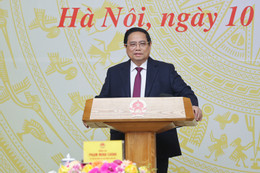
On February 10, Prime Minister Pham Minh Chinh presided over a pivotal conference with leading representatives of Vietnam’s private sector, focusing on strategic solutions to drive economic acceleration, technological breakthroughs, and long-term national resilience. As Vietnam navigates the complexities of a new era characterized by rapid digital transformation and global geopolitical shifts, the government is intensifying efforts to remove institutional bottlenecks and empower private enterprises to serve as a primary engine for sustainable growth.
A Strategic Dialogue for Economic Transformation
The meeting served as a platform for the government to acknowledge the profound contributions of the private sector, particularly large-scale enterprises, in navigating the country through the multifaceted challenges of the post-pandemic era. Prime Minister Chinh emphasized that the government is fully committed to standing alongside businesses, acting not merely as a regulator but as a partner in removing the "institutional bottlenecks" that hinder innovation.
"In the collective achievements of the nation, the contribution of the business community, particularly large-scale enterprises, is both significant and indispensable," the Prime Minister stated. He highlighted the private sector’s instrumental role in the nation’s COVID-19 response and its ongoing efforts to recover from the economic repercussions of the pandemic, asserting that the state is prepared to "clear the path" for private entities to excel.
The New Era: AI and Technological Sovereignty
A central theme of the dialogue was the "democratization of Artificial Intelligence" and the necessity of technological sovereignty. FPT Corporation Chairman Truong Gia Binh, who also serves as the head of the Private Sector Development Research Board, underscored the urgency of this transition. Binh expressed immense optimism regarding Vietnam’s potential to integrate into the ranks of the world’s most advanced nations.

Binh drew a parallel between the current technological opportunity and the historical "popularization of education" during the nation’s struggle for independence. He argued that just as basic literacy was the foundation for survival in the 20th century, AI literacy and application must become the bedrock of national progress today.
"When we look at the correlation between GDP growth and scientific and technological capacity, we see a parabolic curve pointing upward," Binh noted. He advocated for the rapid integration of AI into the national education system, from primary school levels upward, to ensure that the next generation of the workforce is natively fluent in AI technologies. He specifically cited the emergence of tools like DeepSeek as evidence that AI can be made accessible and affordable, allowing small and medium-sized enterprises (SMEs) to leverage cutting-edge technology without the need for prohibitive capital expenditure.
CMC’s Vision for Digital Infrastructure
Adding to the discussion, Nguyen Trung Chinh, Chairman of CMC Corporation, focused on the structural requirements for Vietnam’s digital economy. Chinh expressed strong support for the government’s Resolution 57, viewing it as a comprehensive strategic blueprint that provides the necessary impetus for Vietnam to leapfrog traditional development stages.
CMC has outlined two major "national-level" tasks it intends to undertake: the development of large-scale cloud computing infrastructure and the creation of a sovereign AI platform. Chinh announced that CMC plans to increase its data center capacity to 80MW, nearly doubling the current national capacity. Furthermore, the company is doubling down on "C.OpenAI," an initiative aimed at building core AI capabilities developed by Vietnamese talent for the Vietnamese market.
However, Chinh also brought forward specific institutional challenges, particularly regarding land use and financing. He highlighted that current regulations requiring 2 hectares of land for new educational branches or technology hubs are often impractical in dense urban environments like Hanoi, Da Nang, and Ho Chi Minh City. He called for more flexible administrative procedures to allow companies to invest in human capital development without being constrained by outdated spatial requirements.
Government Commitment: The Eight Strategic Pillars
In his concluding remarks, Prime Minister Chinh reiterated that the private sector remains a vital engine for the state-oriented market economy. He outlined eight key expectations for the business community to propel the country forward:
- Pioneering Innovation: Companies must lead in R&D and the adoption of new, disruptive business models.
- Technological Mastery: Strengthening the application of science and technology in all sectors, including the digital, green, and circular economies.
- Strategic Breakthroughs: Contributing more actively to the three national strategic pillars: institutional reform, infrastructure development, and human resource training.
- Accelerated Growth: Maintaining high-speed, inclusive, and sustainable growth trajectories.
- Global Integration: Expanding the participation of domestic companies in global value chains and supply networks.
- Social Responsibility: Actively participating in social welfare initiatives, specifically the national mandate to eliminate temporary and dilapidated housing and provide social housing for industrial workers.
- Human Capital Development: Investing in the training and upskilling of the workforce to meet the demands of the 4th Industrial Revolution.
- Brand Building: Enhancing the national brand through high-quality products and services that compete effectively on the global stage.
Fact-Based Context: The Path Forward
The dialogue reflects a broader shift in Vietnam’s economic policy. For decades, the country relied heavily on foreign direct investment (FDI) to fuel its export-oriented manufacturing base. While FDI remains a cornerstone, the government is now actively seeking to build a domestic "industrial base" capable of autonomous innovation.
Data from the Ministry of Planning and Investment indicates that the private sector currently contributes approximately 40% of the national GDP. However, the government’s goal is to increase the depth of this contribution by transitioning away from labor-intensive sectors toward high-value-added digital and service sectors.
The challenges cited by industry leaders—ranging from interest rate support for large-scale infrastructure projects to the streamlining of land-use permits—are currently under review by relevant ministries. The government’s willingness to engage in this high-level dialogue suggests a move toward a more agile, feedback-driven administrative process.
Implications for the Future
The meeting on February 10 serves as a symbolic and practical milestone. By inviting the heads of major tech giants to shape the policy agenda, the Prime Minister has signaled that Vietnam’s future development is inextricably linked to its digital maturity.

For international investors and stakeholders, this shift underscores a more favorable environment for technology-focused collaborations. As Vietnam moves to refine its legal framework—specifically regarding AI regulation and data sovereignty—the private sector’s role as both an advisor and an executor will likely expand.
As the country looks toward the remainder of the decade, the success of these initiatives will depend on the effective implementation of the reforms discussed. The "bottlenecks" identified by leaders like Binh and Chinh are well-known, but the political will expressed by the Prime Minister to address them marks a significant departure from more bureaucratic, top-down approaches of the past. If the government can successfully marry its regulatory power with the innovative spirit of the private sector, Vietnam is well-positioned to maintain its status as one of the fastest-growing digital economies in Southeast Asia.