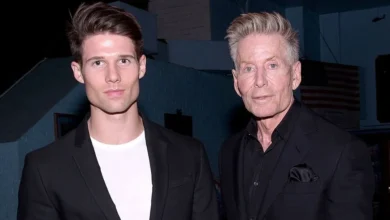
Director Toni Dương Bảo Anh’s Debut Feature ‘Trại Buôn Người’ Sparks Intense Debate and High Anticipation Ahead of Theatrical Release

The bustling landscape of Vietnamese cinema witnessed another milestone on the afternoon of September 22, when a high-profile press screening and red carpet event for the upcoming feature film Trại Buôn Người (Human Trafficking Camp) took place in Ho Chi Minh City. Marking the directorial debut of Toni Dương Bảo Anh, the project has steadily generated considerable industry buzz due to its gritty subject matter, ambitious scale, and a powerhouse ensemble cast featuring Steven Nguyễn, Miss Universe Vietnam runner-up Minh Kiên, People’s Artist Như Quỳnh, and Quách Ngọc Ngoan.
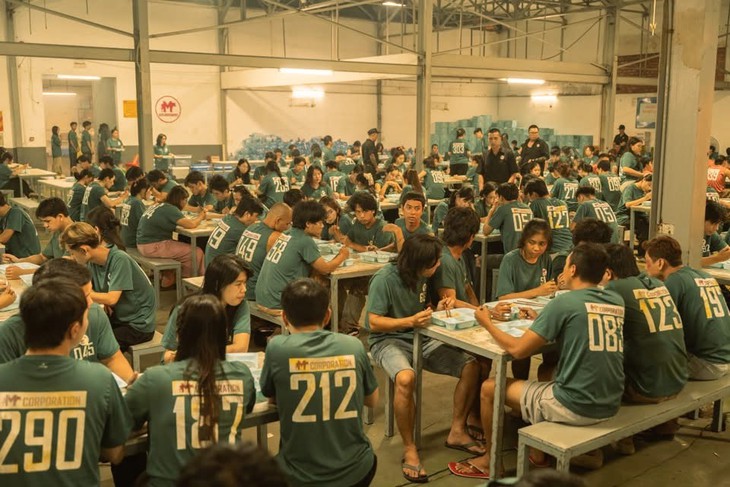
Set within a dystopian, hyper-surveilled subterranean detention and labor facility designed as a micro-society, Trại Buôn Người chronicles the desperate survival and escape trajectories of various marginalized characters. The narrative centers on Ny, portrayed by Steven Nguyễn, who deliberately sells himself into a brutal fraud syndicate operating along the southwestern border of Vietnam. His desperate gamble stems from a singular, harrowing motivation: to rescue his younger sister, who has fallen prey to ruthless human traffickers. Inside the compound, Ny aligns with undercover police operatives stationed deep within the criminal network, orchestrating a high-stakes, clandestine escape plan under the constant threat of torture and execution.
A Five-Year Labor of Love Rooted in Real-World Horrors
During the lively post-screening press conference, Director Toni Dương Bảo Anh addressed persistent media inquiries regarding potential thematic comparisons between Trại Buôn Người and earlier box-office monoliths, such as the record-breaking 2026 thriller Thiên Đường Máu (Blood Paradise). Displaying a steadfast commitment to the artistic integrity of his own work, Bảo Anh firmly stated that he harbors no desire for his debut film to be measured against other cinematic products.

"Human trafficking and transnational cyber-fraud rings are unfortunately not new concepts, but they remain deeply insidious threats that can silently upend anyone’s life," Bảo Anh explained to the assembled press corps. "That exact reality is why the production team, led by producer Mèo Bích Trang, dedicated nearly five years to researching, writing, and constructing this project from the ground up."
The director revealed that the development phase involved extensive, sensitive consultations with individuals who had survived trafficking syndicates, as well as frontline rescue workers. These firsthand accounts—detailing the psychological manipulation, the complex logistics of transnational movement, and the sheer terror experienced within clandestine compounds—formed the raw, uncompromising material for the screenplay.
"With my film, I only know that I have tried my absolute best to deliver an authentic cinematic experience," Bảo Anh emphasized. "I sincerely hope audiences do not use my film to benchmark others, nor should anyone use outside films to diminish what our cast and crew have built here."
Addressing the ‘Squid Game’ Visual Comparisons
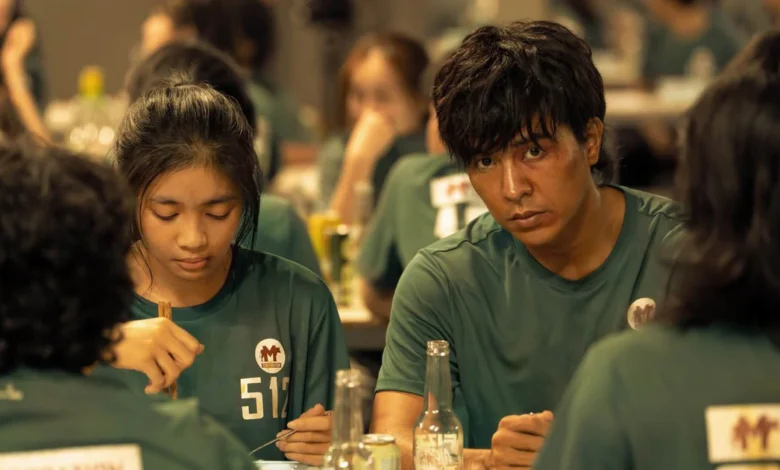
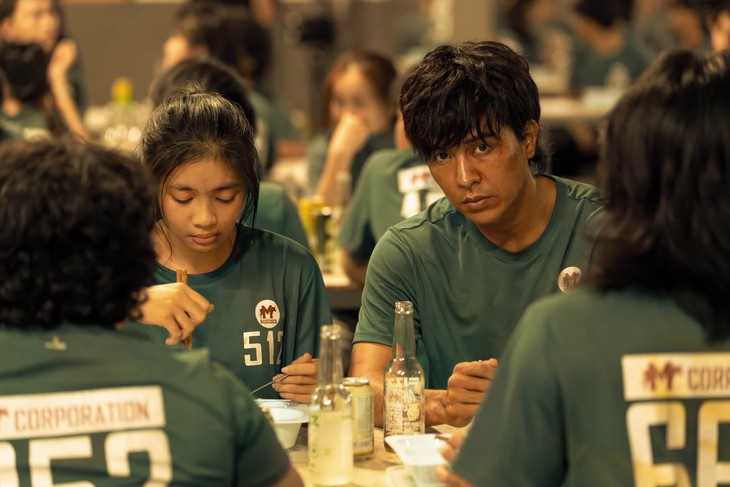
In the weeks leading up to the premiere, promotional materials including posters and trailers for Trại Buôn Người drew immediate scrutiny across social media platforms. Netizens were quick to point out similarities between the striking green tracksuits adorned with identification numbers worn by the characters in the film and the iconic dystopian aesthetic of the global Netflix phenomenon Squid Game, with some commentators prematurely labeling the project a "Vietnamese version of Squid Game."

Producer Mèo Bích Trang offered a comprehensive breakdown of the creative choices behind the costuming, tracing the concept back to empirical observations from the corporate sales and retail sectors. In many high-pressure sales environments, employees are routinely assigned numerical identifiers rather than personal names to track performance metrics, manage workflows, and maintain operational oversight.
"Within the universe of our film, the characters are stripped of their individual identities and recognized solely by numbers to facilitate strict administrative control by the syndicate leaders," Trang clarified. "While audiences naturally draw visual comparisons to Squid Game due to the aesthetic of numbered uniforms, the underlying thematic purpose of those numbers in each narrative serves a fundamentally different psychological and sociological function."
Veteran Performances and High-Stakes Physical Commitment
Among the most celebrated casting choices in Trại Buôn Người is the involvement of People’s Artist Như Quỳnh, a towering figure in Vietnamese cinema with a career spanning over five decades. Unlike the majority of characters who are forcibly abducted, coerced, and stripped of their names upon entering the camp, Như Quỳnh portrays a mother who willingly infiltrates the harrowing syndicate in a desperate search for her missing son.
The esteemed veteran actress confessed that the emotional gravity of the script compelled her to sign onto the project immediately upon reading it. Despite the logistical challenge of regularly traveling between Hanoi and Ho Chi Minh City for principal photography, she remained deeply moved by the tenacity of a mother operating within a suffocating, life-or-death environment.
"In my fifty years dedicated to the acting profession, I have rarely encountered a character written with such distinct psychological depth," Như Quỳnh shared during the event. "Most individuals brought into the camp completely vanish into anonymity, reduced to mere digits, yet my character manages to retain her name and her fierce maternal dignity throughout the ordeal."
Action sequences in the film also push physical boundaries, introducing rising action star Túng Mint, who left a lasting impression on viewers through his dynamic combat choreography. However, the intensity of the physical demands came at a personal cost. Túng Mint revealed that he sustained a severe injury during the final day of principal photography, an accident so debilitating that it temporarily left him unable to stand unassisted.
Reflecting on the grueling production schedule, the actor expressed a bittersweet sentiment regarding the perfectionism required in high-stakes action filmmaking. "As actors, we always yearn for that elusive moment where a director calls ‘cut’ and praises a take as flawless on the first try," Túng Mint noted. "Yet, for me, that exact moment brought a strange sense of sorrow. When a demanding scene is finalized on the spot, it signifies that there are no remaining opportunities to refine the performance or push the boundaries of what you hoped to achieve."
Industry Implications and Theatrical Outlook
The release of Trại Buôn Người arrives at a critical juncture for the Vietnamese film industry, which has increasingly gravitated toward high-concept thrillers tackling contemporary socio-political issues, ranging from systemic cyber-scams to cross-border criminal enterprises. Industry analysts note that by grounding its narrative in verified investigative reporting and survivor testimonies, the film aims to transcend standard genre tropes, offering audiences both visceral entertainment and an urgent cautionary tale.
As Trại Buôn Người officially enters theatrical distribution nationwide, box office observers will be closely monitoring whether its unique blend of gritty social realism, high-octane action choreography, and veteran dramatic performances can sustain strong word-of-mouth momentum in a fiercely competitive commercial landscape. With its multi-generational cast and unflinching examination of modern exploitation, Toni Dương Bảo Anh’s directorial debut stands as a notable entry in contemporary Vietnamese cinema’s ongoing evolution toward mature, globally resonant storytelling.