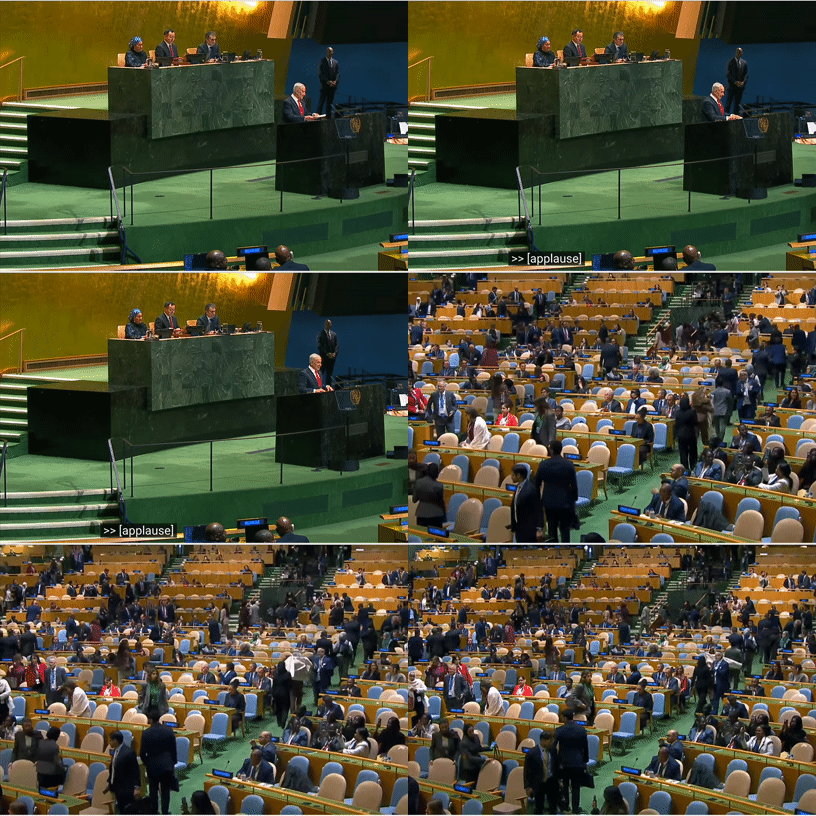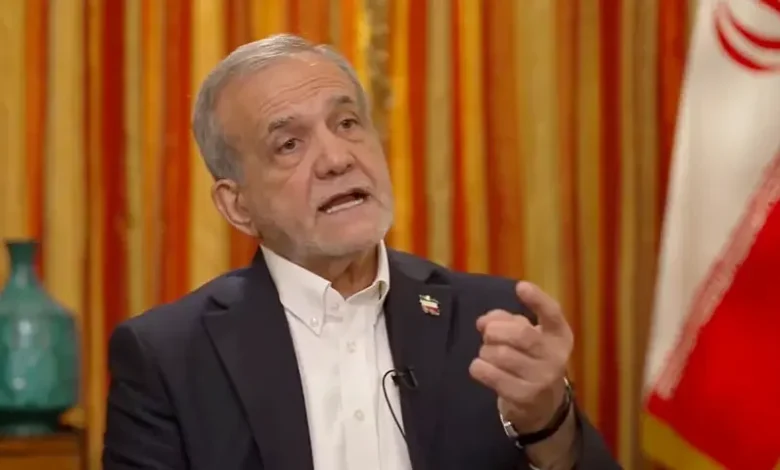
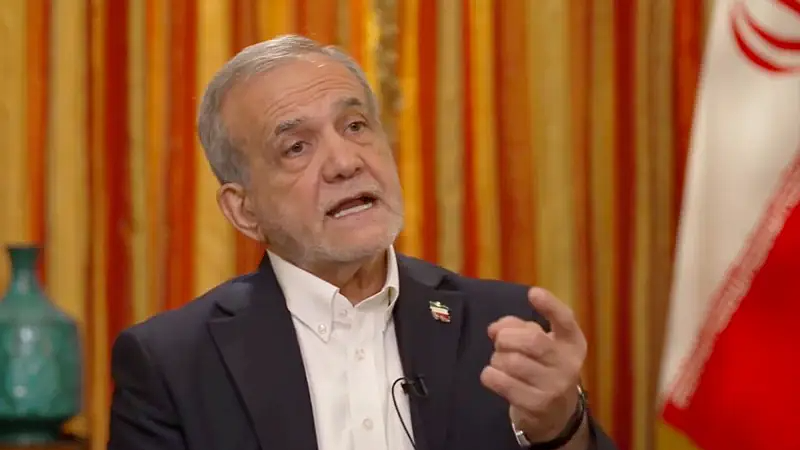
Amidst mounting international speculation regarding the health and stability of the Iranian leadership, Iranian President Masoud Pezeshkian has provided a rare, firsthand account of his recent interactions with Supreme Leader Ayatollah Ali Khamenei. Speaking to the press on the sidelines of the United Nations General Assembly in New York on September 24, 2026, President Pezeshkian sought to dispel rumors that have circulated globally since early March, emphasizing that the Supreme Leader remains fully functional and actively engaged in the governance of the Islamic Republic.
A Firsthand Account of Leadership Stability
President Pezeshkian’s comments came during a rare media engagement, where he addressed questions regarding the health of Ayatollah Khamenei. "I cannot recall the exact date, but the meeting took place approximately one to one-and-a-half months ago," Pezeshkian stated. He described a seven-hour dialogue with the Supreme Leader, characterizing the atmosphere as calm and productive.
According to the President, the two leaders sat together, occasionally walking during their extensive discussion. "I did not observe any physical ailment or distress," Pezeshkian noted, explicitly countering reports that suggested the Supreme Leader was incapacitated or struggling with chronic health issues. He further confirmed that Khamenei continues to hold regular consultations with government officials, providing direct guidance on the implementation of national policy, which remains the cornerstone of Iranian administrative operations.
The Context of Speculation: A Timeline of Uncertainty
The health of Iran’s supreme leader has been a subject of intense geopolitical scrutiny for years, but rumors intensified significantly following reports of a military strike involving U.S. and Israeli intelligence interests on February 28, 2026. While official Iranian channels maintained that the leadership remained intact, international intelligence agencies suggested that Khamenei had sustained injuries during the incident.
Since March 2026, the Supreme Leader’s public appearances have been notably limited, fueling a vacuum of information that has been filled by competing narratives from foreign intelligence services and regional analysts. The following timeline outlines the key developments in this period of uncertainty:
- February 28, 2026: A coordinated military operation by U.S.-Israel forces occurs, leading to unverified reports of damage to key infrastructure and potential injury to high-ranking officials.
- March 2026: Ayatollah Khamenei ceases public appearances, sparking a wave of international media speculation regarding his health status.
- August 2026: State media in Iran releases footage of Mojtaba Khamenei, the Supreme Leader’s son, conducting a lecture, which some analysts interpreted as a potential signal of succession planning or a move to maintain continuity in the face of leadership questions.
- September 24, 2026: President Pezeshkian, appearing at the UN, provides the most comprehensive official update to date, aiming to reassure domestic and international stakeholders of the government’s stability.
Intelligence Perspectives and Geopolitical Friction
The mystery surrounding the Supreme Leader is compounded by the hostile climate between Tehran, Washington, and Tel Aviv. U.S. intelligence agencies have frequently scrutinized Iran’s leadership structure, particularly following allegations that Tehran has been involved in planning operations against former President Donald Trump.
President Pezeshkian addressed these allegations during the same press conference, categorically denying that the Iranian government has ever sought to assassinate Donald Trump or any members of his family, whether through overt or covert channels. This statement serves as a diplomatic pivot intended to lower the temperature in U.S.-Iran relations, even as the U.S. continues to express concern over a video broadcast by Iranian state television that appeared to threaten Barron Trump.
The intersection of health rumors and security threats creates a complex security landscape. For international observers, the question is not merely one of medical status, but of institutional resilience. If the Supreme Leader’s health were to decline, the mechanisms for succession—historically overseen by the Assembly of Experts—would face an unprecedented test in an environment of high external pressure.
Institutional Resilience and Governance
Despite the rumors, the administrative apparatus of the Islamic Republic appears to be operating according to established protocols. Analysts note that the Iranian system is designed to be "leader-proof" to a degree, where the Office of the Supreme Leader functions as a bureaucratic entity that continues to issue directives even if the individual at the helm is temporarily unavailable.
"The system is built on a collective decision-making process involving the Islamic Revolutionary Guard Corps (IRGC), the Assembly of Experts, and the executive branch," says a regional security analyst. "Pezeshkian’s testimony is designed to project an image of ‘business as usual’ to prevent any opportunistic maneuvers by domestic factions or foreign adversaries."
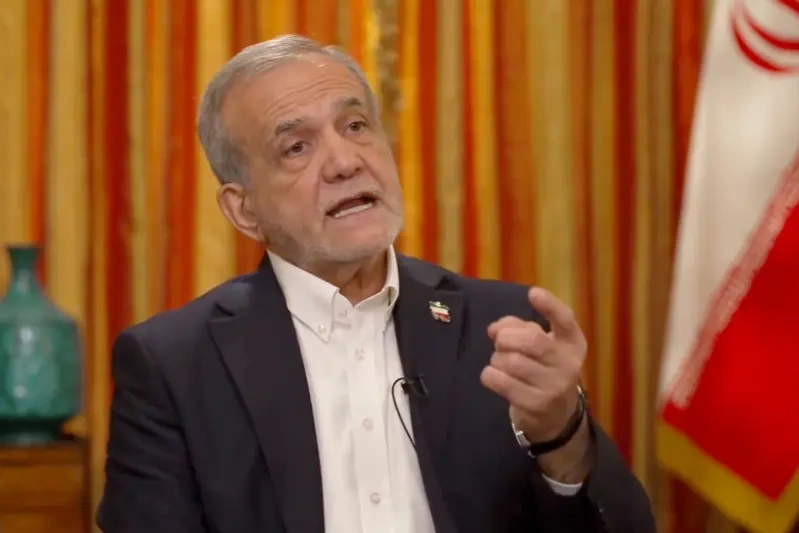
However, the lack of recent public appearances by Khamenei remains a point of concern for those tracking the regime’s long-term trajectory. The absence of visual confirmation is often interpreted by markets and neighboring states as a sign of volatility. By choosing the UN General Assembly—a global stage—to deliver his remarks, Pezeshkian attempted to stabilize regional perceptions and maintain the legitimacy of the current administration.
Implications of the Ongoing Narrative
The implications of this episode are twofold. First, it highlights the role of information warfare in modern geopolitical competition. By managing the narrative surrounding the Supreme Leader’s health, the Iranian government is attempting to preserve its strategic deterrent posture. Any perception of a "power vacuum" in Tehran could embolden regional rivals or lead to miscalculations in ongoing proxy conflicts across the Middle East.
Second, the interaction between Pezeshkian and the international press reflects a strategic effort to separate the issue of leadership stability from the broader, more contentious issues of regional security and nuclear policy. By addressing the health rumors directly, the President aims to clear the table for diplomatic discussions on other priorities, such as economic sanctions and trade relations.
Conclusion
As of late September 2026, the official position remains clear: the Iranian leadership maintains that the Supreme Leader is fully capable of exercising his duties. While President Pezeshkian’s assurances are significant, they serve as one data point in a broader, opaque intelligence picture. The international community will continue to monitor the situation, looking for signs of continuity or shifts in power that could alter the strategic balance in the region.
For now, the government in Tehran remains focused on dispelling the notion of internal instability. Whether this diplomatic effort will succeed in shifting the focus of international intelligence services remains to be seen. The coming months will be critical in determining whether these reports of health stability are matched by a return to more frequent and visible leadership participation in the country’s public life, which would ultimately be the only definitive proof to silence the ongoing speculation.