Toyota Fortuner undergoes intensive road testing in Southeast Asia as it prepares for a generational shift to challenge the Ford Everest

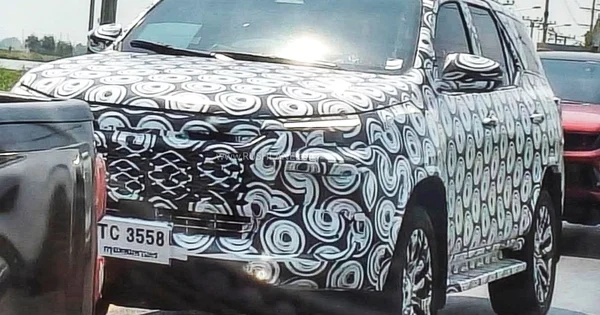
The automotive landscape in Southeast Asia is witnessing a period of significant transition, as Toyota intensifies its efforts to revitalize its long-standing SUV powerhouse, the Fortuner. Recent sightings of a heavily camouflaged test mule on public roads in Thailand have signaled that the Japanese automaker is nearing the final stages of development for a new generation of the seven-seater SUV. This development comes at a critical juncture for Toyota, as the current model faces declining market performance and increasing pressure from more technologically advanced competitors, most notably the Ford Everest.
A Decade of Evolution and the Need for Renewal
For nearly a decade, the current generation of the Toyota Fortuner has been a stalwart of the mid-size SUV segment. Built on the rugged IMV (Innovative International Multi-purpose Vehicle) platform—which it shares with the Hilux pickup—the Fortuner established itself as a reliable, go-anywhere vehicle that dominated sales charts across emerging markets. However, the automotive industry has evolved rapidly since the current generation’s inception around 2015. Consumers today demand not only durability but also sophisticated connectivity, advanced driver-assistance systems (ADAS), and refined interior aesthetics.
While Toyota has periodically updated the model with cosmetic refreshes and technology tweaks, these incremental changes have struggled to keep pace with the rapid innovation cycles of rivals. The Ford Everest, in particular, has surged ahead by offering a more modern, premium experience, effectively positioning itself as the benchmark in the segment. The emergence of the new test mule confirms that Toyota is opting for a comprehensive overhaul rather than another mid-cycle update, a move deemed necessary to reclaim its market share.
Analyzing the New Prototype: Design and Technological Shifts
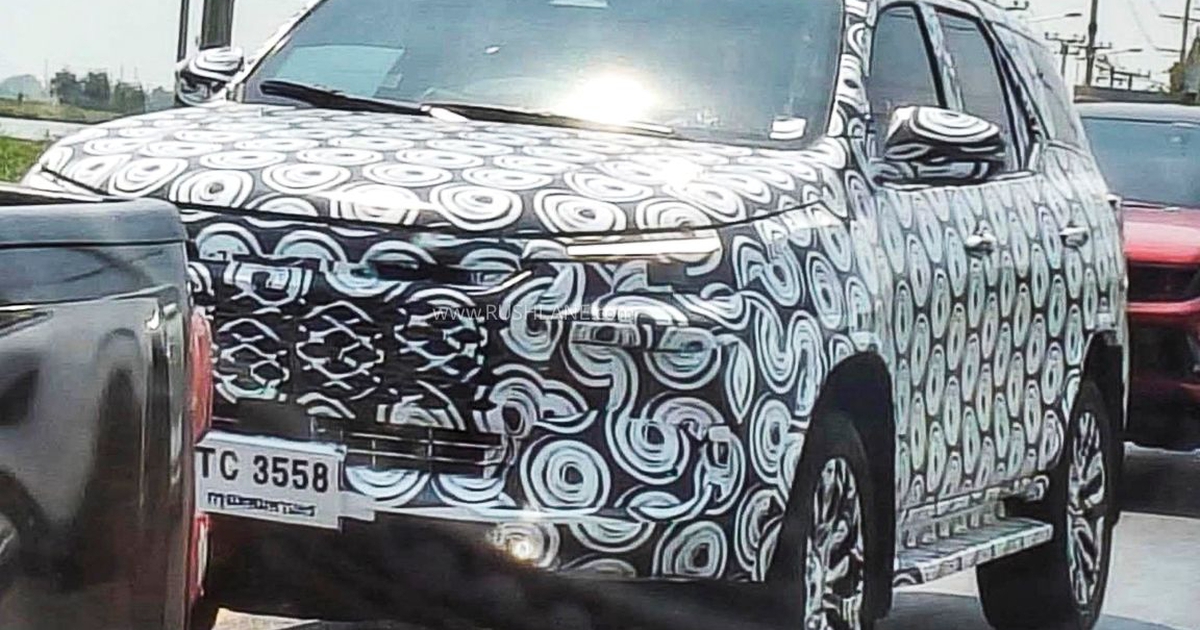
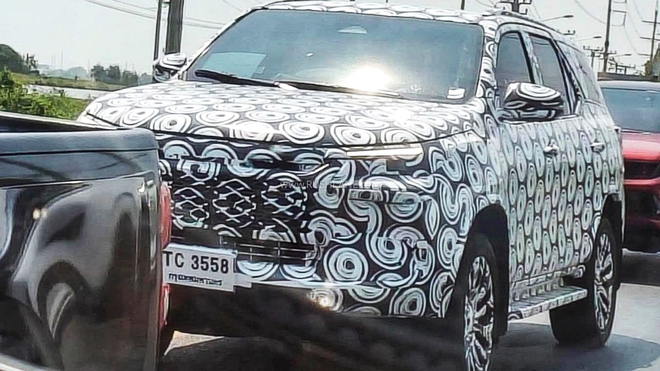
The most recent sightings of the prototype provide the clearest indication yet of the design language Toyota is adopting. Despite the heavy camouflage, the vehicle’s silhouette reveals a more aggressive, muscular posture. Observers have noted a significantly flatter, more pronounced hood and a larger, more imposing radiator grille.
Perhaps most striking is the lighting architecture. The prototype features slim, sleek LED strips positioned high on the front fascia, while the primary headlamp clusters are set lower, suggesting a departure from the current design language in favor of a more modern, stacked aesthetic. Furthermore, the presence of radar sensors on the front bumper and a camera module mounted behind the windshield strongly suggests that Toyota is integrating a robust suite of active safety technologies, likely falling under the Toyota Safety Sense umbrella.
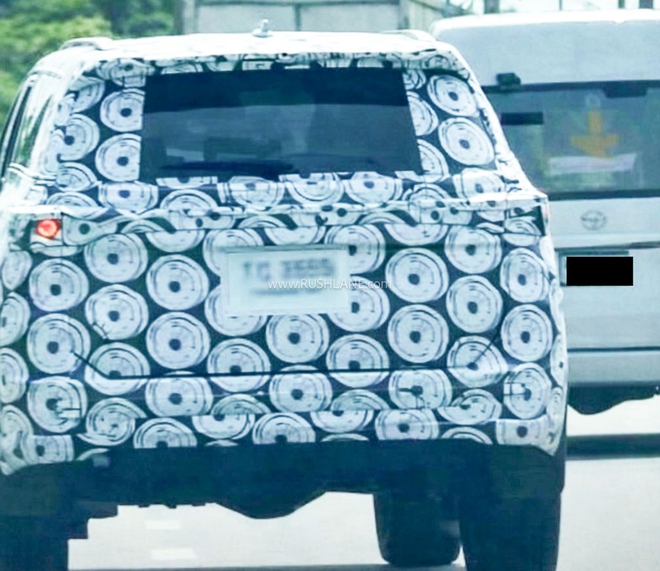
At the rear, while much of the tailgate and bumper remains obscured, the visible light signatures indicate a redesigned tail lamp cluster. Industry experts, including those from automotive publication RushLane, suggest that these units will adopt a sleeker, more horizontal design, moving away from the more conventional lighting configurations of the current model.
Strategic Implications for the IMV Platform
The decision to develop a new generation of the Fortuner is deeply intertwined with Toyota’s broader strategy for its IMV platform. Reports from Autocar India and other industry analysts indicate that the upcoming Fortuner will likely utilize an updated version of the IMV platform, similar to the one underpinning the newest generation of the Toyota Hilux.
This platform sharing is not merely a cost-saving measure; it is a fundamental pillar of Toyota’s manufacturing strategy, ensuring that the Fortuner retains its reputation for off-road capability and structural integrity while allowing for the integration of modern powertrain options. Among the highly anticipated updates is the potential for electrification. While official specifications remain under wraps, market analysts anticipate that the current 2.7-liter gasoline and 2.8-liter diesel engines will be retained but likely optimized for better fuel efficiency and lower emissions, possibly through the addition of mild-hybrid (MHEV) technology.

The Competitive Crisis: A Look at the Numbers
The urgency of this development is underscored by the shifting sales dynamics in the Vietnamese market, which serves as a bellwether for the broader Southeast Asian region. According to data provided by the Vietnam Automobile Manufacturers’ Association (VAMA), the contrast between the Fortuner and its primary rival, the Ford Everest, has become stark.
As of August 2026, the Toyota Fortuner recorded a monthly sales volume of 217 units. While this represented a 22% increase from the previous month, it pales in comparison to the Ford Everest, which moved 690 units in the same period. The cumulative disparity is even more alarming for Toyota. In the first eight months of 2026, Ford delivered 7,640 units of the Everest, capturing approximately 85% of the market share for body-on-frame seven-seater SUVs. During that same timeframe, the Toyota Fortuner reached only 1,181 units, representing a year-on-year decline of over 41% compared to 2025.
Industry experts attribute this widening gap to the "ageing product" phenomenon. Ford has successfully capitalized on the Everest’s fresh design, superior cabin ergonomics, and superior infotainment features, while the Fortuner, despite its legendary reliability and brand equity, has begun to look dated. The loyalty of the Toyota customer base, while strong, has proven insufficient to bridge the technological and aesthetic divide that has emerged over the last three years.
Official Stance and Future Roadmap
Despite the intense activity surrounding the test mules, Toyota has remained characteristically tight-lipped regarding the official launch timeline or technical specifications. The company’s policy of not commenting on future products during the development phase means that enthusiasts and potential buyers must rely on the evidence gathered by automotive journalists and industry insiders.
Speculation remains high regarding a potential global debut in 2027. If the Fortuner is indeed slated for a 2027 release, the company will likely initiate a phased rollout, beginning with key manufacturing hubs in Thailand and Indonesia before expanding to other markets, including Vietnam and India. For the Vietnamese market specifically, Toyota representatives have not provided a definitive roadmap, though it is widely expected that the model will be prioritized as a high-volume product necessary to stabilize the company’s position in the premium SUV segment.
Broader Impact: The Future of the Seven-Seater SUV
The arrival of a new Toyota Fortuner will be a landmark event for the regional automotive industry. It represents not just a product launch, but a recalibration of Toyota’s strategy in the face of stiff competition. If Toyota can successfully integrate the rumored hybrid technology, advanced driver-assistance systems, and a vastly improved interior, it could potentially reverse the current sales trends.
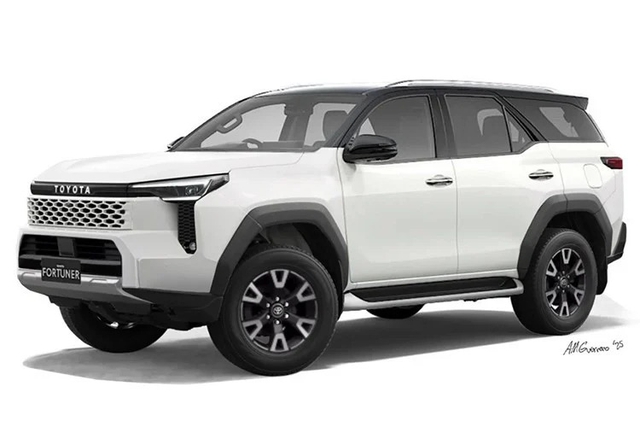
However, the challenge remains significant. The Ford Everest has established a strong foothold and a loyal customer base that values the vehicle’s "tech-forward" approach. To succeed, the new Fortuner must balance the traditional values of Toyota—reliability, resale value, and off-road prowess—with the modern expectations of a tech-savvy demographic.
As the test mules continue to clock miles on the roads of Thailand, the industry watches closely. For Toyota, the next generation of the Fortuner is more than just another SUV; it is a crucial instrument for reclaiming its dominance in a segment it once owned. The success of this transition will serve as a testament to the brand’s ability to adapt to a changing landscape without losing the core identity that has made it a household name across Southeast Asia. Until the official unveiling, the automotive world remains in a state of high anticipation, waiting to see if the new Fortuner can turn the tide in the fiercely contested seven-seater SUV market.