Ho Chi Minh City Prioritizes Green Transition and Circular Economy as GRECO 2026 Opens

Ho Chi Minh City officially inaugurated the fourth edition of its Green Growth Products and Services Promotion Space (GRECO 2026) on the evening of October 26, establishing a high-profile platform for sustainable innovation. Organized by the Investment and Trade Promotion Centre of Ho Chi Minh City (ITPC) in collaboration with relevant municipal bodies, the event unfolds within the broader framework of the Autumn Economic Forum 2026 (AEF 2026). As Vietnam’s commercial, financial, and technological powerhouse steers its socioeconomic development toward long-term sustainability, this year’s exhibition highlights an urgent push to bridge traditional manufacturing with advanced, low-carbon technologies.
Spanning an impressive footprint of approximately 11,000 square meters, GRECO 2026 hosts 90 specialized booths representing nearly 70 domestic and international entities, equivalent to 300 standard exhibition booths. The venue serves as an interactive convergence point where policymakers, investors, technology providers, and consumers meet to explore cutting-edge environmental solutions. The exposition is strategically designed not merely as a showcase of eco-friendly merchandise, but as a dynamic catalyst for technological adoption, cross-sector collaboration, and the normalization of sustainable consumer habits across urban and regional markets.
Positioning Green Transition as a Core Municipal Mandate
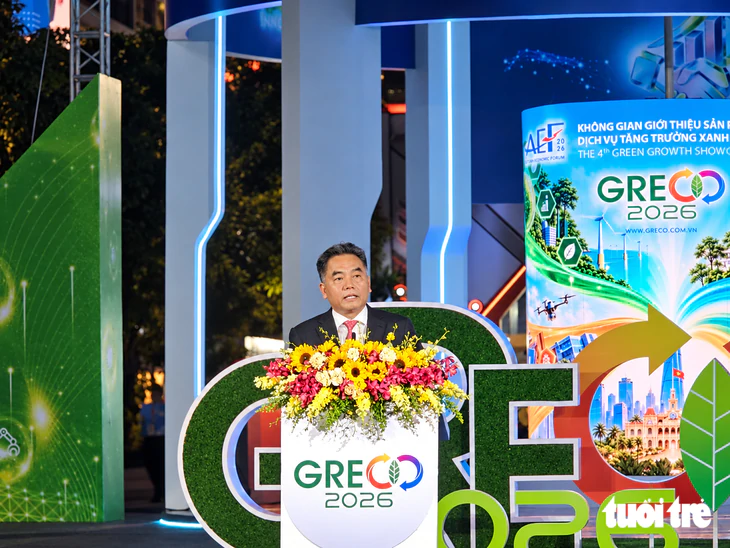
Delivering the keynote address at the opening ceremony, Nguyen Loc Ha, Permanent Vice Chairman of the Ho Chi Minh City People’s Committee, articulated the municipal government’s resolute commitment to sustainable restructuring. He noted that Ho Chi Minh City is navigating a critical new development phase, carrying the dual responsibility of serving as the nation’s primary economic engine while pioneering structural reforms aligned with global environmental standards.
"In our long-term development framework, Ho Chi Minh City has firmly identified green transition and digital transformation as two core, synergistic missions," Mr. Ha emphasized. "These pillars are essential to restructuring our economic sectors along sustainable lines, building a smart, carbon-neutral economy, and making a substantive contribution to Vietnam’s National Green Growth Strategy and its ultimate commitment to achieving Net Zero emissions."
Mr. Ha’s assertions are underscored by the city’s robust economic performance amid global market volatility. In the lead-up to the event, Ho Chi Minh City reported strong positive growth indicators. The Gross Regional Domestic Product (GRDP) reached 2.46 trillion VND, representing a notable expansion of 9.06% compared to the same period in 2025. Industrial production indices climbed by 10.9%, while foreign direct investment (FDI) inflows surged by an astonishing 323.1% year-on-year. These figures demonstrate that stringent environmental regulations and green investments are not inhibiting economic vitality, but rather attracting high-value capital and modernizing local industries.
Upcycling Agricultural and Industrial Byproducts into Economic Value
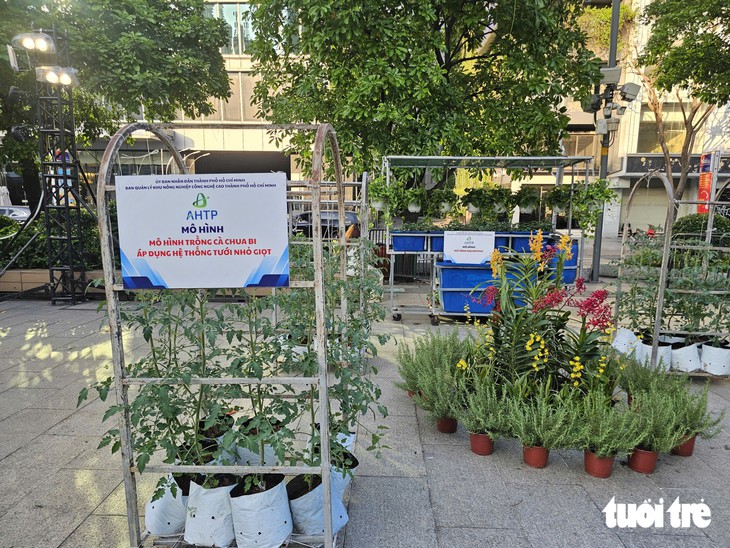
A defining characteristic of GRECO 2026 is the widespread commercial and industrial application of upcycling—transforming agricultural waste, food processing byproducts, and marine refuse into high-value commercial inputs. Throughout the exhibition floor on Nguyen Hue Walking Street, industry leaders and academic researchers presented breakthrough technologies that convert discarded organic matter into sustainable alternatives for consumer goods, agriculture, and manufacturing.
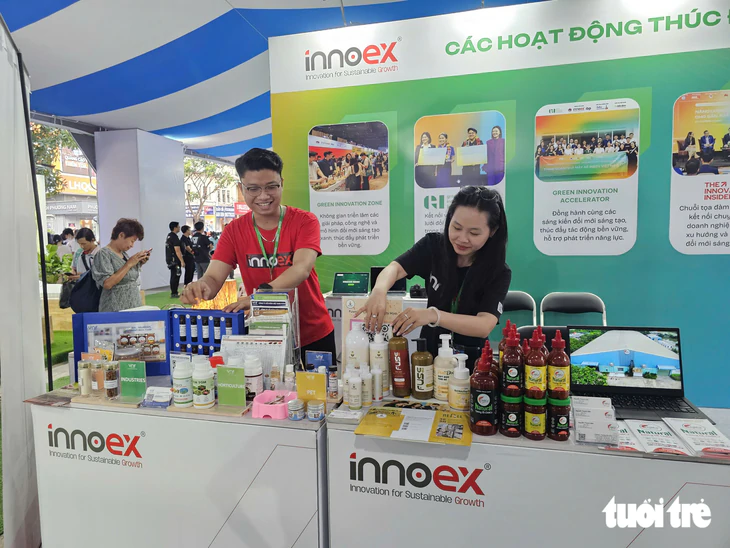
Bui Thi Thanh Tu, Community Manager at InnoEx (International Open Innovation Alliance), highlighted nine sustainable agricultural models presented at the exhibition. Among them is Fuwa3e, a pioneering enterprise manufacturing bio-cleaning and personal care products utilizing enzymes extracted from pineapple processing waste. Instead of discarding fruit peels and agricultural remnants—which traditionally present disposal challenges and generate methane emissions—the company upcycles these materials into dishwashing liquids, hand washes, and floor cleaners. Research is also underway to expand this technology into pet care formulations, including shampoos and body washes.
"Utilizing these raw materials allows enterprises to extract entirely new value streams from agricultural byproducts rather than relying exclusively on primary resource harvesting for consumer goods," Ms. Tu explained. "This approach transforms a local environmental burden into a sustainable commercial asset."
A parallel transformation is occurring within the seafood processing sector. Vietnam Food (VNF) showcased its advanced biotechnology models designed to process shrimp waste generated in the Mekong Delta. The region’s intensive shrimp processing industry yields massive quantities of heads and shells, which can cause severe localized environmental degradation if left untreated. By applying enzymatic and chemical separation technologies, VNF converts this marine byproduct into high-grade organic fertilizers, animal feed additives, and specialty chitosan derivatives for agricultural and veterinary use.
Tran Dao Hong Ngoc, Commercial Director of VNF, noted that applying modern technology to seafood waste not only mitigates environmental pollution but also significantly enhances the economic value of Vietnam’s aquaculture value chain. By capturing these secondary streams, processors reduce waste footprints while supplying domestic and export markets with high-performance biological inputs.
Advanced Materials and Industrial Applications
Beyond consumer goods and agriculture, GRECO 2026 serves as a showcase for advanced industrial materials derived from biomass. Academic institutions are playing a vital role in bridging laboratory research with commercial manufacturing, offering sustainable solutions to energy-intensive industries such as textiles and packaging.
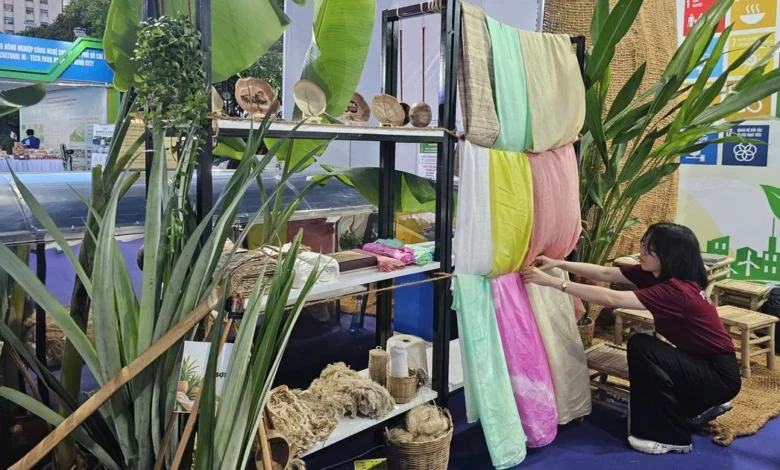
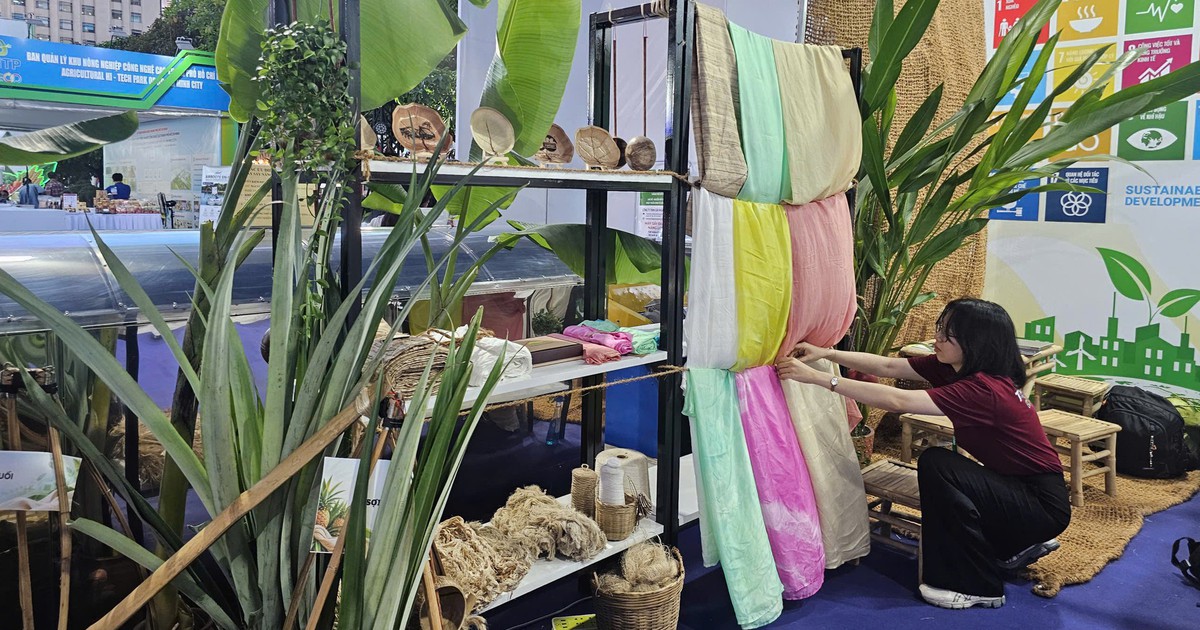
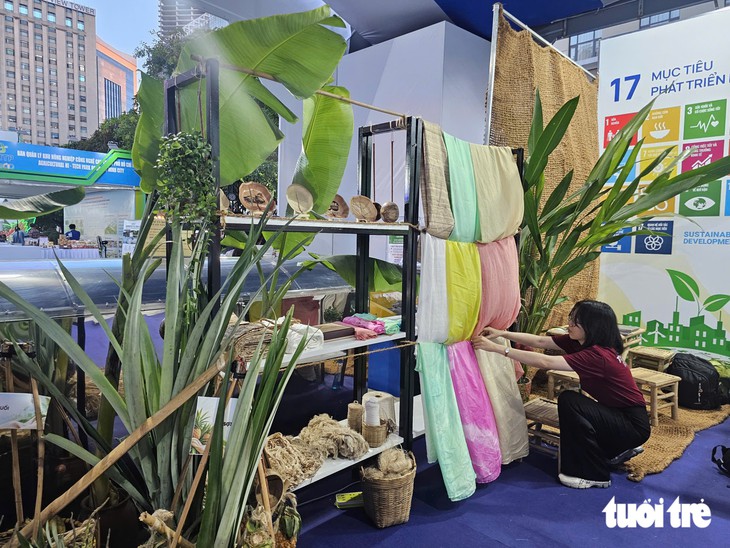
Dr. Pham Thi Hong Phuong, Head of the Department of Chemical Technology and Materials at the Faculty of Chemical Technology, Ho Chi Minh City University of Industry (IUH), introduced a series of innovative biomaterials to the exhibition. Her research team presented novel fiber samples derived from banana pseudo-stems, pineapple leaves, and corn husks, alongside high-end textiles dyed exclusively with natural colorants.
"All of our introduced products utilize agricultural byproducts that were historically discarded or burned, creating severe air and soil pollution," Dr. Phuong stated. "Through advanced chemical processing, we convert these residues into high-value industrial materials. These innovations are currently garnering significant interest from international partners, particularly from Japan and South Korea, as well as domestic manufacturers seeking compliance with stringent global ESG standards."
The integration of artificial intelligence and robotics was also prominently featured at GRECO 2026. Humanoid robots and automated environmental monitoring systems greeted visitors along the pedestrian boulevard, illustrating the convergence of digital transformation and green technology. These systems monitor urban air quality, optimize energy consumption in smart buildings, and streamline waste sorting processes in densely populated areas.
Broader Implications for Regional and National Sustainability
The timing of GRECO 2026 aligns with a broader national push to redefine Vietnam’s economic trajectory. As global supply chains face mounting regulatory pressures—such as the European Union’s Carbon Border Adjustment Mechanism (CBAM) and strict due diligence laws regarding deforestation and carbon footprints—Vietnamese enterprises must adapt or risk losing access to premium international markets.
Economists and trade analysts point out that initiatives like GRECO 2026 provide crucial networking opportunities for small and medium-sized enterprises (SMEs) to access green finance, modern technologies, and international partnerships. By demonstrating that circular economy models can achieve commercial viability and high profit margins, Ho Chi Minh City is establishing a replicable blueprint for other urban centers across Southeast Asia.
Furthermore, the surge in foreign direct investment coupled with strong industrial growth indicates that international investors view Ho Chi Minh City not just as a low-cost manufacturing hub, but as an emerging center for sustainable technology and green innovation. The city’s focus on infrastructural upgrades, renewable energy integration, and circular supply chains strengthens its competitive edge in attracting high-tech capital.

As GRECO 2026 continues its multi-day run, the event is expected to facilitate numerous memorandum-of-understanding (MoU) signings between local agricultural cooperatives, tech startups, and international distribution networks. By institutionalizing sustainability as a core metric of economic success, Ho Chi Minh City is systematically laying the groundwork for a resilient, low-carbon future that balances rapid industrial expansion with uncompromising ecological stewardship.