Internal Republican Discord Intensifies as High-Profile Figures Break Ranks Ahead of Crucial Elections

The Republican Party is currently grappling with a profound internal fracturing that threatens to undermine its cohesion just days before a critical series of midterm and legislative elections. While the party has long contended with ideological factions, the current volatility is marked by an unprecedented level of public dissent, with prominent figures—including members of established political dynasties—openly distancing themselves from the Trump-aligned wing of the party. This internal "civil war" is manifesting in a series of strategic defections, with some veteran conservatives actively endorsing Democratic opponents, signaling a significant shift in political loyalties that could have far-reaching consequences for the party’s electoral prospects.
A Pattern of Strategic Defection
The recent weeks have seen a growing number of Republican officeholders and influential strategists voice sharp criticism of policies championed by former President Donald Trump. This dissent is not confined to the party’s periphery; it has reached the very core of the GOP establishment. Figures such as Representative Ashley Hinson (R-Iowa), former Representative Mike Rogers (R-Michigan)—who is currently vying for a U.S. Senate seat—and various state-level candidates, including Brinker Harding in Nebraska and Jon Husted in Ohio, have publicly sparred with the former president’s platform. Their critiques range from foreign policy stances on Iran to protectionist trade policies and the long-term economic impact of broad-based tariffs.
The shift is perhaps most symbolic in the actions of the Bush family, a cornerstone of the Republican establishment for decades. Neil Bush, the son of the late President George H.W. Bush and brother to former President George W. Bush, recently announced his support for James Talarico, a Democratic candidate running for a seat in the Texas state legislature. In a move that sent shockwaves through local political circles, Neil Bush explicitly stated that his vote was a response to his deep concerns regarding the direction of the party under Trump’s influence. He emphasized that his support for Talarico stemmed from an alignment of principles rather than partisan loyalty, citing his alarm over a political culture that he believes prioritizes personal fealty over foundational conservative tenets.
The Erosion of Party Unity in Texas
Texas, often cited as a bastion of Republican strength due to its massive population and economic influence, has become a focal point for this internal strife. The state’s political landscape is currently characterized by high-profile clashes that transcend traditional policy debates. Recently, Bo French, a Republican candidate for a seat on the Texas Board of Education, sparked intense backlash after circulating images of students at a University of Texas football game, accompanied by commentary expressing anxiety over changing demographics.
The incident was widely condemned as racially divisive, drawing sharp criticism from within the party. U.S. Senator John Cornyn (R-Texas) publicly rebuked French, calling him a "liability" to the party and declaring he would not support his candidacy. Similarly, Karl Rove, the influential former strategist for George W. Bush, announced his intention to vote for French’s Democratic opponent. These actions reflect a growing divide between traditional conservatives who advocate for a more inclusive platform and the populist, nationalist wing that continues to dominate the party’s primary contests.
The Ohio Conflict: Ethical and Moral Tensions
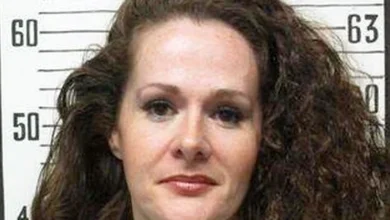
The internal friction has also spilled over into the state-level elections in Ohio, where the contest between Vivek Ramaswamy (Republican) and Amy Acton (Democrat) for a statewide office has turned deeply personal and controversial. The conflict erupted when the Ramaswamy campaign released a promotional video featuring Donna Arthur, the estranged mother of Amy Acton. In the video, Arthur attempted to portray her daughter in a negative light, aiming to damage Acton’s credibility.
The strategy backfired spectacularly. Investigative reports, including those from The New York Times, revealed that Acton had been estranged from her mother for years following a traumatic childhood. Records indicate that Acton’s stepfather was convicted in 1978 for the sexual assault of both Acton—who was 12 at the time—and her foster sister. Following these revelations, Donna Arthur lost custody of her children due to negligence and was later convicted on charges related to property crimes.
The decision to feature a mother attacking her daughter in this context was met with immediate, bipartisan condemnation. Governor Mike DeWine (R-Ohio), a staunch Republican who had initially supported Ramaswamy, described the video as "profoundly disturbing" and "entirely wrong," calling for its immediate removal. The fallout was swift; prominent figures, including Representative Ashley Hinson and media personality Meghan McCain, denounced the advertisement as "vile" and an affront to basic political decency. Casey Putsch, a well-known conservative strategist in Ohio, announced that he would switch his support to Acton as a direct result of the ad’s content. The intensity of the reaction forced Vice President-elect J.D. Vance to weigh in, attempting to stifle the dissent among his fellow Republicans, yet the damage to the campaign’s reputation appeared to be significant and potentially irreparable.
Broader Implications for the GOP
The current state of the Republican Party suggests a struggle for its very identity. Analysts note that the party is caught between two competing visions: the populist, Trump-centered movement that relies on base mobilization, and the traditionalist wing that prioritizes institutional stability and traditional conservative values.
- Electoral Vulnerability: The open infighting risks alienating suburban and independent voters, a demographic that is essential for victory in tight races. When prominent Republicans openly endorse Democratic candidates, it provides a "permission structure" for centrist voters to abandon the party line.
- Policy Paralysis: The lack of a unified front on critical issues such as trade, foreign intervention, and immigration makes it increasingly difficult for the party to present a coherent legislative agenda to the American public.
- Institutional Erosion: The departure of long-standing donor families and political strategists from the party’s orbit suggests a long-term erosion of the party’s traditional infrastructure. If these figures continue to back Democratic candidates or remain on the sidelines, the party may find its fundraising and organizational capabilities significantly diminished in the long term.
Looking Ahead
As the election date approaches, the Republican Party’s leadership faces a precarious situation. The strategy of leveraging nationalist rhetoric has proven effective in primaries, but it is creating significant friction in general elections where broader appeal is required. The "civil war" currently playing out in states like Texas and Ohio is a microcosm of a larger national struggle. Whether the party can reconcile these competing factions—or whether it will continue to fracture—will likely determine its electoral fate not only in the upcoming midterms but also in the cycles to come.
The willingness of high-profile figures to publicly break with the party’s leadership represents a departure from the "party-first" mentality that has characterized American politics for the past several decades. It remains to be seen whether this shift is a temporary reaction to specific candidates or a permanent realignment of the American conservative movement. For now, the Republican Party remains in a state of flux, struggling to navigate a path between its populist fervor and the traditional values that once defined its core.