AI Skills Command Premium Salaries as Vietnam IT Recruitment Market Evolves Through 2025


The rapid integration of Artificial Intelligence into the corporate landscape is fundamentally reshaping the recruitment dynamics for Information Technology (IT) professionals in Vietnam. A comprehensive new report from Navigos Group, the parent company of VietnamWorks inTECH, titled "Human Resources Challenges and Recruitment in the Era of Artificial Intelligence: 2024-2025," reveals that businesses are increasingly prioritizing AI proficiency, with a significant number of firms offering salary premiums of up to 50% for candidates possessing expertise in this field. This paradigm shift marks a critical transition point for the Vietnamese labor market, as companies race to remain competitive in a landscape defined by digital transformation and the widespread adoption of Generative AI.
The Landscape of the IT Job Market in 2024
The report, which draws upon detailed surveys of 1,500 employees and nearly 500 enterprises conducted during July and August 2024, provides a comprehensive overview of the current state of IT recruitment. Throughout the first half of 2024, the IT sector in Vietnam exhibited signs of stabilization. The turnover rate for IT professionals hovered around 32%, a figure that suggests a period of relative consistency after the volatility experienced in previous years.
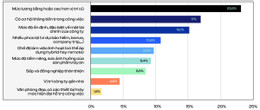
However, beneath this veneer of stability, the industry is poised for significant movement. The data indicates that approximately 65% of current IT personnel are either actively seeking new employment opportunities or are planning to transition to new roles within the next six to 12 months. This impending churn is driven by a desire for better financial compensation, increased career advancement opportunities, and a search for organizational stability—particularly in the face of shifting global economic conditions.
The Premium on AI Expertise
Perhaps the most striking finding in the Navigos Group report is the direct correlation between AI skill sets and salary growth. In a competitive market where specialized talent is scarce, companies are aggressively bidding for individuals who can bridge the gap between traditional software development and AI-driven workflows.
According to the survey, 62% of the nearly 500 enterprises involved in the research confirmed that they are paying a premium for AI-proficient staff compared to traditional IT roles. Specifically, 43.7% of these companies reported that their support salaries for AI-specialized positions are 10% to 20% higher than the market average for standard roles, while an additional 18.4% of companies stated they are paying premiums ranging from 20% to 50%. This trend underscores a growing urgency among businesses to implement AI-based solutions to drive operational efficiency, product development, and data analysis.
Shifting Requirements and Recruitment Challenges
The definition of a "hard-to-fill" role has also evolved. The report notes that 25.6% of recruitment efforts for product management and leadership positions are currently facing significant hurdles. The primary reason cited by employers is a misalignment between candidate skill sets and the increasingly complex technical requirements of these roles.
As organizations pivot toward AI-integrated operations, the demand for traditional software development roles remains high, but with a new emphasis on integration capabilities. Backend and Frontend Developers remain the most sought-after positions, accounting for 22.5% of projected hiring needs for 2025. This is followed by the "Product Owner/Product Manager/Project Manager" cohort at 15.7%. Employers are no longer looking for developers who can simply write code; they are searching for professionals who understand how to deploy AI agents, leverage Machine Learning models, and maintain robust security protocols within an AI-first architecture.

AI Integration and the Changing Daily Workflow
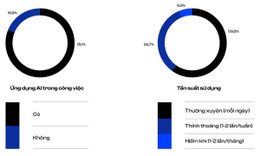
The adoption of AI is no longer a peripheral concern for IT professionals; it is becoming central to their daily operations. The Navigos report highlights that over 80% of IT personnel surveyed are already using AI tools to assist in their work, with nearly 60% of that group utilizing these tools on a daily basis.
This widespread adoption is fundamentally changing the nature of work. For programmers, AI-assisted coding is drastically reducing the time required for routine tasks like boilerplate generation, debugging, and initial testing phases. For Quality Assurance (QA) engineers, AI is automating the creation of test scripts, allowing for more comprehensive coverage in less time.
Phan Thanh Hien, Director of Product and Technology at Navigos Group, emphasizes that this transition is not merely a tool upgrade but a fundamental shift in the professional skill set. "Those who know how to harness the power of AI will far outpace those who continue to follow traditional methods," Hien noted. "There is a very real risk of obsolescence for those who refuse to adapt to these new methodologies."
Implications for the Future Workforce
The emergence of Generative AI, while creating new opportunities for efficiency, has also created a new form of "skills gap." The pressure is now on both the employee and the employer. For employees, the challenge lies in constant upskilling—learning how to interact with Large Language Models (LLMs), understanding prompt engineering, and maintaining a high level of critical oversight over AI-generated outputs.
For employers, the burden is on fostering a culture that encourages AI adoption while maintaining quality control. The data shows that even as automation becomes more pervasive, the role of human judgment in evaluating, testing, and refining AI-driven solutions remains paramount. The report suggests that businesses must invest in continuous training programs and internal policy frameworks that guide the ethical and effective use of these technologies.
A New Recruitment Frontier
The survey also touched upon the changing channels through which IT professionals seek employment. While traditional job boards and professional networking platforms remain dominant, there is a clear trend toward the diversification of recruitment sources. Even newer social media platforms like Threads are being tapped into, with 4.4% of IT professionals using the platform to seek job opportunities and 2.4% of companies using it to reach potential candidates. This diversification suggests that the modern IT professional is increasingly mobile, tech-savvy, and willing to explore non-traditional avenues to advance their careers.
Conclusion and Strategic Recommendations
The findings from Navigos Group serve as a clear indicator for the Vietnamese IT industry. As we head into 2025, the market is moving toward a model where AI literacy is no longer a "nice-to-have" attribute but a foundational requirement.
The path forward for IT professionals is clear: they must embrace a flexible mindset and remain committed to lifelong learning. Developing a proficiency in AI tools—whether it be for coding, project management, or data analytics—will be the defining factor in career longevity and financial compensation.
For corporations, the message is equally important. Investing in the human element—training, upskilling, and building an AI-native organizational culture—is the only way to retain top-tier talent in an increasingly volatile and competitive landscape. The companies that successfully integrate AI while empowering their workforce to master these tools will be the ones that lead the market in the coming years. By prioritizing human-AI collaboration, the Vietnamese tech sector is well-positioned to maintain its momentum in the global digital economy.