Super El Niño Reaches Historical Thresholds Triggering Unprecedented Nationwide Heatwaves Across Vietnam


The meteorological landscape of Vietnam is currently experiencing a profound and alarming shift, driven by the convergence of a historically intense El Niño event and overarching global climate change. Throughout the month of October, empirical data compiled by national and international weather agencies revealed a disturbing frequency of extreme temperature anomalies. Within a compressed twenty-day window, the country recorded an astonishing 59 instances where daily maximum temperatures either matched or surpassed historical records established over decades of observation. This meteorological phenomenon has blanketed the nation in unseasonal warmth, setting the stage for what climatologists warn could be a severe dry season characterized by acute water scarcity, agricultural disruption, and an early onset of saline intrusion in the Mekong Delta.
The unfolding climate crisis is rooted in oceanic and atmospheric dynamics that have been intensifying throughout the year. According to updates released by the Climate Prediction Center of the U.S. National Oceanic and Atmospheric Administration (NOAA), sea surface temperatures in the critical Niño 3.4 region have risen to levels 2.5 degrees Celsius above normal averages. Further east, anomalies in the Niño 3 region reached 3.6 degrees Celsius, while the Niño 1-2 region recorded a staggering deviation of 4.4 degrees Celsius above the historical baseline. These metrics underline the unprecedented scale of the current warming cycle, with international forecasting models indicating an 83 percent probability that this super El Niño will persist with extraordinary strength through the peak winter months of January to March, potentially ranking as one of the most powerful warming events in modern observational history.
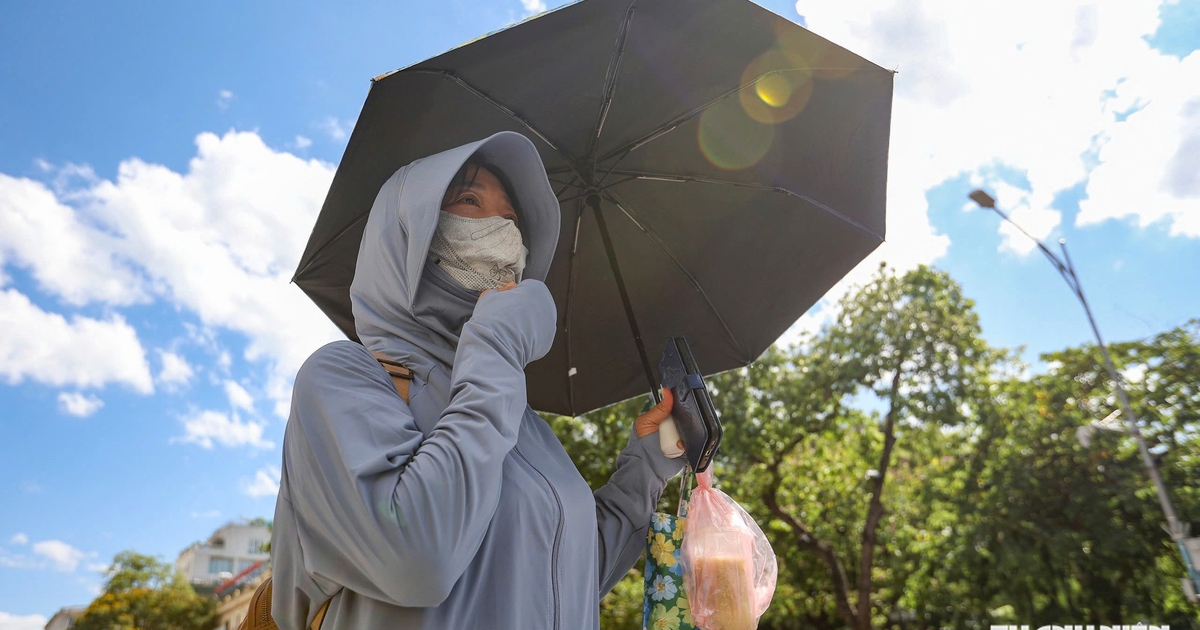
Within Vietnam, the National Center for Hydro-Meteorological Forecasting (NCHMF) has corroborated these alarming trends, noting that the country’s weather patterns are increasingly dictated by this compounding thermal energy. While the northern provinces experienced an initial touch of cool air early in September—arriving three to five days ahead of the historical multi-year average—this respite proved fleeting. The subsequent weeks of September and October saw sweeping heatwaves reemerge across the northern region, with daytime highs consistently hovering between 35 and 37 degrees Celsius, and occasionally exceeding the 37-degree mark.
The chronological escalation of these temperature records highlights the unprecedented nature of the autumn season. At the Lang meteorological station in Hanoi, the mercury soared to 38.4 degrees Celsius on September 30, surpassing the previous record of 38.2 degrees Celsius set just weeks earlier on September 8. In the mountainous province of Sơn La, the Yên Châu station recorded 38.3 degrees Celsius on October 3, eclipsing the previous historical high set on October 23, 2019, by 0.8 degrees Celsius. Coastal areas were similarly impacted; the Hòn Dấu station in Hải Phòng registered 37.2 degrees Celsius on October 3, shattering the 2014 record of 34.8 degrees Celsius. Further inland, the Phú Hộ station in Phú Thọ recorded 35.3 degrees Celsius, breaking a benchmark that had stood since 1995. Across the entire northern region, average temperatures remained 1.5 to 2 degrees Celsius above historical norms, turning what is traditionally a transitional cooling period into a continuation of oppressive summer heat.
The heat anomalies, however, were not confined to the north. Stations across the central and southern regions similarly documented record-breaking warmth. In Quảng Trị Province, the Tuyên Hóa station recorded 37 degrees Celsius on October 4, exceeding the historical mark of 36.4 degrees set in 2003. In the southern economic hub of Đồng Nai, Biên Hòa station reached 36.2 degrees Celsius on October 1, breaking its October 2025 record, while the Nhà Bè station in Ho Chi Minh City recorded 35.2 degrees Celsius on the same day, surpassing a threshold established in 2017.
When viewed comprehensively, the statistical accumulation of these weather events underscores the severity of the climate pressure. During the first twenty days of October alone, Vietnam documented 59 instances of historical temperature thresholds being broken, compared to 25 instances in September and 17 in August. Climatologists emphasize that while El Niño serves as the primary regional catalyst, its impacts are inextricably amplified by the long-term trajectory of global warming, creating an environment where extreme weather events are no longer isolated anomalies but an escalating baseline.
Precipitation Patterns Reflect Extreme Polarization
Compounding the temperature anomalies, the current El Niño cycle has severely disrupted regional rainfall distribution, engendering a polarized climate characterized by severe localized droughts in some areas and torrential, record-breaking downpours in others. Rainfall amounts in the northern mountainous provinces and the north-central corridor spanning from Thanh Hóa to Nghệ An fell 50 to 80 percent below multi-year averages. Conversely, other regions experienced precipitation levels 30 to 70 percent above normal, with certain areas in the Southeast recording rainfall totals that exceeded historical baselines by 80 to 120 percent.
The intensity of these episodic downpours has repeatedly rewritten historical meteorological logs. In late September, the Quy Nhơn weather station recorded a daily rainfall of 176 millimeters, surpassing the previous record of 144.9 millimeters set in September 2022. In Phan Thiết, precipitation reached 176.8 millimeters, overshadowing the 122.8 millimeters recorded in September 1962. Most dramatically, the Phan Rí station registered 213.6 millimeters of rainfall on September 23, nearly 2.6 times the previous record of 82.6 millimeters set in 2018.
This trend of intense precipitation persisted into October. The Diên Biên station logged 169.8 millimeters of rain on October 5, easily surpassing the 97.2 millimeters recorded on the same date in 2015. Meanwhile, continuous heavy rainfall between October 4 and October 10 inundated the central provinces from Huế to Quảng Ngãi, delivering cumulative totals ranging from 300 to 500 millimeters, and significantly higher in isolated pockets. This juxtaposition of severe drought conditions in northern watersheds alongside extreme flood events in central and southern coastal zones illustrates the increasing volatility of Vietnam’s contemporary climate profile.
Implications for Agriculture, Hydropower, and Water Security
As the nation transitions deeper into the dry season, the convergence of high temperatures and deficient rainfall poses profound systemic risks to agriculture, energy generation, and freshwater security. Associate Professor Dr. Trần Bá Hoằng, Director of the Southern Institute of Water Resources Research (SIWRR), has issued critical warnings regarding the prolonged duration of the super El Niño event, which is projected to extend its influence through March 2027.
According to projections from SIWRR, rainfall across multiple key river basins is expected to fall 20 to 40 percent below normal during the upcoming dry season. Consequently, water reserves in numerous regional reservoirs are forecasted to remain 10 to 30 percent below their designed storage capacity. This deficit threatens to constrain hydroelectric power generation and municipal water supplies, necessitating the implementation of strict water-allocation hierarchies. Dr. Hoằng emphasizes that water distribution must adhere to a strict order of priority: safeguarding freshwater for domestic sanitation and drinking purposes must take absolute precedence, followed by industrial and commercial services, with agricultural production managed according to available regional supplies. In agricultural sectors facing severe deficits, authorities may be forced to curtail irrigation to conserve vital resources.
The Mekong Delta Faces Early and Severe Saline Intrusion
Of particular concern is the Mekong Delta, where the compounding effects of upstream hydrological shifts and low freshwater discharge are projected to trigger early and severe saline intrusion. Historical precedents from the severe dry season of 2019-2020 serve as a critical baseline for developing preemptive response strategies. Current forecasts indicate that saline intrusion could penetrate deep into the delta river systems as early as late December 2026.
To mitigate potential agricultural devastation, agricultural experts and water management authorities have formulated comprehensive local response protocols. Farmers across the Mekong Delta are strongly advised to accelerate their crop schedules for the upcoming Winter-Spring planting season, ensuring that sowing is fully completed before December 2026. This strategy aims to harvest crops prior to the peak salinity intrusion period expected between late January and early February 2027.
Concurrently, local authorities are mobilizing communities to maximize water conservation measures. Residents are encouraged to dredge and clear local canal networks, ponds, and household reservoirs to store maximum volumes of freshwater during favorable tidal windows. Because salinity levels fluctuate significantly in accordance with tidal cycles, communities are instructed to closely monitor hydrological bulletins, extracting freshwater into local storage systems only during periods of low tide when saltwater wedges retreat downstream.
Conclusion and Future Outlook
The convergence of historical temperature highs, erratic precipitation, and an intensifying super El Niño underscores the urgent need for climate resilience and adaptive resource management in Vietnam. As the country navigates the complex challenges of unseasonal warmth in the north and looming drought and salinity threats in the south, coordinated institutional planning and proactive community engagement will remain essential to safeguarding national food security, public health, and economic stability in an era of rapid environmental change.