
The landscape of Vietnam’s premium seafood market is undergoing a significant transformation as imports from Canada, particularly snow crab and lobster, continue to surge. Driven by competitive pricing, consistent quality, and favorable trade conditions, Canadian seafood has firmly established itself as a staple in high-end dining and retail sectors across Vietnam. Over the past two years, the import value of these products has seen a remarkable growth trajectory of nearly 40%, reflecting a deepening trade relationship between the two nations.
A Sustained Upward Trend in Import Statistics
According to official data from the General Department of Vietnam Customs, the import value of Canadian seafood products has demonstrated consistent growth over the past three years. In 2023, Vietnam imported $44 million worth of Canadian seafood. This figure rose to $49 million in 2024, followed by a substantial jump to $61 million in 2025. The momentum has remained strong throughout the current year, with Vietnam importing $43.2 million worth of Canadian seafood in the first eight months alone—a 28.2% increase compared to the same period in the previous year.
This rapid growth is not merely a statistical anomaly but the result of a strategic pivot by Canadian exporters, particularly those based in Nova Scotia, to diversify their international market reach. As global demand for live lobster saw a contraction of 19% in other traditional markets, Nova Scotia’s seafood industry intensified its focus on the burgeoning Vietnamese consumer base, which has shown an increasing appetite for high-quality imported marine delicacies.
The Role of Nova Scotia in the Canada-Vietnam Seafood Trade
Nova Scotia, a maritime province on Canada’s eastern coast, stands at the forefront of this export drive. It currently serves as the leading province in Canada for seafood exports. For the region, Vietnam has become the seventh-largest export market. During a recent trade mission to Vietnam in September, Jason Hollett, Deputy Minister of Agriculture, Fisheries, and Aquaculture for Nova Scotia, emphasized the strategic importance of this relationship.
"Nova Scotia’s premium seafood products now account for 29% of the total value of Canada’s global seafood exports," Hollett stated during his visit to facilitate business-to-business connections. "Vietnam represents a vital partner in our global supply chain strategy, offering a sophisticated consumer base that appreciates the quality of our cold-water harvests."
In 2025, snow crab emerged as the top export from Nova Scotia to Vietnam by volume, with a trade value of approximately 35 million Canadian dollars (CAD), equivalent to roughly $25.3 million USD. Lobster followed, contributing approximately 8 million CAD (about $5.8 million USD) to the province’s export revenue.
Market Dynamics and Consumer Accessibility
At the retail level in major Vietnamese urban centers such as Ho Chi Minh City, the presence of Canadian seafood is increasingly ubiquitous. Store managers in high-end districts, such as the shops located on Le Thanh Ton Street in District 1, report that Canadian products are among the most sought-after items due to their reputation for freshness and reliability.
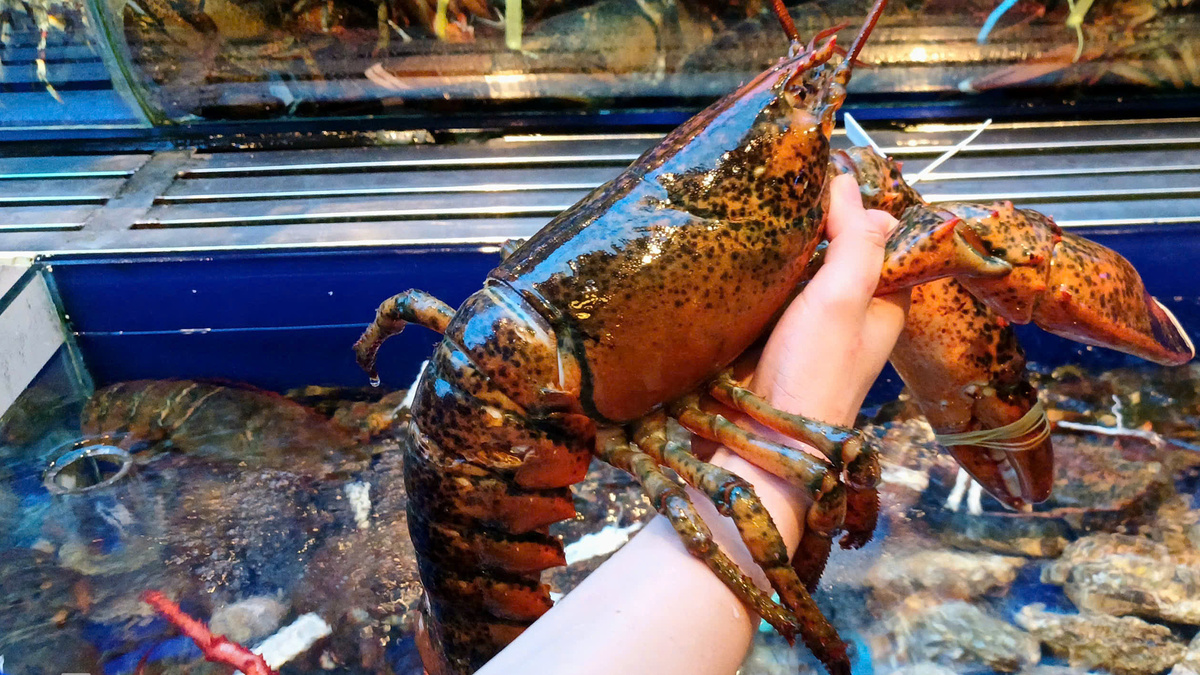
The pricing strategy for these products has played a critical role in their market penetration. For instance, Canadian lobster (500–600 grams) is typically priced between 950,000 VND and 1.1 million VND per kilogram, while larger specimens (one kilogram or more) range from 1.3 million to 1.4 million VND per kilogram. These price points are significantly more accessible than Australian rock lobster, which often retails at approximately 3.5 million VND per kilogram, or other premium species like blue lobster, which can cost 1.5 million VND per kilogram.
Similarly, live Canadian snow crab is currently retailing for approximately 1.4 million to 1.5 million VND per kilogram, representing a price advantage of about 30% compared to other imported crab varieties. Even Canadian oysters, priced at roughly 400,000 VND per kilogram, present a strong value proposition compared to certain French oyster varieties that can reach prices as high as 1 million VND per kilogram.
The Impact of Trade Agreements
The success of Canadian seafood in Vietnam is not solely due to market demand but is also bolstered by institutional trade frameworks. Tran Van Truong, General Director of Hoang Gia Seafood, noted that the stability of prices and competitive logistics have been instrumental in attracting a broader demographic of customers.
A significant contributing factor is the Comprehensive and Progressive Agreement for Trans-Pacific Partnership (CPTPP). Under this multilateral trade agreement, many Canadian seafood products benefit from a 0% import tariff. This preferential tariff treatment has allowed importers to reduce costs significantly, providing a price cushion that is ultimately passed on to the consumer. By mitigating the overhead costs associated with international trade, the CPTPP has effectively made high-end Canadian seafood an "attainable luxury" for the growing middle and upper classes in Vietnam.
Broader Economic Implications and Future Outlook
The sustained growth of this trade segment carries several implications for both the Vietnamese and Canadian economies. For Vietnam, the influx of high-quality imports encourages higher standards in the domestic cold-chain logistics and retail sectors. Local distributors are increasingly investing in advanced aeration systems, temperature-controlled transport, and specialized retail environments to ensure the "fresh from the ocean" quality that consumers now expect.
For Canada, the diversification of export markets is a critical hedge against volatility in the global economy. By deepening ties with Southeast Asian markets, Canadian producers are better equipped to weather downturns in the United States or European markets. The ongoing dialogue between Canadian officials and Vietnamese enterprises suggests that this partnership is expected to expand beyond raw product exports. Future initiatives may include collaborative efforts in aquaculture technology transfer, sustainable harvesting research, and enhanced food safety certification programs.
Furthermore, the shift in consumer behavior—moving from viewing these products as rare, expensive treats to viewing them as regular high-end dietary choices—indicates a long-term shift in the Vietnamese culinary landscape. As urban populations continue to grow and disposable income levels rise, the demand for sustainable, wild-caught marine protein is projected to maintain its upward trajectory.
Conclusion
The surge in Canadian snow crab and lobster imports into Vietnam is a multifaceted success story. It represents the intersection of global trade policy, such as the CPTPP, with the evolving tastes of a dynamic Southeast Asian market. Through the persistent efforts of Nova Scotian exporters and the readiness of the Vietnamese market to embrace premium international products, the trade relationship between the two countries has reached a new level of maturity. As both sides continue to refine their supply chains and deepen their collaborative efforts, the Canadian-Vietnamese seafood trade is set to remain a vibrant and essential component of the regional food economy for the foreseeable future.