Pentagon Dismisses Army Lt. Gen. Brett Sylvia Amid Broad Military Restructuring and Rising Tensions with Iran

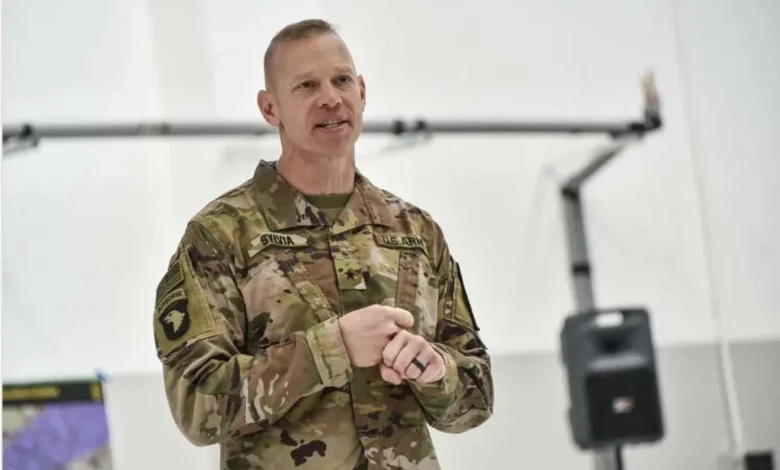
The United States Department of Defense has officially removed Army Lieutenant General Brett Sylvia from his vital position as the Director of Strategy, Plans, and Policy (J5) within the Joint Chiefs of Staff. The decision, which took effect late on October 28, sent shockwaves through Washington’s national security apparatus and further intensified ongoing debates regarding sweeping personnel changes inside the Pentagon. While official statements from military leadership frame the decision as part of a routine effort to streamline the armed forces, defense analysts and insiders point to a complex backdrop of shifting strategic priorities, most notably the escalating tensions between Washington and Tehran.
The abrupt dismissal of Lieutenant General Sylvia highlights an increasingly aggressive posture by the civilian leadership under Secretary of War Pete Hegseth, who has overseen the departure of nearly 20 high-ranking military and civilian officials since taking office. The decision comes at a critical geopolitical juncture as the United States actively constructs contingency plans for potential military conflicts in the Middle East. With the administration of President Donald Trump repeatedly hinting at large-scale military operations targeting Iran—including the potential resumption of a 40-day bombing campaign reminiscent of the opening phase of US-Israeli operations launched in late February—the structural integrity and responsiveness of the Pentagon’s strategic planning directorate have come under unprecedented scrutiny.
Chronology of Leadership Shuffles and the J5 Directorate
Lieutenant General Brett Sylvia’s removal marks yet another high-profile disruption within the J5 directorate, a foundational component of the military’s strategic architecture responsible for formulating comprehensive military strategies and contingency plans. The J5 advises both the Chairman of the Joint Chiefs of Staff and the President of the United States on global defense postures, alliance management, and force deployment strategies.
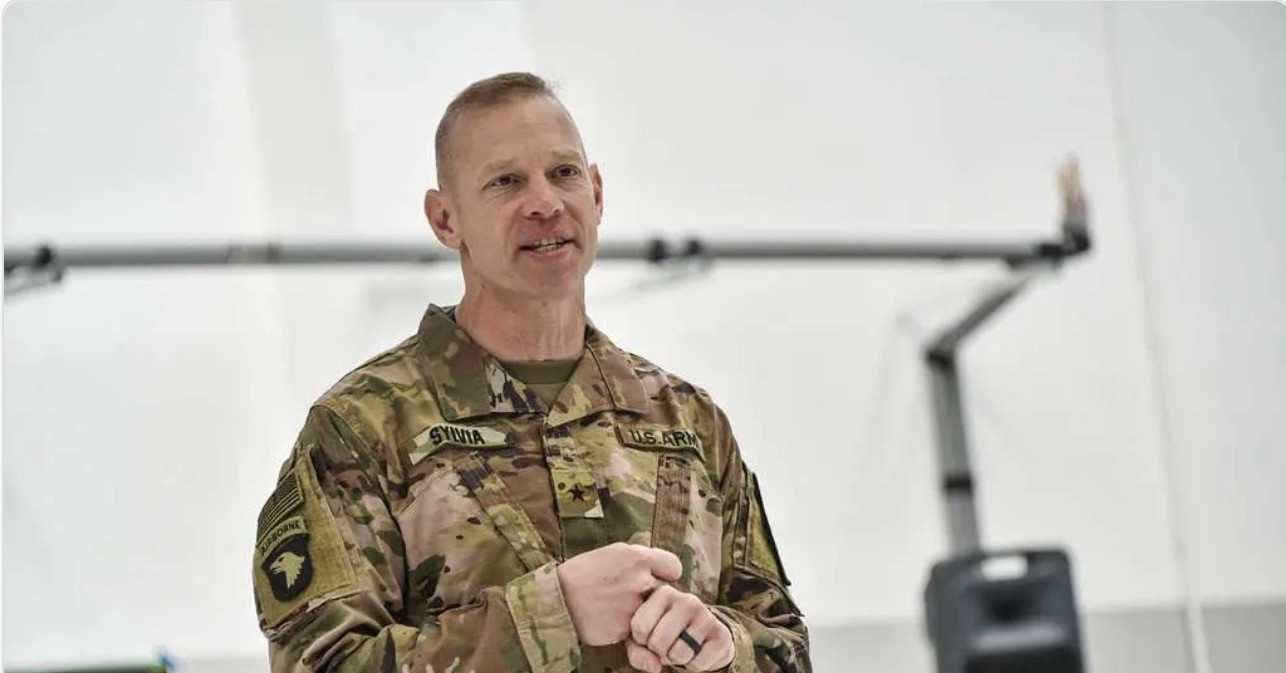
Before assuming the role of Director, Sylvia served as the Deputy Director of the same agency, positioning him as an experienced insider trusted with long-term strategic forecasting. His ascension to the top J5 post followed a turbulent period involving his predecessor, Lieutenant General Joseph McGee. Just a year prior, McGee was forced into early retirement following widespread media reports detailing irreconcilable differences and sharp strategic disagreements with Secretary of War Pete Hegseth and the Chairman of the Joint Chiefs of Staff, General Dan Caine.
The rapid turnover within the upper echelons of the J5 directorate highlights an unprecedented period of internal friction between legacy military leadership and the incoming administration’s political appointees. Observers have noted that successive dismissals at this level risk creating institutional memory gaps and procedural inertia at a time when the Department of Defense faces multi-theater challenges ranging from the Middle East to the Korean Peninsula and Eastern Europe.
The Broader Purge: Streamlining or Ideological Realignment?
Secretary of War Pete Hegseth has consistently defended the sweeping personnel changes, describing them as essential steps toward trimming an unwieldy, bureaucratic leadership structure. According to the Pentagon’s official narrative, these strategic dismissals and early retirements are designed to enhance operational efficiency, accelerate decision-making cycles, and ensure that the armed forces remain lean, adaptable, and fully aligned with the Commander-in-Chief’s vision for modern warfare.
However, critics, defense policy experts, and retired military officials have offered a starkly different interpretation. Many view the systematic removal of senior generals and flag officers not as mere administrative downsizing, but as a calculated ideological purge aimed at sidelining officers who emphasize institutional process, multilateral alliances, and conventional strategic doctrine over rapid, politically driven escalations.

The nearly 20 high-level departures executed under Hegseth’s tenure have disproportionately affected policy-heavy offices like the J5, intelligence directorates, and joint operations commands. Critics argue that replacing seasoned planners with officers perceived as more compliant with political directives could erode the traditional non-partisan advisory role of the military, potentially undermining long-term strategic stability and strategic depth.
Rising Middle East Tensions and the Iranian Threat Horizon
The timing of Lieutenant General Sylvia’s dismissal is inextricably linked to the deteriorating security situation in the Middle East and Washington’s increasingly hawkish rhetoric toward Tehran. Over recent weeks, President Donald Trump and senior national security advisors have ramped up warnings regarding Iran’s nuclear ambitions and regional proxy activities, raising the specter of direct military intervention.
Intelligence briefings shared within Washington indicate that the Pentagon has been tasked with updating comprehensive war plans capable of neutralizing Iranian nuclear infrastructure and ballistic missile networks. These preparations include evaluating the feasibility of re-enacting intensive, sustained aerial campaigns akin to the expansive air strikes witnessed during the opening weeks of the US-Israeli coordinated operations earlier this year.
Because the J5 directorate is the primary engine for drafting these operational concepts, the sudden removal of its director raises critical questions about how these plans are being formulated and vetted. Strategic planners must balance immediate political directives with the logistical realities of sustained multi-service campaigns, regional alliance management, and the risk of wider regional escalation involving proxy networks across Lebanon, Syria, Yemen, and Iraq.

Global Ripple Effects: Concurrently Unfolding Crises
The shake-up in Washington occurs against a backdrop of simultaneous geopolitical crises across the globe, compounding the challenges faced by U.S. strategic planners. While the Pentagon refocuses its attention on the Middle East, other global hotspots continue to demand intense military and intelligence bandwidth.
In the Indo-Pacific region, security concerns escalated following recent missile tests by North Korea. South Korean military authorities reported that Pyongyang launched approximately 12 short-range ballistic missiles toward the waters off the eastern coast of the Korean Peninsula, signaling continued defiance and testing the readiness frameworks of the U.S.-ROK alliance.
Simultaneously, domestic political and security developments in allied nations continue to send shockwaves through regional security structures. In South Korea, a special prosecution team formally requested the death penalty for former President Yoon Suk-yeol during an appellate court hearing, stemming from his controversial and short-lived imposition of martial law. The ongoing legal and political fallout in Seoul underscores the fragility of democratic institutions in key frontline states upon which Washington relies for regional deterrence.
Closer to home, the infrastructure supporting America’s strategic nuclear complex has also experienced unexpected disruptions. The U.S. Department of Energy recently confirmed that a significant fire broke out at a critical nuclear research facility in South Carolina, a vital site supporting the nation’s nuclear deterrent and aerospace programs. Although officials moved quickly to contain the incident and assure the public of facility safety, the event served as an unwelcome reminder of the domestic vulnerabilities running parallel to international security pressures.
Implications for U.S. National Security Strategy
The removal of Lieutenant General Brett Sylvia from the J5 directorate is far more than an isolated administrative personnel change; it is a symptom of a profound transformation within the American national security establishment. As the Pentagon transitions toward a leaner, more politically responsive leadership model under Secretary Hegseth, the mechanisms of long-term strategic planning are undergoing a stressful evolutionary phase.
With the threat of conflict with Iran looming large, the ability of the Department of Defense to execute coherent, well-vetted, and strategically sound contingency plans will be severely tested. The loss of experienced planners like Sylvia and his predecessor McGee risks leaving a void in institutional expertise just as Washington contemplates some of its most consequential military decisions in decades. Whether the new leadership structure can successfully balance operational agility with rigorous strategic foresight remains one of the most critical questions facing U.S. foreign and defense policy today.