The performance art scene in Hanoi has been revitalized with the long-awaited return of the critically acclaimed bamboo circus production, Làng tôi (My Village). Premiering on October 28 at the Hanoi Bamboo Circus Center, housed within the historic Cong Nhan Theater, the show serves as a poignant, visceral exploration of rural Vietnamese life. By synthesizing traditional acrobatics with indigenous musical heritage, the production bridges the gap between historical agricultural practices and contemporary performance art.
A Sensory Journey Through the Rural Soul
Stepping into the theater, the audience is immediately transported away from the urban clamor of modern Hanoi. The soundscape—a meticulously curated blend of chirping birds, the gentle rustling of wind through foliage, and the rhythmic cadence of village life—creates an immersive atmosphere of pastoral tranquility. The production begins at the break of dawn, signaled by the familiar crow of a rooster, and proceeds to weave a narrative tapestry of village existence.
The choreography translates the daily toil of farmers into gravity-defying acrobatic feats. Viewers witness the artistic representation of young women sowing seeds, groups of men dancing with ropes, and the communal effort required to cultivate rice. These scenes are not merely athletic displays; they are dramatizations of the symbiotic relationship between the Vietnamese people and their environment. As the performance transitions into the evening, the lighting shifts to represent the starry night sky, accompanied by traditional lullabies, which serve to evoke a profound sense of nostalgia and collective memory.
The Symbolic Power of Bamboo
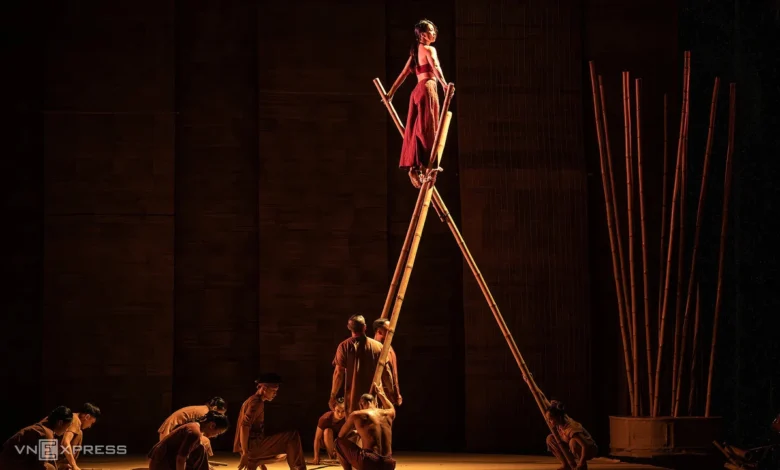
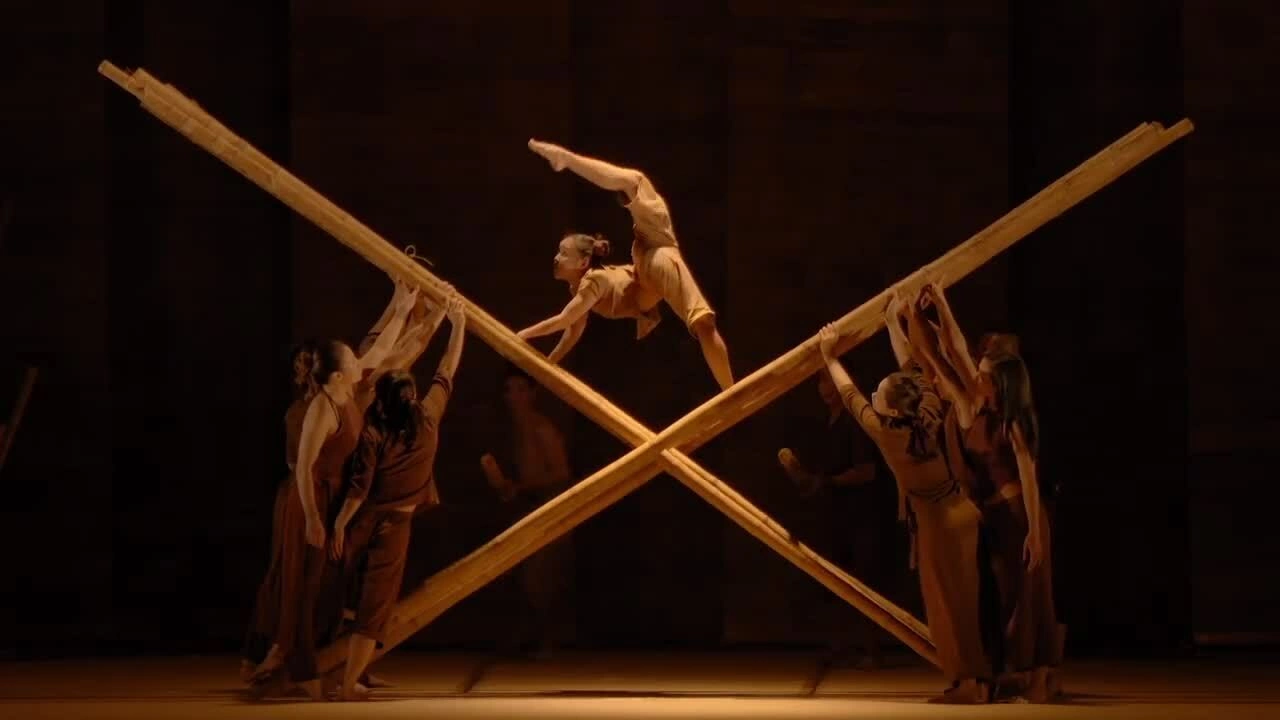
At the heart of the production is the bamboo plant, a quintessential symbol of Vietnamese culture and resilience. In Làng tôi, bamboo ceases to be a mere prop and becomes the central character. The performers utilize dozens of bamboo stalks to construct temporary structures—from scaffolding and bridges to makeshift boats and swing sets. This material adaptability mirrors the resourcefulness of the rural population.

The structural engineering involved in the show is significant. Artists manipulate bamboo to create rotating platforms and precarious balance beams, requiring immense physical strength and precise timing. When the bamboo is used to form the hull of a boat or the framework of a home, it emphasizes the theme of shelter and protection. The sound of bamboo hitting the stage, combined with the live, unplugged musical accompaniment, creates an organic, percussive rhythm that is both raw and sophisticated.
Historical Context and Chronology of the Production
The genesis of Làng tôi dates back to 2005, when it was first conceptualized as a project to preserve and modernize traditional Vietnamese performance arts. Since its international debut in 2009, the show has undergone several iterations, touring extensively across Europe, Asia, and Australia.
The production’s international journey serves as a barometer for its global appeal:
- 2005: Initial concept development and creation.
- 2009: Major international tour commences, reaching audiences in France, Belgium, Germany, Spain, Greece, Hungary, Hong Kong, and Australia.
- 2010–2019: Sustained global presence, with over 100,000 tickets sold and significant critical acclaim from international media outlets such as The Guardian and CNN.
- 2020–2023: Operations significantly disrupted by the global COVID-19 pandemic, leading to a temporary hiatus in public performances.
- 2026: Official return to the Hanoi stage, marking a symbolic "homecoming" for the troupe after years of international success.
Production Leadership and Artistic Vision
The success of the production is attributed to a veteran creative team led by director Tuan Le. Music director Nguyen Nhat Ly and creative director Nguyen Lan Maurice have been instrumental in maintaining the show’s aesthetic integrity. The current iteration features a diverse cast of 21 performers, ranging in age from 18 to 69. This intergenerational dynamic is intentional, as the show aims to pass down traditional skills while integrating the fresh, energetic perspectives of Gen Z performers.
Tuan Le has consistently emphasized the importance of individuality within the troupe. In recent interviews, he noted that his goal was not to turn the performers into generic village archetypes, but to allow them to express their own histories. For example, performer Bich Du, a member of the Muong ethnic minority, brought his background as a teacher into his role, which was then expanded by the director to include music and dance elements. This collaborative process ensures that the performance feels authentic rather than rehearsed.
Data and Impact Analysis
Làng tôi represents more than just entertainment; it is a vital case study in cultural preservation. By integrating traditional instruments such as the dan moi (mouth harp), the ken (oboe), and the drum, the production provides a platform for these instruments to be heard by modern audiences.
The economic and cultural implications of such a production are twofold. Firstly, it provides a sustainable model for the arts in Vietnam, demonstrating that traditional forms can be commercially viable on an international scale. Secondly, the show has become a staple of cultural tourism in Hanoi, attracting both domestic and international visitors who seek a deeper understanding of the country’s rural roots. The decision to establish a recurring, scheduled residency at the Cong Nhan Theater, starting November 3, indicates a commitment to institutionalizing this art form within the capital’s cultural infrastructure.
The Evolution of the Performance
The inclusion of younger performers from the Gen Z demographic has been a strategic focus for the creative team. According to director Tuan Le, the challenge is not in training them to perform the stunts, but in teaching them the nuance of rural life—a lifestyle that many urban-born youths have never experienced. The troupe spends significant time sharing personal stories and ancestral memories, which are then distilled into the performance. This pedagogical approach ensures that the "soul" of the village is accurately captured and transmitted, regardless of the performer’s background.
The lighting design in the current version has also been noted for its subtlety. By focusing light tightly on the performers, the production highlights the facial expressions and micro-movements that convey the emotional weight of the narrative. This minimalist approach stands in stark contrast to high-tech, spectacle-heavy shows, instead opting for a more intimate and resonant experience.
Implications for the Future of Vietnamese Arts
The success of Làng tôi serves as a roadmap for other Vietnamese cultural initiatives. By prioritizing high-quality production values while remaining grounded in local folklore, the troupe has managed to transcend the "exotic" label often assigned to traditional performances. It has achieved a status as a legitimate work of contemporary circus theater.

Looking forward, the establishment of the Hanoi Bamboo Circus Center at the Cong Nhan Theater provides a permanent home for this work, allowing for consistent training and experimentation. This move is expected to bolster the local arts scene and provide a platform for new generations of performers to develop their craft. The endurance of the show—spanning two decades—speaks to the universal appeal of its themes: community, resilience, and the enduring connection between a people and their land.
As Làng tôi begins its new residency in November 2026, it stands as a testament to the idea that tradition is not a static relic, but a living, breathing entity that can evolve and adapt without losing its essence. For the audience in Hanoi, it is an opportunity to reconnect with the rhythms of the past, presented through the innovative, high-energy lens of the present. The production continues to be a point of pride for the Vietnamese cultural sector, reinforcing the country’s position as a significant contributor to the global performing arts stage.