Premature infant born at 29 weeks with congenital heart defect thrives after two months of intensive neonatal care


A significant medical success story has emerged from the Neonatal Intensive Care Unit (NICU) at Tam Anh General Hospital in Hanoi, where a baby born prematurely at just 29 weeks of gestation has been discharged in stable health. Born weighing only 1.15 kilograms and suffering from respiratory distress syndrome alongside a congenital heart defect, the infant’s survival and subsequent growth underscore the critical importance of advanced neonatal interventions and the efficacy of modern pediatric care protocols.
The Critical First Moments of Life
The infant’s journey began in an emergency delivery setting necessitated by a maternal infection. From the outset, the newborn faced significant physiological hurdles. Because the baby was born with severe respiratory distress, the medical team at Tam Anh General Hospital performed immediate life-saving interventions while the umbilical cord was still intact.
This specific technique, known as delayed cord clamping and resuscitation while the circulation is still supported by the placenta, allowed the medical team to stabilize the infant’s oxygen levels and blood volume before the cord was eventually severed. By facilitating this transition, the medical staff effectively improved the infant’s baseline physiological status, significantly reducing the risk of post-birth anemia—a common and dangerous complication in extremely low birth weight infants.
Chronology of Care and Clinical Management
Following the initial stabilization, the infant was transferred to the NICU, where the team employed a multi-faceted approach to support her immature systems.
Week 1: Stabilization and Nutritional Support
In the immediate days following birth, the infant required a combination of intravenous nutrition and nasogastric tube feeding. Because a 29-week-old infant lacks the coordinated suck-swallow-breathe reflex required for independent feeding, the medical staff gradually increased the intake of mother’s milk based on the child’s tolerance. By the fifth day, the infant was able to meet her caloric requirements entirely through enteral feeding, allowing the removal of intravenous lines.
The Cardiac Complication: Managing Patent Ductus Arteriosus (PDA)
During the initial diagnostic screening, doctors identified a Patent Ductus Arteriosus (PDA). In a fetus, the ductus arteriosus is a normal blood vessel that allows blood to bypass the lungs; however, if it fails to close after birth, it can cause a significant strain on the heart and lungs, leading to pulmonary congestion and circulatory instability. Rather than resorting to invasive surgical closure—which poses high risks for a 1.15-kilogram infant—the medical team opted for a targeted pharmacological approach. The infant responded exceptionally well to the medication, and the vessel closed without the need for surgical intervention, a major victory for the clinical team.
Respiratory Support and Transition
The infant initially required Continuous Positive Airway Pressure (CPAP) to maintain the patency of her lung alveoli and assist in gas exchange. As a premature infant, she also experienced frequent episodes of apnea (pauses in breathing). The medical staff maintained round-the-clock monitoring, adjusting the respiratory support based on real-time data. Within two weeks, the infant’s respiratory function improved sufficiently to transition from CPAP to high-flow nasal cannula oxygen therapy, and eventually, to breathing room air independently.
The Role of Maternal-Infant Bonding
As the infant’s clinical status stabilized, the medical team prioritized the implementation of "Kangaroo Care," or skin-to-skin contact. Under the guidance of the nursing staff, the mother was encouraged to hold the infant against her chest for extended periods. Research consistently shows that this practice helps regulate the infant’s body temperature, stabilizes heart rate and breathing, and promotes weight gain through the reduction of stress hormones. For this particular patient, skin-to-skin contact played a vital role in her transition to a home-ready state.
Clinical Data and Recovery Milestones
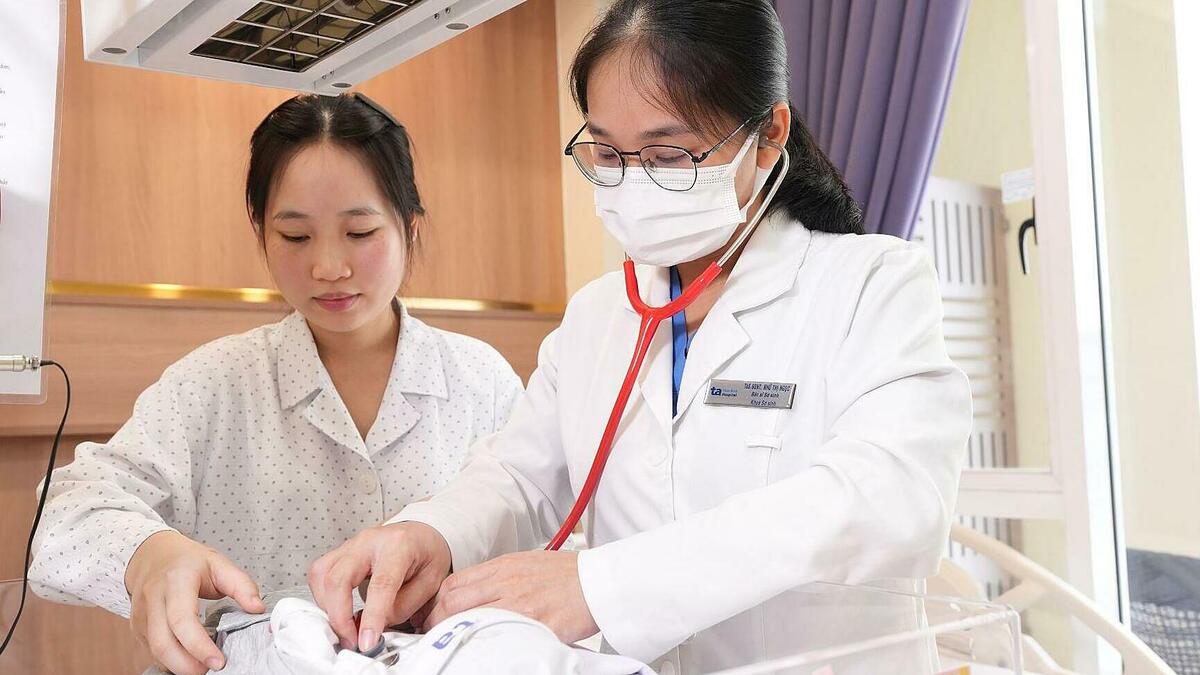
After two months of intensive, specialized care, the infant reached several crucial milestones. Her body weight nearly doubled from her birth weight of 1.15 kilograms, signaling healthy caloric absorption and metabolic function. Her thermoregulation, respiratory capacity, and neurological reflexes reached levels consistent with a healthy infant of her corrected age, meeting the necessary criteria for discharge from the hospital.
ThS.BS Nhat Thi Ngoc of the Department of Neonatology noted that the successful outcome was the result of precise, evidence-based management and the dedicated oversight of the NICU team. "The recovery of this infant serves as a testament to the advancements in neonatal technology and the importance of early, aggressive, and highly specialized interventions for premature infants," she stated.
Long-term Implications and Post-Discharge Care
The discharge of the infant is merely the beginning of her journey. Premature infants are at a higher risk for developmental delays and require a structured long-term follow-up plan to ensure they reach their full potential.
The hospital has mandated a rigorous follow-up schedule at six weeks, three months, six months, and 12 months, based on the child’s corrected age. These appointments are designed to track critical metrics, including:
- Growth parameters: Weight, height, and head circumference.
- Sensory development: Vision and hearing screenings.
- Neurological development: Fine and gross motor skills and cognitive progression.
Medical professionals emphasize that parents must remain vigilant even after returning home. Any sign of distress—such as fever, hypothermia, lethargy, sudden changes in breathing patterns, or signs of cyanosis (bluish skin)—must be addressed immediately by medical professionals.
The Broader Context of Premature Care
The survival rate of premature infants has improved significantly over the past decade due to the integration of NICUs with advanced cardiac and respiratory support systems. In Vietnam, as in many parts of the world, the focus has shifted from mere survival to the quality of life and the reduction of long-term morbidities.
The case of this infant highlights a shift toward "minimally invasive" neonatal care. By utilizing non-invasive ventilation (like CPAP), avoiding surgery where possible, and prioritizing parental involvement through skin-to-skin contact, hospitals are seeing better neurodevelopmental outcomes for babies born before the 30-week mark.
As public health infrastructure continues to evolve, the integration of these high-level neonatal care protocols across major metropolitan hospitals in Vietnam will be critical in managing the rising rates of premature births. For families facing similar challenges, this story serves as a reminder of the necessity of choosing specialized facilities equipped to handle the complex physiological needs of preterm infants. The collaborative effort between the medical team, the technology available, and the active involvement of the parents remains the gold standard for neonatal success.