El Nino Intensifies: Severe Drought and Salinity Threat Loom Over Mekong Delta for 2026-2027 as Dutch Water Management Insights Offer a Lifeline

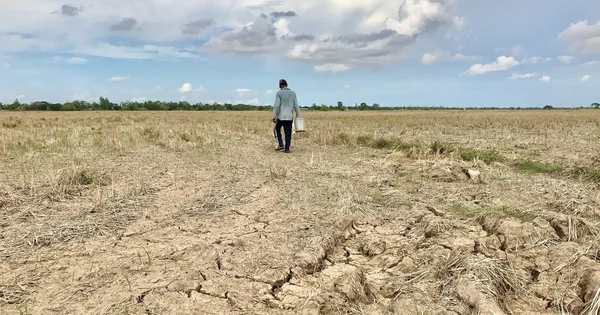
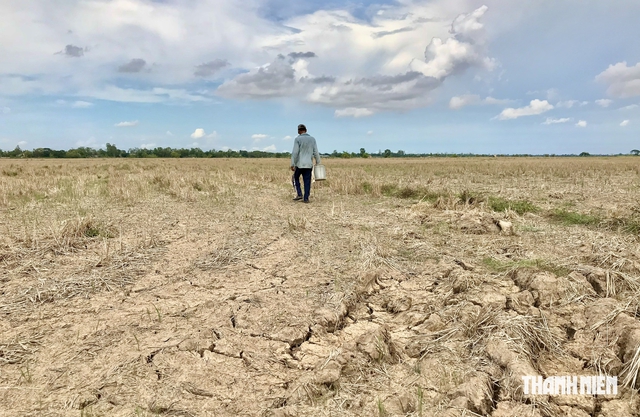
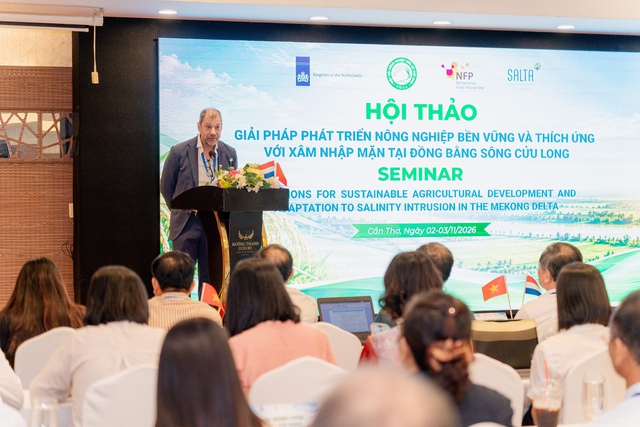
The Mekong Delta, widely recognized as Vietnam’s primary agricultural breadbasket, faces an escalating threat from intensifying El Nino phenomena heading into the 2026-2027 dry season. Meteorological and hydrological forecasts indicate that upcoming weather patterns could mirror or even surpass the historic drought and salinity crisis of 2015-2016. With approximately 86,000 hectares of agricultural production land at immediate risk of severe saltwater intrusion and prolonged moisture deficits, local authorities, agricultural associations, and international experts have mobilized. A recent collaborative high-level forum held in Can Tho, organized by the Vietnam Organic Agriculture Association (VOAA) and the SALTA Foundation from the Netherlands, brought together regional policymakers, Dutch diplomats, and representatives from six southwestern provinces to establish proactive, long-term resilience frameworks.
Background and Context of the Mekong Delta Vulnerability
The Mekong Delta spans a vast geographical area that supports roughly 20 million residents and is responsible for producing approximately 55% of Vietnam’s total rice volume, alongside 90% of the nation’s rice exports. In addition to these agricultural contributions, the region generates a significant portion of regional aquaculture and fruit production. However, this critical deltaic ecosystem is caught in a multi-front vulnerability crisis. Upstream flow regulations from the Mekong River basin, shifting marine dynamics, and localized land subsidence—measured at an average rate of 0.96 centimeters per year alongside a relative sea-level rise of 0.35 centimeters annually—have severely compromised the region’s hydrological stability.
Historically, dry season challenges have been a recurring test for the region. During the previous dry season, early saltwater intrusion materialized between January 14 and January 17, arriving roughly 15 days earlier than the multi-year historical average. Despite this premature onset, damage was successfully mitigated due to early warning systems and proactive barrier operations by local governments. However, the forecasts for the 2026-2027 cycle point toward a far more harrowing scenario.
Chronology and Projected Impact for the 2026-2027 Dry Season
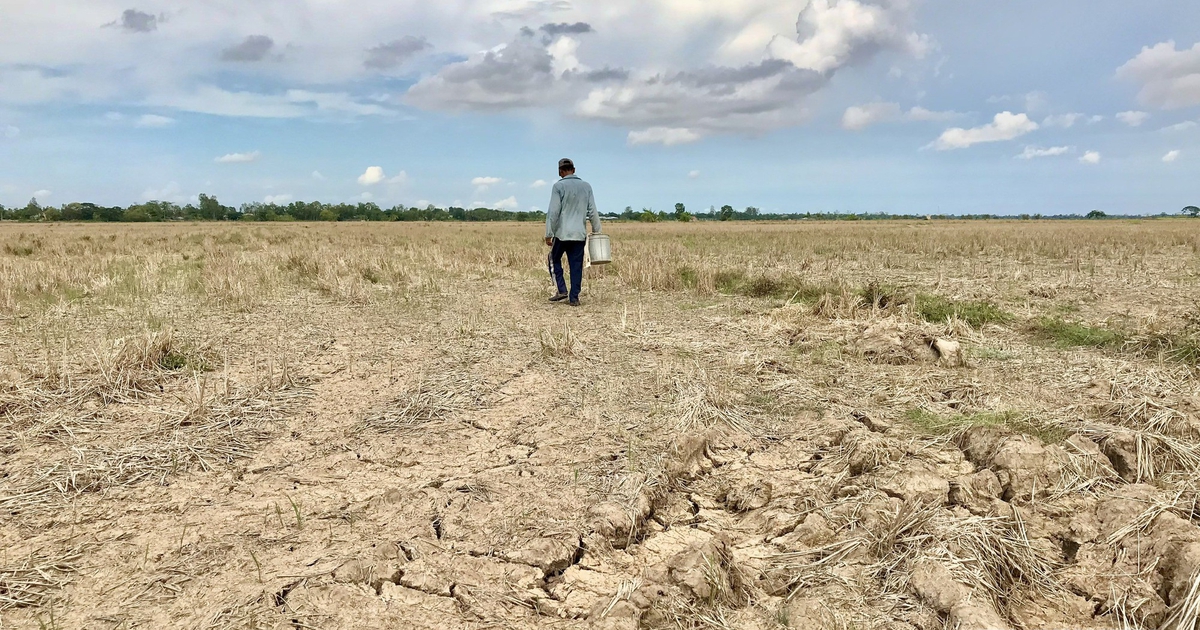
Data compiled through October 2026 confirms that an exceptionally strong El Nino event is currently developing. Projections indicate temperature anomalies ranging from 1.5 to 2.5 degrees Celsius above the multi-year average, which will drastically accelerate evapotranspiration rates against a backdrop of severely depressed precipitation levels.
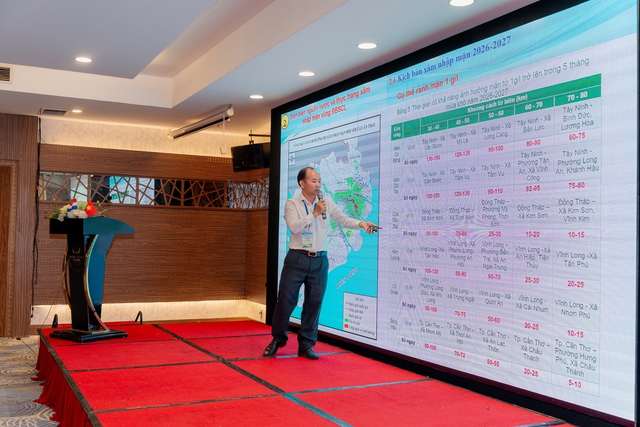
According to hydrological forecasting models provided by the Southern Institute of Water Resources Research (SIWRR), the progression of saltwater intrusion is expected to advance in distinct phases:
- December 2026: The 4 grams per liter (g/l) salinity boundary is projected to push 40 to 50 kilometers inland from the coast.
- January and February 2027: Salinity tongues are expected to penetrate deeply into the mainland, reaching distances of 80 to 85 kilometers.
- March 2027: Salinity intrusion is forecasted to peak, pushing inland between 110 and 130 kilometers from the coastline.
Dr. Tran Thai Hung, Deputy Director of the Center for Agricultural Hydrology and Water Supply at SIWRR, warned that approximately 85,800 hectares of agricultural land face direct threats. The most heavily impacted areas will likely be Ca Mau province, which accounts for roughly 30,000 vulnerable hectares, Can Tho with 22,000 hectares, and Dong Thap with 20,000 hectares, among others. In response to these projections, agricultural planners have issued strict advisories urging farmers in vulnerable zones such as Go Cong, northern Ben Tre, southern Mang Thit, and Long Phu-Tiep Nhut to adjust seasonal calendars, complete crop sowing by October, and remain vigilant against tidal surges.
Shifting Paradigms: From Dependent Farming to Circular Green Agriculture
Addressing the Can Tho forum, Mr. Nguyen Van Sy, Chairman of the Can Tho Farmers’ Association, emphasized that local agricultural communities can no longer afford passive reliance on emergency relief measures. Following recent administrative boundary realignments, Can Tho encompasses vast production areas that are directly exposed to deep-penetration salinity. Mr. Sy noted an urgent imperative to transition the regional mindset from dependent, traditional wet-rice agriculture toward circular, low-emission, green agricultural economics.
"We must move beyond theoretical recommendations printed on paper and implement tangible, practical solutions directly on the fields," Mr. Sy asserted.
Echoing this sentiment, Dr. Ha Phuoc Mich, Chairman of the VOAA, reiterated that long-term survival in the delta requires foundational strategies firmly rooted in ecological principles and organic farming models. Given the compounding pressures of rising sea levels and sinking land, short-term engineering fixes must be integrated with comprehensive land-use planning.
International Cooperation: Insights and Collaboration with the Netherlands
To bridge the gap between theoretical adaptation and practical field execution, the forum heavily featured insights from Dutch water management and agricultural experts. The Netherlands shares deep geographic parallels with Vietnam as a low-lying delta nation, where approximately one-third of the total land area sits below sea level. Furthermore, roughly 14% of Dutch agricultural land currently experiences or is at risk of salinization.
Mr. Joost van Uum, Agricultural Counsellor at the Embassy of the Netherlands in Vietnam, underscored that managing salinity requires an integrated approach combining water, soil, crop selection, and cultivation habits, rather than relying on isolated physical barriers.
"The Mekong Delta is not the Netherlands. The sharing of knowledge and technology from the Netherlands is not a one-way transfer, but a mutual learning process," Mr. Van Uum stated, noting that lessons learned from addressing salinization in Vietnam also assist Dutch authorities in managing domestic climate challenges.
Technical approaches were further detailed by Mr. Peter Prins, Chief Executive Officer of the SALTA Foundation, who characterized saltwater intrusion as an insidious, silent process that progressively degrades soil structure. He highlighted a critical vulnerability concerning data access: while farmers can easily measure salinity levels in major rivers, they often lack awareness of daily fluctuations within local canals, secondary ditches, or sub-surface aquifers, alongside a general lack of data regarding the salt tolerance thresholds of specific crops.
To combat this, SALTA has connected over 60 expert partners in the Netherlands to introduce the "Farm Coach" model. Under this initiative, agricultural specialists bring field-testing equipment directly to farms to analyze soil samples and provide localized, real-time recommendations. Mr. Prins also pointed out that while the Mekong Delta receives between 1,000 and 2,000 millimeters of rainfall annually, a significant portion flows unused into the sea. Localities must urgently invest in decentralized infrastructure to harvest and store rainwater for use during protracted dry spells.
Socio-Economic Implications and Market Linkages
From a regional research perspective, Dr. Dang Kieu Nhan from the Mekong Development Research Institute at Can Tho University drew a sharp contrast between localized farming responses. He noted that while farmers in regions like Ca Mau frequently struggle with water scarcity and soil acidification—since saline intrusion in the Delta is invariably accompanied by acid sulfate soil activation—their counterparts in the Netherlands utilize advanced monitoring frameworks to manage soil salinity dynamically.
Dr. Nhan emphasized that technical adaptation must be tightly coupled with market dynamics. Production must be reorganized through cooperatives and enterprise partnerships to build resilient value chains. Without structured market integration, singular adaptation projects risk returning to baseline vulnerabilities once project funding concludes.
Mr. Nguyen Van Cat, Chairman of the An Giang Farmers’ Association, reinforced this perspective, stating that while scientific and technical solutions are readily available, the ultimate question remains centered on market access and supply chain integration. Current business-to-farmer linkages frequently rupture during periods of extreme price volatility.
To mitigate market vulnerabilities, the Dutch Embassy reaffirmed its commitment to supporting Vietnamese agricultural exports in accessing the European Union market. Approximately 70% to 80% of Vietnamese agricultural products entering the EU pass through the port of Rotterdam. Specialized initiatives are already underway to support specific regional products, such as building international brand recognition for Mekong Delta shrimp.
Conclusion and Next Steps
Following the conclusion of the Can Tho forum, delegation members organized field visits to inspect salinity-impacted areas and engage directly with local farming communities. These localized findings will be synthesized by the Dutch Embassy and incorporated into high-level strategic panel discussions in Hanoi with relevant government ministries, departments, and international organizations. These collaborative efforts aim to institutionalize robust, long-term support programs that safeguard the livelihoods of millions of agricultural workers across the Mekong Delta as they confront the mounting pressures of climate change.