Pomina Steel Faces Continued Financial Hurdles Despite Over VND 1,115 Billion Interest-Free Liquidity Support from Vinhomes

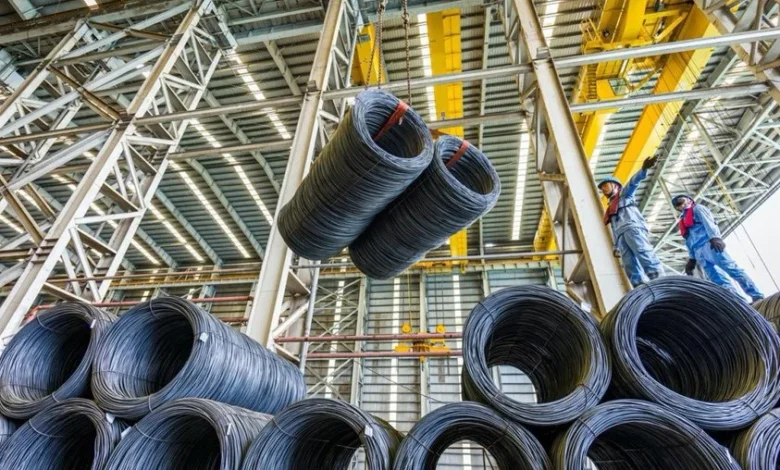
The financial restructuring of Vietnam’s steel sector has taken a notable turn as details emerge regarding the extensive financial backing provided to Steel Pomina Joint Stock Company (UPCoM: POM) by Vinhomes Joint Stock Company (HoSE: VHM). According to Pomina’s recently released reviewed semi-annual financial report, the struggling steel manufacturer has recorded long-term payables to Vinhomes amounting to nearly VND 1,115 billion. This substantial capital injection represents a critical lifeline for Pomina, which has been grappling with deep operational disruptions, heavy accumulated losses, and immense debt pressures within an increasingly competitive domestic construction materials market.
The partnership stems from a strategic framework agreement signed on January 31, involving Vinhomes and several core entities within the Pomina Group ecosystem. These include Steel Pomina Joint Stock Company, Pomina Steel Plant Branch 1, Steel Pomina Joint Stock Company 2, and the Pomina 3 Steel Rolling Mill Branch. Under the terms of this comprehensive accord, the group of Pomina entities received funding designed primarily to supplement working capital, clear overdue obligations to raw material suppliers, and jump-start idled manufacturing facilities. The total credit ceiling authorized for working capital under this arrangement reaches up to VND 1,352 billion.
Crucially for Pomina, the financial support package carries zero interest for a duration of two years, with the overarching agreement scheduled to remain in effect until December 31, 2027. According to the disclosures in the financial report, the advanced capital is intended to be recovered through future commercial transactions—specifically the purchase and sale of goods—or via other revenue streams as mutually agreed upon by the participating corporations.
Reversing the transaction flow, Vinhomes also appears prominently on the opposing side of Pomina’s balance sheet under short-term trade receivables. As of June 30, Pomina logged approximately VND 172 billion in short-term customer receivables due from Vinhomes. This figure compares with the end of the first quarter of 2026, when Pomina registered roughly VND 202 billion categorized under "Receivables from Vin" within its broader other receivables ledger.
This financial interlock traces back to a broader strategic cooperation blueprint officially announced by Vingroup Joint Stock Company (HoSE: VIC) on November 25, 2025. At that time, Vingroup disclosed that its subsidiary, VinMetal Production and Business Joint Stock Company, would act as a primary channel to supply working capital to Pomina under zero-interest conditions for up to two years. Concurrently, the conglomerate designated Pomina as a preferred strategic steel supplier across its extensive property and industrial ecosystem. Furthermore, management disclosures indicate that these short-term receivables and supply agreements have served as collateral backing for various commercial bank loans held by the steel maker.
Genesis of the Strategic Alliance: A Chronology of Restructuring

The operational relationship between the Vingroup ecosystem and Pomina did not emerge in a vacuum, but rather as a calculated maneuver to salvage a foundational domestic industrial asset. Pomina, once a dominant force in the southern Vietnamese construction steel market, fell into severe distress following the post-pandemic economic slowdown, a prolonged real estate slump, and a cash-flow crunch that forced the company to shutter multiple high-capacity production lines.
By late 2025, as systemic liquidity evaporated and commercial lenders tightened credit access, Pomina faced mounting threats of insolvency. The intervention announced by Vingroup in November 2025 offered an alternative restructuring path outside traditional debt-equity swaps or bankruptcy proceedings. By coupling zero-interest working capital injections with guaranteed off-take agreements and preferred supplier status within Vinhomes’ massive residential and urban development projects, the alliance sought to establish an integrated supply chain loop. This arrangement guaranteed Vinhomes a steady, localized source of construction steel while giving Pomina the immediate operational oxygen required to fire up its dormant furnaces.
Resumption of Production: Progress at Pomina Plants
Leveraging the capital infused through the Vinhomes cooperation framework, Pomina’s executive board has steadily executed a phased operational revival. Starting in March 2026, the company successfully brought production lines back online at Steel Pomina Plant 1 and Steel Pomina Joint Stock Company 2. This reactivation allowed the manufacturer to begin recording incoming revenues and operational cash flows for the first time in several quarters.
Meanwhile, preparations for the heavier industrial segment—specifically the Pomina 3 Steel Rolling Mill—have accelerated. Management has focused on fulfilling the rigorous technical, engineering, and safety prerequisites required to bring the facility’s blast furnace back into operation. Company executives anticipate that the Pomina 3 plant will resume active production during the second half of 2026, a milestone viewed as essential for improving economies of scale and reducing per-unit production costs.
Auditor Skepticism: Persistent Financial Realities and Going Concern Warnings
Despite the optimism surrounding the production restart and the financial backing from Vinhomes, independent auditing firm AFC Vietnam expressed a qualified opinion on Pomina’s semi-annual financial statements, highlighting deep-seated financial vulnerabilities that continue to plague the company.

During the first six months of the year, Pomina reported a net loss of nearly VND 329 billion. This latest red figure expands the company’s staggering accumulated losses to approximately VND 3,822 billion. Concurrently, the total debt burden remains formidable, standing at roughly VND 5,744 billion as of the mid-year mark. Short-term loans constitute the vast majority of this liability at VND 5,097 billion, while long-term borrowings account for the remaining VND 647 billion.
In their explanatory notes, the auditors noted that as of the issuance date of the financial statements, Pomina had yet to supply a fully comprehensive and viable business recovery plan capable of definitively demonstrating its ability to settle obligations, restore balance sheet equilibrium, and secure the permanent working capital required to ensure uninterrupted ongoing operations. Furthermore, the audit firm pointed out that the financial statements and accompanying notes failed to adequately address or incorporate the potential adjustments that would become mandatory should Pomina ultimately prove unable to maintain its status as a going concern.
Industry Implications and Market Outlook
The ongoing financial balancing act at Pomina offers a case study in corporate restructuring within Vietnam’s heavy industry sector. On one hand, the partnership with Vinhomes demonstrates the viability of private-sector cross-industry bailouts, where large conglomerates leverage their balance sheets to secure upstream supply chains and stabilize vital industrial infrastructure. The ability to secure over VND 1,115 billion in interest-free funding has undeniably prevented a total operational collapse and allowed thousands of tons of steel to flow back into the market.
On the other hand, the stark warnings issued by independent auditors underscore the immense difficulty of reversing years of structural financial damage through operating cash flows alone. With short-term liabilities overshadowing current liquid assets and accumulated losses approaching the VND 4,000 billion threshold, Pomina’s long-term survival depends heavily on the successful, on-schedule revival of its heavy rolling mills, the sustained absorption capacity of Vinhomes’ construction pipeline, and potentially further debt restructuring initiatives with its commercial banking creditors.
As the second half of 2026 unfolds, market watchers will closely monitor whether Pomina can translate its newly revived production lines and strategic supply contracts into sustainable profitability, or if deeper structural interventions will be required to stabilize the embattled steelmaker’s financial foundation.
Related posts: