Gulf Region Accelerates Multi-Billion Dollar Pipeline Network to Bypass Volatile Strait of Hormuz

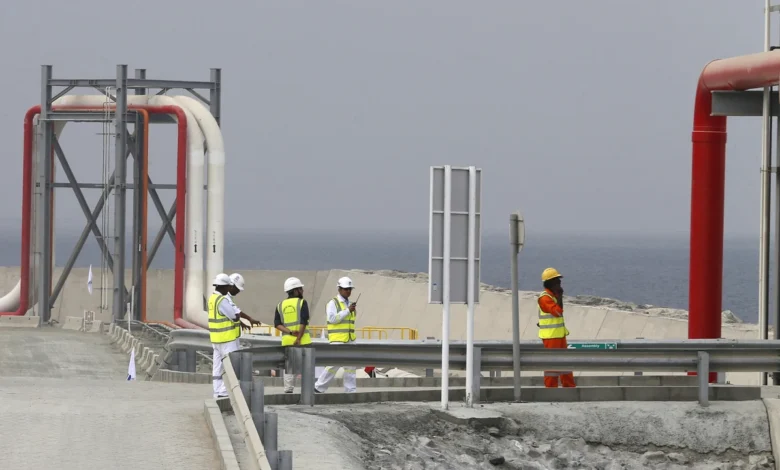
In a strategic pivot driven by escalating geopolitical tensions and the imperative of energy security, nations across the Gulf region are engaged in a rapid, multi-billion-dollar endeavor to construct an extensive network of oil pipelines. This ambitious infrastructure build-out aims to significantly reduce their longstanding reliance on the Strait of Hormuz, a critical maritime chokepoint that has historically served as the primary conduit for a substantial portion of the world’s crude oil supply. The proactive measures underscore a profound shift in regional energy policy, as producers seek to insulate their vital export capabilities from the unpredictable volatility that has plagued the strategic waterway.
The Strategic Imperative: Why Hormuz Matters
A Chokepoint of Global Significance
The Strait of Hormuz, a narrow passage between the Persian Gulf and the Gulf of Oman, is arguably the most strategically important oil chokepoint in the world. Annually, an estimated one-fifth of the world’s total petroleum liquids consumption, or about 21 million barrels per day (bpd), passed through the strait in recent years, according to the U.S. Energy Information Administration (EIA). This volume represents the bulk of oil exports from major producers such as Saudi Arabia, Iran, the United Arab Emirates, Kuwait, and Iraq, making it indispensable for global energy markets. Any significant disruption to traffic through Hormuz has immediate and far-reaching consequences for global oil prices, supply stability, and economic certainty. Before recent escalations, approximately 15 million barrels of oil from the Persian Gulf were transported through the Strait daily. However, projections indicate that in the coming years, a substantial portion of this volume will be rerouted through alternative pipelines, fundamentally altering established energy trade dynamics.
History of Volatility and Escalating Tensions
The vulnerability of the Strait of Hormuz is not a new concern. Its history is punctuated by periods of intense geopolitical friction, particularly involving Iran, which controls its northern coast. During the Iran-Iraq War in the 1980s, the "Tanker War" saw numerous attacks on oil tankers in the Gulf, highlighting the strait’s susceptibility to conflict. More recently, the waterway has been a flashpoint for renewed tensions. Incidents such as drone and missile attacks on oil tankers, the seizure of vessels, and direct threats from Iranian officials to close the strait in response to international sanctions have consistently raised alarm bells in global capitals. The ongoing instability in the wider Middle East, including recent disruptions to shipping in the Red Sea and heightened regional proxy conflicts, has only amplified the strategic urgency for Gulf states to secure alternative export routes. This sustained pressure and the ever-present threat of disruption have catalyzed the current race to build bypass infrastructure, turning what were once long-term strategic plans into immediate, high-priority projects.
A Race to Diversify: Key Projects Underway
Driven by the dual forces of robust oil prices and persistent Iranian pressure over Hormuz, several Gulf nations are actively implementing or planning major pipeline projects, each representing billions of dollars in investment. Government officials, oil and gas industry executives, and energy analysts confirm that at least seven large-scale pipeline projects are either under construction, in advanced planning stages, or under active discussion. These initiatives aim to deliver oil to ports on the Red Sea, connect to the Suez Canal, or provide direct access to the Gulf of Oman, thereby circumventing the Strait of Hormuz entirely.
United Arab Emirates’ Fujairah Expansion
The United Arab Emirates has long recognized the strategic importance of bypassing Hormuz. Its existing Habshan-Fujairah pipeline, which transports crude oil from Abu Dhabi’s inland oil fields to the Fujairah terminal on the Gulf of Oman, has been a cornerstone of its energy security strategy. This pipeline, along with Saudi Arabia’s East-West Pipeline, collectively had the capacity to handle between 3.5 and 5.5 million barrels per day before recent conflicts, and both are now operating close to their maximum throughput.
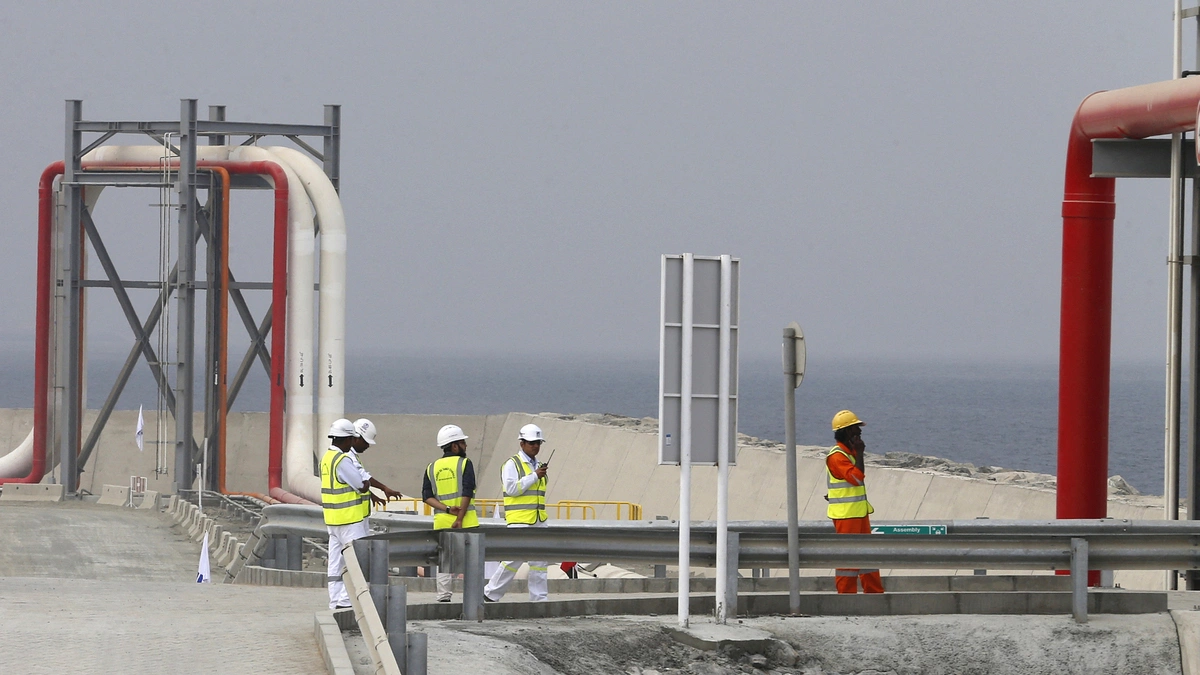
To further bolster its bypass capabilities, the Abu Dhabi National Oil Company (ADNOC) is accelerating the construction of a new 300-kilometer pipeline. Valued at an estimated $3 billion, this new artery will run parallel to the existing Habshan-Fujairah pipeline, significantly enhancing the UAE’s export capacity from Fujairah. Once operational, the new pipeline is projected to add more than 1.2 million barrels per day to the existing export volume. Although the initial target for completion was early 2027, data analytics firm Kpler suggests that a mid-202X timeline is now more feasible, largely due to the necessity of expanding the Fujairah port infrastructure to accommodate the increased flow. Victoria Grabenwöger, a senior expert at Kpler, highlighted the compelling nature of this ambition, stating that it "becomes feasible in the context of a Hormuz blockade," underscoring the urgent geopolitical drivers behind the project.
Saudi Arabia’s East-West Pipeline Boost
Saudi Arabia, the world’s largest oil exporter and a nation with a vast, established oil infrastructure, is also moving to enhance its alternative export routes. The Kingdom’s East-West Pipeline, also known as the Petroline, is a vital strategic asset. It transports crude oil from the eastern oil processing facilities at Abqaiq, across the desert, to the port city of Yanbu on the Red Sea. From Yanbu, oil can be loaded onto tankers for transport southwards into the Arabian Sea, or northwards towards the Suez Canal.
Sources familiar with the matter, as reported by Reuters, indicate that Saudi Arabia is actively considering expanding the capacity of its East-West Pipeline by an additional 2 million barrels per day. This expansion would significantly increase the volume of oil that can bypass Hormuz, offering greater flexibility and resilience to Saudi oil exports. The ability to export oil directly to the Red Sea provides a crucial strategic advantage, allowing Saudi Arabia to maintain its supply commitments even if the Strait of Hormuz becomes impassable.
Iraq’s Ambitious Mediterranean Corridors
Iraq, OPEC’s second-largest oil producer, has felt the repercussions of Hormuz disruptions particularly acutely. The nation’s oil production plummeted by over 50% in June, settling at approximately 1.9 million barrels per day compared to its previous output of around 4.2 million barrels. Given that oil exports account for roughly 90% of Iraq’s national budget revenue, the imperative to secure stable and diversified export routes is paramount for Baghdad.
In response, Iraq is accelerating plans for several alternative export pipelines. One significant project involves reviving and expanding a pipeline that would carry oil from the southern export hub of Basra, which typically exports over 3 million bpd, to the Turkish port of Ceyhan on the Mediterranean Sea. This ambitious project also includes a branch extending to the Syrian port of Baniyas. On July 17, an agreement for the implementation of this project was reportedly signed between Bassem Abdul Karim Nasr of the Basra Oil Company and Youssef Qablawi of the Syrian Oil Company. In the long term, this route could potentially transport up to 2 million barrels of oil per day to Baniyas, a corridor that the U.S. State Department has termed an "important energy corridor." U.S. Energy Secretary Chris Wright (likely a reference to a senior energy official, though the exact title may vary in translation) emphasized that there is "still a lot of room for Iraq to improve, increase oil production, and reduce reliance on neighbors."
Furthermore, Iraqi officials are actively collaborating with Jordan on plans to construct another pipeline connecting Basra to the Jordanian port of Aqaba. This route would enable Iraq to export oil via the Red Sea, providing direct access to European markets and other international destinations without traversing the volatile Persian Gulf.
Quantifying the Shift: Projected Capacities and Impact
The cumulative impact of these extensive pipeline projects is projected to be transformative for global energy markets. Analysts at Goldman Sachs have estimated that the total capacity of these new bypass pipelines could reach 3.8 million barrels per day by the end of next year, and further increase to 7.3 million barrels per day by late 2028. If these targets are successfully met, approximately 60% of the Gulf region’s pre-conflict oil exports, which stood at around 23 million barrels per day, would no longer be dependent on the Strait of Hormuz.
This monumental shift represents a significant recalibration of energy geopolitics. It promises enhanced supply security for major oil importers worldwide, potentially reducing the risk premium associated with Middle Eastern crude and dampening price volatility stemming from chokepoint disruptions. For the Gulf producers, it signifies a newfound resilience, allowing them greater autonomy and stability in their export operations, even amidst heightened regional tensions. The long-term implications include a re-evaluation of maritime shipping routes and a potential decrease in the strategic leverage of actors who have historically threatened the closure of the Strait.
Navigating New Challenges: Costs and Enduring Security Risks
While the construction of these bypass pipelines offers a vital solution to the immediate challenge of the Strait of Hormuz, it also introduces a new set of economic and security complexities that demand careful consideration.
Economic Trade-offs
The primary drawback of these alternative routes often lies in increased transportation costs. For instance, oil tankers departing from ports like Yanbu on the Red Sea can choose to transit the Suez Canal. However, the Suez Canal, despite its strategic importance, cannot accommodate the largest crude oil carriers (Very Large Crude Carriers or VLCCs), which have capacities of up to 2 million barrels. These supertankers are typically the most cost-effective option for long-haul journeys due to economies of scale. Consequently, utilizing smaller vessels or trans-shipping oil at other ports can add to the overall shipping cost.
Moreover, pipelines extending from the Persian Gulf to the Mediterranean effectively reverse the traditional flow of oil for European markets, which are major customers for Hormuz-transit oil. To reach these markets from Mediterranean ports, tankers would either need to navigate the Suez Canal or undertake significantly longer voyages around the Cape of Good Hope at the southern tip of Africa. Such extended sea passages dramatically increase transit times, fuel consumption, insurance costs, and ultimately, the per-barrel cost of delivery, potentially impacting the competitiveness and profitability of Gulf oil.
Evolving Security Landscape
Another critical consideration is that these new pipeline networks are not entirely immune to security threats. While they mitigate the risk of maritime disruptions within the Strait of Hormuz, they introduce new vulnerabilities to land-based attacks. The regional security environment remains volatile, with numerous state and non-state actors capable of launching sophisticated assaults on energy infrastructure.
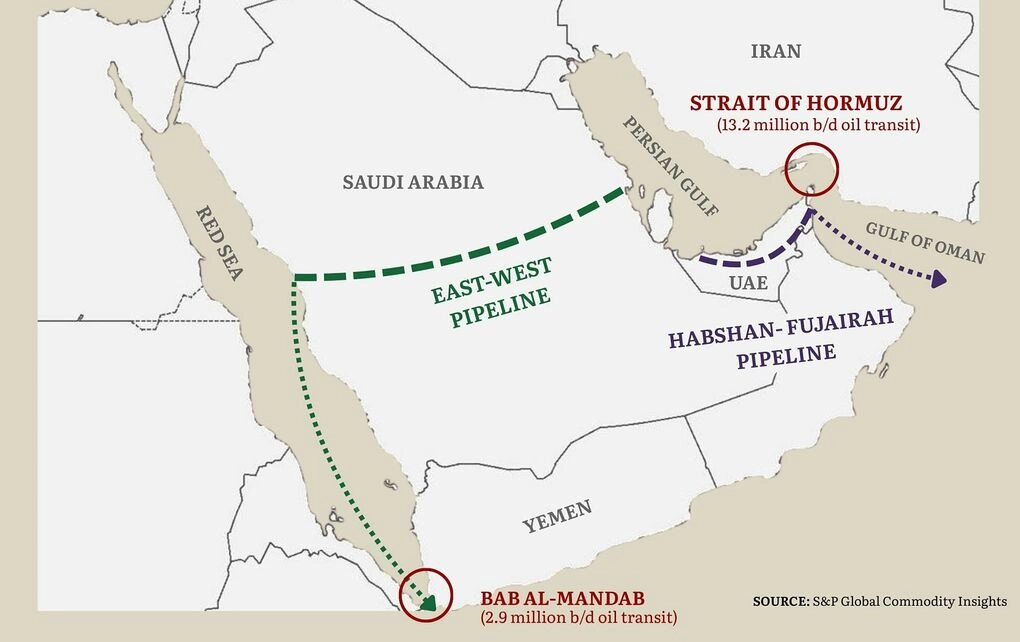
A stark reminder of this threat occurred in May 2019, when Saudi Arabia’s East-West pipeline was forced to halt operations after being attacked by drones attributed to Houthi rebels in Yemen. This incident highlighted that pipelines, pump stations, and loading terminals on land could become targets, even if they are far removed from the Strait of Hormuz itself. The Houthis have also previously caused significant disruptions to maritime transport at the Bab el-Mandeb Strait, another crucial chokepoint connecting the Red Sea with the Gulf of Aden.
Furthermore, these land-based infrastructures, even those located far from Iran’s immediate borders, could still be targeted by Iran’s Islamic Revolutionary Guard Corps (IRGC) or its allied militant groups operating within the region. As Bob McNally, founder of the consulting firm Rapidan Energy, aptly noted on CNBC, "The problem is not the waterway itself… Iran can still use weapons to attack oil loading facilities, pump stations, terminals, and storage along these pipelines." This broadens the scope of potential conflict, shifting the battleground from a purely maritime domain to a more diffused geographical area encompassing critical land infrastructure.
Conclusion: A New Era of Energy Geopolitics
The multi-billion-dollar investment in bypass pipelines by Gulf nations marks a pivotal moment in global energy geopolitics. It represents a pragmatic and strategic response to the enduring vulnerability of the Strait of Hormuz, aiming to enhance energy security for both producers and consumers worldwide. The projected capacities of these new routes underscore a future where a significant majority of Persian Gulf oil exports will no longer be held hostage by a single maritime chokepoint.
However, this strategic shift is not without its trade-offs. The economic implications of longer, potentially more expensive shipping routes, coupled with the persistent threat of land-based attacks on pipeline infrastructure, present new challenges that regional powers must continuously manage. Ultimately, while these ambitious projects mitigate one critical risk, they necessitate an adaptive and comprehensive security strategy that accounts for an evolving threat landscape. The long-term vision is clear: to reshape global energy trade routes, strengthen the resilience of Gulf oil producers, and foster a more stable, albeit complex, international energy market.
Related posts: