Cinema and Heritage: Bridging Creative Industries and Cultural Preservation at the Crossroads of Policy and Practice


The intersection of filmmaking and cultural heritage preservation has emerged as one of the most pressing policy debates in the contemporary creative economy, drawing intense scrutiny from cultural administrators, filmmakers, legal experts, and international organizations. This complex dialogue took center stage during a high-level panel discussion titled Cinema and Heritage: From Talent Incubation to Creative Industry Development, which convened industry leaders to address the delicate balance between safeguarding historical monuments and fostering vibrant, economically viable cinematic production environments. The core of the discourse addresses a fundamental tension: how nations with rich historical legacies can welcome modern commercial film productions without compromising the integrity, physical safety, and spiritual resonance of irreplaceable cultural treasures.
The Global Dilemma: Balancing Cinematic Ambition with Heritage Protection
In recent years, the global film industry’s increasing appetite for authentic historical backdrops has frequently placed production houses on a collision course with heritage conservationists. A prime catalyst for this international debate occurred in early 2025, when the production crew behind the KBS historical drama series The First Night with the Duke descended upon Byeongsan Seowon—a revered Confucian academy in Andong, South Korea, recognized globally as a UNESCO World Heritage site. The arrival of hundreds of staff members, alongside massive technical equipment setups, triggered widespread public outrage across South Korea. The incident exposed systemic vulnerabilities in how heritage sites are managed during commercial shoots, ultimately prompting the city of Andong to pursue legal action against the production team.

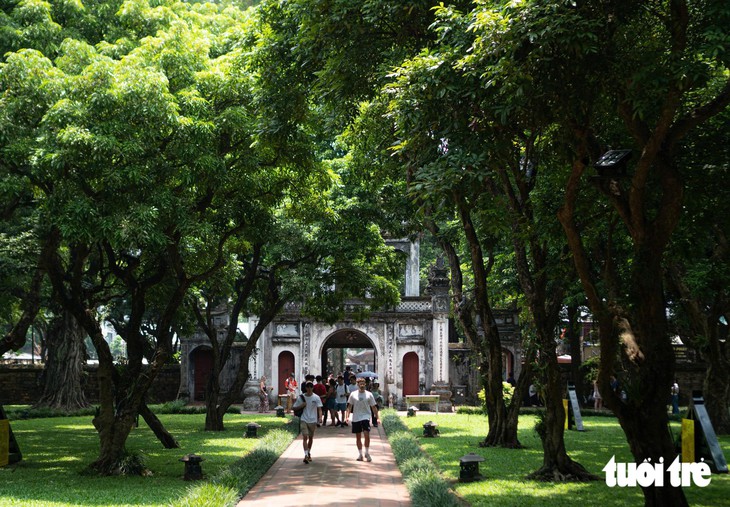
This high-profile controversy has resonated deeply within Southeast Asia, particularly in Vietnam, where rapid economic growth and burgeoning creative sectors have turned historical monuments into coveted locations for domestic and international filmmakers. During the panel discussion, prominent Vietnamese producer Tran Thuong Bich Ngoc directed a pointed inquiry to Dr. Le Xuan Kieu, Director of the Văn Miếu – Quốc Tử Giám (Temple of Literature) Scientific and Cultural Activities Centre. Addressing the nearly 950-year-old sanctuary, she asked whether a massive film crew comprising hundreds of personnel and extensive heavy equipment would ever be permitted inside the historic complex, and if so, what strict regulatory frameworks would govern their operations.
Dr. Kieu acknowledged that the Temple of Literature holds a special status under state administration, frequently receiving official clearance requests from the Ministry of Culture, Sports and Tourism, particularly for international film projects. He articulated the Centre’s dual mandate: safeguarding the sanctity and physical integrity of the historical site while avoiding the erection of prohibitive barriers that stifle artistic expression and cultural promotion. According to Dr. Kieu, allowing film crews within the temple grounds is feasible, provided that proactive dialogues take place beforehand to formulate mutually agreed-upon solutions and preemptively neutralize any elements that could severely impact the historic fabric.
Operational Realities: Lessons from Domestic and Regional Filming Practices
The logistical challenges of shooting within fragile historical environments are further underscored by veteran cinematographer Nguyen K’Linh. Drawing from his experience filming The Legend of the Imprints: Secrets of the Dinh Dynasty in Ninh Bình—a region widely celebrated as a natural outdoor studio attracting domestic and international productions—K’Linh emphasized that strict adherence to preservation guidelines is mandatory. However, he pointed out a critical systemic flaw: the current absence of standardized national regulations or official guidelines governing filming within heritage sites forces production teams to independently negotiate and establish rigorous protocols with site management boards.
Recalling his experience in Ninh Bình, K’Linh noted that his production team proactively established three non-negotiable guiding principles for the entire crew: objects that could be touched, objects where equipment could be safely placed, and sacred areas that were strictly off-limits. Without unified statutory guidelines, production houses are left to navigate a labyrinth of ad-hoc agreements, underscoring the urgent need for a standardized legal framework that protects heritage while offering clear, predictable pathways for filmmakers.
International comparisons reveal divergent models for resolving the tension between cinematic commercialization and heritage conservation. Pham Thi Thanh Huong, Head of the Culture Unit at the UNESCO Office in Hanoi, provided valuable global context during the seminar. UNESCO’s guiding philosophy maintains that heritage sites should never be viewed as entirely untouchable or impervious to engagement; rather, they require a responsible, measured approach. UNESCO regards cinema and creative activities not merely as marketing tools for visual promotion, but as dynamic mechanisms that clarify and elevate the outstanding universal value of heritage sites.
Nevertheless, nations across Europe and Asia have approached this balance through vastly contrasting regulatory lenses. China, for instance, enforces an absolute ban on commercial filming and entertainment-oriented production activities within primary heritage sites, making exceptions primarily for scientific documentaries. To accommodate the immense demand for historical sets without endangering genuine artifacts, Chinese municipalities frequently construct massive, historically accurate 1:1 scale replica studios, thereby neutralizing potential risks to real cultural landmarks.
In contrast, South Korea integrates cinema directly into its strategy for building national cultural soft power, viewing historical monuments and heritage spaces as indispensable components of storytelling. The South Korean model relies on ensuring absolute historical authenticity and emotional resonance for artistic works, while simultaneously leveraging on-screen exposure to stimulate tourism and local economies. Furthermore, South Korea bolsters these efforts through financial policies, such as cost-reimbursement schemes for film crews working at designated heritage sites, treating these expenditures as direct investments in tourism promotion. Similarly, regional neighbors like Cambodia adopted a newly updated set of official regulations in 2024 specifically designed to govern and streamline film production activities tied to its extensive archaeological heritage.
The Regulatory Vacuum and the Urgent Need for Industry Infrastructure
Despite a growing desire among Vietnamese filmmakers to emulate successful international models—particularly the South Korean framework—Vietnam currently lacks the comprehensive infrastructure, dedicated studio spaces, and granular regulatory guidelines found in countries like China or Cambodia. The country finds itself in a transitional phase where the ambition to develop a thriving creative industry frequently clashes with outdated or ambiguous administrative procedures.
Industry stakeholders emphasize that cinematic heritage must be integrated smoothly into Vietnam’s broader strategic roadmap for cultural industry development. However, core elements such as talent incubation, transparent filming mechanisms at heritage sites, studio construction, and the finalization of supportive financial policies remain fraught with institutional hurdles.
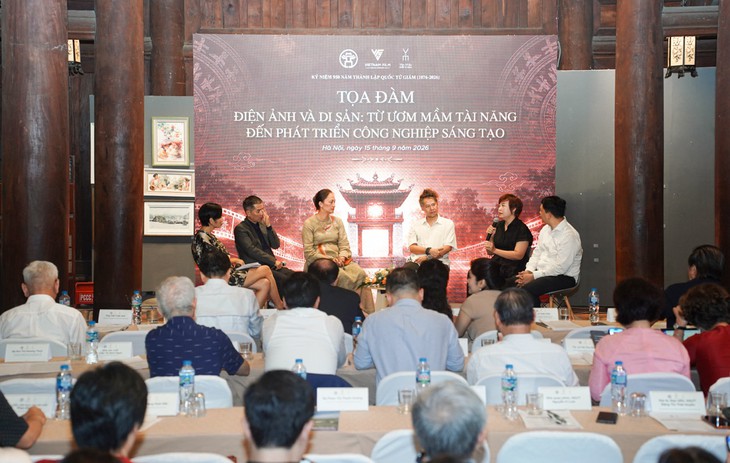
Addressing these challenges, Pham Thi Thanh Huong expressed optimism that active collaboration between film associations and state management bodies—such as the Ministry of Culture, Sports and Tourism—will accelerate the promulgation of explicit operational codes, detailed technical guidelines, and supportive financial policies for production teams. Dr. Ngo Phuong Lan, Chairwoman of the Vietnam Film Promotion and Development Association, echoed this sentiment, asserting that cinema possesses the unique ability to integrate heritage into contemporary daily life, offering fresh perspectives and serving as a rich raw material for artistic creation. Achieving this potential, however, requires nurturing top-tier talent and establishing a profoundly supportive creative environment.
Government Response and Future Outlook for Vietnam’s Creative Economy
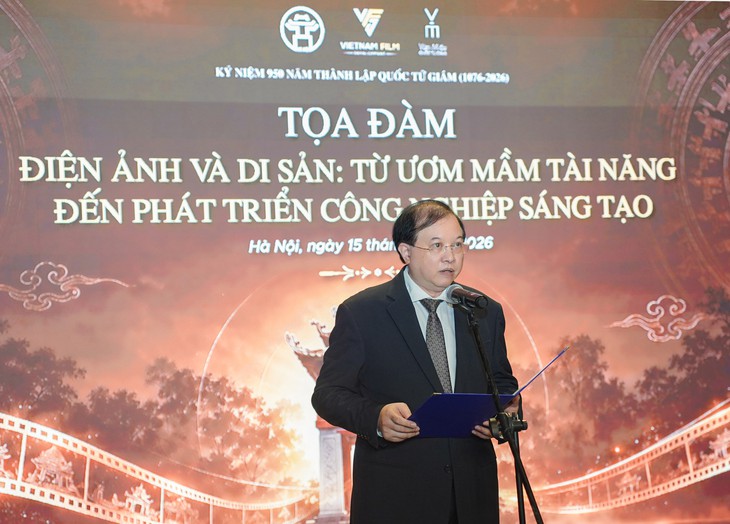
The discussions and policy recommendations generated during the seminar did not go unnoticed by high-level state authorities. Deputy Minister of Culture, Sports and Tourism Ta Quang Dong officially acknowledged the insights and concerns raised by experts, filmmakers, and international organizations. He affirmed that the Ministry remains fully committed to refining institutional frameworks, policies, and legal mechanisms to foster a favorable ecosystem for creative expression, develop highly skilled human resources, and seamlessly integrate the film sector into the broader value chain of the national cultural industry.
As Vietnam continues to position its cultural heritage as both a national treasure and an economic asset, the establishment of clear, enforceable, and balanced guidelines for cinematic production will be paramount. By bridging the gap between rigorous conservation standards and the dynamic demands of modern media production, the country can protect its historical legacy while unlocking the immense potential of its creative industries on the global stage.