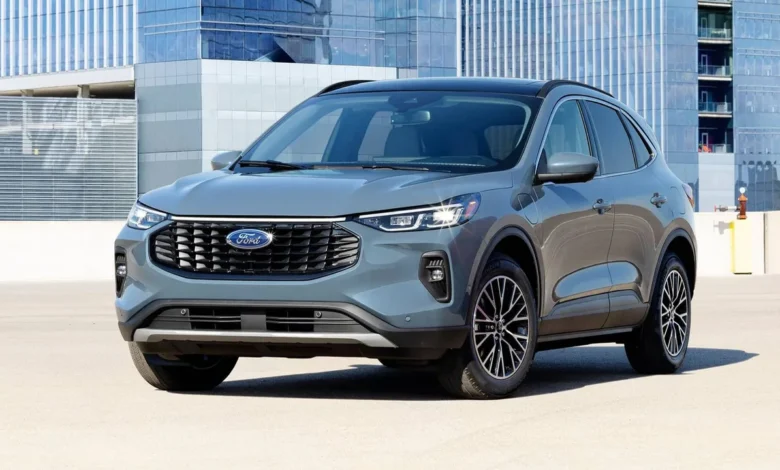
The automotive landscape witnessed a bittersweet milestone on December 17, 2025, when the final Ford Escape rolled off the assembly line at the Louisville Assembly Plant in Kentucky. Marking the definitive conclusion of a 25-year production run that helped shape the compact SUV segment in North America, this historical vehicle—a 2026 Ford Escape ST-Line—did not immediately find an eager buyer upon its completion. Instead, it languished on a dealership lot for roughly eight months, subjected to deep consecutive price cuts before finally being claimed.
The prolonged stay of the final internal combustion engine (ICE) Escape highlights broader shifts in consumer preferences, dealership inventory management, and the aggressive financial incentives required to clear outgoing legacy models as automakers pivot toward electrification.
Journey of the Final Escape: From Louisville to Sheboygan
The final chapter of the Ford Escape’s quarter-century history began in December 2025, signaling the end of an era for the Louisville facility. According to industry tracking by Ford Authority, the historic vehicle was shipped to Van Horn Ford, a dealership located in Sheboygan, Wisconsin.
Specification-wise, the ultimate Escape was far from a stripped-down base model. It rolled off the transporter finished in an elegant Star White Metallic Tri-Coat, complemented by an Onyx black interior. The vehicle was heavily optioned, featuring a panoramic Vista Roof, intelligent all-wheel drive (AWD), and the Cold Weather Package, which added a heated steering wheel, heated front row seats, and heated side mirrors.
Under the hood, the ST-Line variant relied on a 1.5-liter EcoBoost turbocharged inline-three engine, generating 180 horsepower and 269 Nm of torque. Power was routed through an 8-speed automatic transmission. Despite its robust specification and all-weather readiness, the vehicle’s status as the absolute final unit of a discontinued nameplate failed to command an immediate premium.
The Anatomy of a Clearance: Eight Months on the Lot
The prolonged duration required to retail the final Ford Escape provides a fascinating case study in dealership economics and the challenges of liquidating discontinued vehicle lines. When the vehicle first arrived at Van Horn Ford, it carried a manufacturer’s suggested retail price (MSRP) of $38,020.
As months passed and the vehicle remained unsold against a backdrop of shifting consumer interest toward newer hybrid and electric alternatives, the dealership was forced to aggressively adjust its pricing strategy. In the initial phase of discounting, the dealership slashed $5,983 off the sticker price, bringing the figure down to $32,037. However, with the vehicle remaining stubbornly parked on the lot, a subsequent and steeper price reduction of $7,021 was applied. This brought the advertised price down to a floor of $30,999—marking a total reduction of nearly $13,000 from its original window sticker.
While the final out-the-door transaction price remains confidential, the combination of manufacturer clearance incentives and dealer-side markdowns ultimately proved successful. After eight months of gathering dust, the vehicle has officially cleared the dealership’s inventory and is no longer listed on its active sales platform.
Historical Context: The Rise and Fall of a Segment Staple
The retirement of the Ford Escape closes a significant chapter in automotive history. Introduced at the turn of the millennium for the 2001 model year, the Escape was born out of a joint venture between Ford and Mazda, arriving just as the modern crossover SUV boom was beginning to take root. Over four generations, the Escape evolved from a rugged, boxy utility vehicle into a sleek, urban-friendly compact crossover that served as a cornerstone of Ford’s volume strategy.
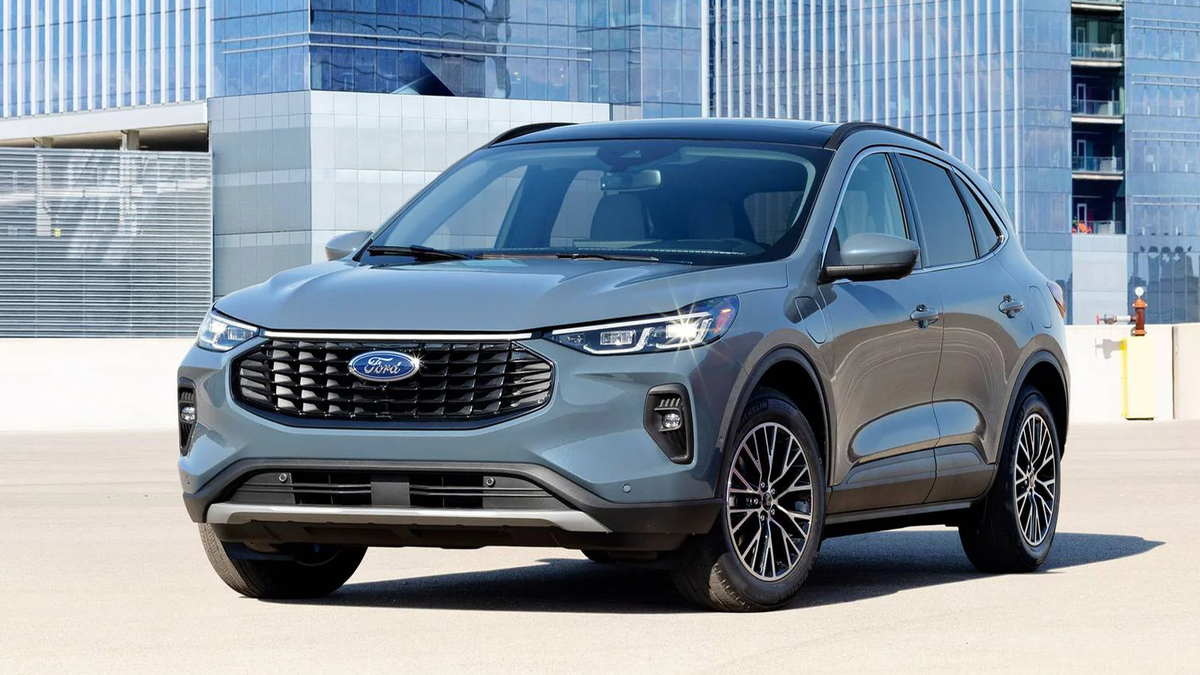
At its peak, the Escape was a powerhouse for the Blue Oval. As recently as 2024, it ranked as Ford’s second-best-selling SUV in the United States, trailing only the mid-size Explorer, while its platform sibling, the Lincoln Corsair, represented the entry point for the luxury marque.
However, changing market dynamics, intensifying competition from Asian and domestic rivals, and Ford’s strategic pivot toward electrification ultimately squeezed the Escape out of the portfolio. By the time production ceased in late 2025, consumer appetite for traditional gas-powered compact SUVs had begun fragmenting in favor of hybrid powertrains and dedicated electric vehicles (EVs).
The Louisville Facility Transition and Future Roadmap
The permanent cessation of Escape production at the Louisville Assembly Plant was not merely a portfolio pruning; it was a necessary operational sacrifice to facilitate a massive industrial overhaul. To prepare the plant for the production of next-generation electric vehicles, Ford initiated a comprehensive retooling project immediately following the departure of the final Escape on December 17, 2025.
According to Ford’s corporate roadmap, the historic Kentucky facility will serve as the launchpad for a brand-new, mass-market C-segment pure electric crossover. This upcoming EV is slated to follow the introduction of Ford’s next-generation mid-size electric pickup truck. Assembly of the new electric crossover is scheduled to commence at the Louisville plant starting in 2029.
This transition mirrors a broader industry-wide phenomenon where legacy manufacturing footprints are systematically dismantled and rebuilt to accommodate battery electric vehicle (BEV) architectures. For workers and communities in Louisville, the end of the Escape era represents a poignant farewell to a reliable profit generator, countered by a high-stakes investment in the facility’s long-term electric future.
Market Implications of Outgoing Legacy Inventory
The eight-month struggle to sell the final Ford Escape offers valuable insights into the current macroeconomic and automotive retail environment. When an automaker officially kills a mainstream nameplate, consumer psychology typically splits into two camps: die-hard enthusiasts eager to snap up a piece of automotive history, and cautious buyers wary of long-term parts availability, declining resale values, and immediate depreciation.
In the case of the 2026 Escape ST-Line, the latter sentiment appeared to dominate initially. Even with substantial dealer incentives, buyers approached the vehicle with hesitation, fully aware that they were purchasing into a dead-end product line. The necessity for deep double-digit percentage discounts underscores the reality that sentimental value rarely translates into financial value on a dealership floor when a vehicle is explicitly marked for discontinuation.
Furthermore, the prolonged inventory dwell time highlights the delicate balancing act dealerships must perform when managing end-of-life vehicle stock. Holding onto a unit for over half a year incurs carrying costs, tying up floor-plan financing and lot space that could otherwise be allocated to high-turnover models like the Ford Maverick or the redesigned Explorer.
Conclusion
The final Ford Escape’s eventual departure from the Van Horn Ford lot in Sheboygan marks the quiet, unceremonious close of a 25-year legacy. While the vehicle itself will likely find a quiet life as a unique piece of trivia for automotive historians—being the very last ICE Escape built in America—its tortuous eight-month path to a buyer serves as a stark reminder of the ruthless efficiency of the modern automotive market. As Ford strips away its traditional combustion engines to make way for the assembly lines of 2029, the Escape leaves behind a legacy of mainstream utility, having motorized millions of American families before gracefully yielding to the inevitable electric wave of the future.