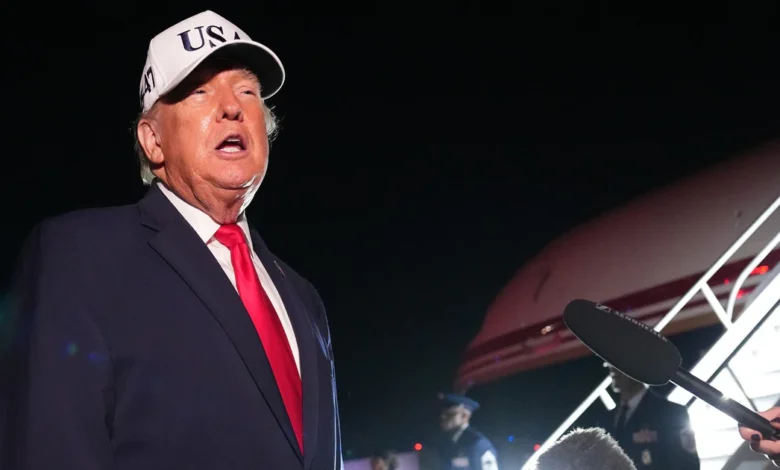
The political landscape of the United States experienced a profound earthquake following the conclusion of the highly anticipated midterm elections. Former U.S. President Donald Trump publicly addressed the sweeping victories secured by the Democratic Party, denouncing the outcome not merely as a political defeat, but as a historic and unprecedented setback for the nation. The elections, which served as a critical referendum on the first half of Trump’s presidential term, fundamentally altered the balance of power in Washington, stripping the Republican Party of its legislative stronghold in both chambers of Congress.
In the wake of these historic results, political analysts, financial markets, and administration officials have begun assessing the profound implications of a divided and increasingly hostile Washington. As both parties prepare for the legislative battles ahead, the fallout from the midterm elections continues to reverberate across the American political and economic spheres.
A Historic Shift in Power on Capitol Hill
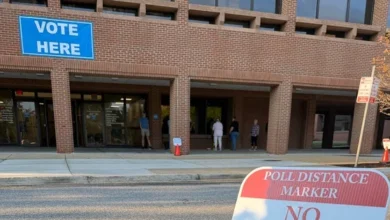
The midterm elections, held on November 3, marked a major turning point in contemporary American politics. For the first time in years, the Democratic Party successfully mounted a coordinated nationwide campaign that capitalized on voter dissatisfaction, shifting demographics, and local grievances. The party secured decisive majorities in both the House of Representatives and the Senate, effectively breaking the legislative monopoly that the Republican Party had maintained.
The Republican defeat was particularly striking because it penetrated deep into traditional party strongholds. States and districts that had reliably voted Republican for decades saw significant swings toward Democratic candidates. Political scientists noted that suburban voters, in particular, played a pivotal role in shifting the balance of power, expressing fatigue with the polarizing rhetoric and policy trajectories emanating from the White House.
For the Trump administration, the loss of congressional control translates to an abrupt halt to its ambitious legislative agenda. Key policy initiatives that once enjoyed smooth passage through friendly committees now face fierce opposition, intense parliamentary scrutiny, and the looming threat of presidential vetoes overridden by unified congressional majorities. Furthermore, the newly empowered Democratic leadership has signaled its intention to launch rigorous oversight investigations into the administration’s policies, financial dealings, and executive appointments.
Trump’s Defiant Response on Truth Social
Despite the passage of several days since the ballots were cast, President Trump remained visibly defiant, taking to his preferred social media platform, Truth Social, to voice his grievances and chart a path forward. In a series of early morning posts, the president dismissed the significance of the Democratic landslide while simultaneously promising an aggressive political comeback.
"The United States has just taken a massive step backward in history with the results of the recent election," Trump wrote, framing the Democratic victories as a threat to national progress rather than a legitimate expression of the electorate’s will.
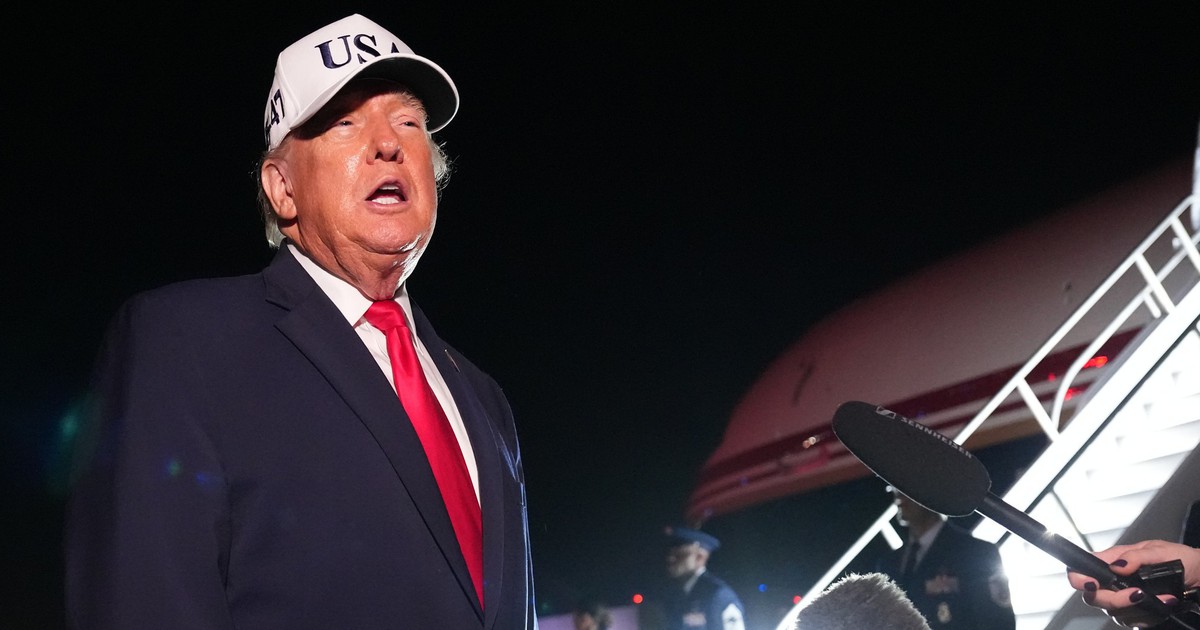
Throughout his time in office, Trump has consistently intertwined the health of the American economy with the performance of the stock market, frequently citing Wall Street gains as definitive proof of his administration’s economic stewardship. However, the immediate aftermath of the midterm elections witnessed a stark divergence from this narrative. Following the announcement of the election results, major stock indices experienced notable turbulence, with Wall Street posting significant losses as investors reacted to the sudden prospect of political gridlock and increased regulatory oversight.
Addressing the market downturn, Trump attempted to reassure both investors and his political base, contrasting the recent volatility with the unprecedented growth recorded earlier in his term. "Even the stock market, which has been rising like an intergalactic missile under Trump, recording massive gains in just a single day, has felt the shock," the president noted. "But do not worry, we will be back, bigger and better than ever before!"
Media Appearances and Strategic Maneuvers
In an effort to regain control of the national narrative, the White House announced that President Trump would appear on CBS News’ flagship program, 60 Minutes. The scheduled interview provided the president with a prominent platform to address millions of viewers directly, defending his administration’s record and outlining his strategy for the remainder of his term.
"I hope they will broadcast the good things we have done in the past two years, not to mention my first term—things that are simply incredible," Trump stated ahead of the broadcast. "If we have the support of the Senate, which remains under Republican control, we still have the capacity to do unbelievable things."
However, political commentators were quick to point out a factual inconsistency in the president’s remarks regarding congressional control. While the Senate historically retains staggered terms, the comprehensive nature of the midterm losses meant that the Republican grip on Capitol Hill had been thoroughly compromised, complicating the administration’s ability to confirm judicial nominees and executive branch appointees without bipartisan consensus.
Internal Shuffling: Stephen Miller Appointed Deputy Chief of Staff
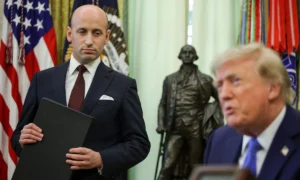
Amid the fallout from the electoral defeat, the Trump administration announced a high-profile shakeup within its inner circle. On November 6, the White House confirmed that Stephen Miller, a long-serving and fiercely loyal advisor, had been appointed as the new Deputy Chief of Staff. Miller stepped into the role to replace Susan Wiles, a trusted confidante who had managed the West Wing operations for an extended period.
Stephen Miller has been a central figure in conservative politics and a core architect of the administration’s hardline immigration policies since the 2016 presidential campaign. Known for his uncompromising stance on border security and interior enforcement, Miller’s elevation to Deputy Chief of Staff signals a doubling-down on the administration’s nationalist agenda, even in the face of legislative setbacks.
The appointment immediately drew sharp rebukes from the newly empowered Democratic leadership. Democratic strategists and congressional leaders had previously pledged to hold the Trump administration strictly accountable for its executive actions. Following the announcement, opposition leaders vowed to engage in direct political and legal combat with the new Deputy Chief of Staff, framing his promotion as a provocation that guarantees continued confrontation between the executive branch and Congress.
Economic Implications and Market Uncertainty
The political realignment in Washington has injected a substantial degree of uncertainty into the U.S. economy. Financial institutions and corporate leaders are currently reevaluating their long-term forecasts in light of the impending congressional investigations and the improbability of passing further deregulatory measures or tax cuts.
Economists note that divided government often leads to fiscal paralysis, reducing the likelihood of major legislative packages passing through both chambers. While some investors welcome the prospect of legislative gridlock as a stabilizing force that prevents radical policy shifts, others fear that escalating partisan warfare could threaten vital government funding bills and debt ceiling negotiations in the months ahead.
Furthermore, the stock market’s reaction to the midterm results underscores the sensitivity of financial markets to political risk. The sharp corrections observed in the days following the election serve as a reminder that Wall Street’s confidence is closely tied to political stability and predictable governance.
Looking Ahead: The Final Two Years
As the dust settles on the 2026 midterm elections, both the administration and the opposition are bracing for a tumultuous final two years of the presidential term. President Trump’s assertion that he will "return stronger than ever" suggests an escalating campaign footing, with the White House looking ahead to the next presidential election cycle while attempting to salvage its remaining legislative priorities.
Conversely, the Democratic Party, emboldened by its historic gains and fortified by unified control of Congress, is preparing to exercise its oversight authority to the fullest extent. With key administration figures like Stephen Miller taking on expanded responsibilities, the stage is set for high-stakes political showdowns over immigration, the economy, and the balance of institutional power in the United States.
The events of this historic week have fundamentally redefined the American political landscape, ensuring that the remainder of the presidential term will be characterized by intense partisan conflict, heightened public scrutiny, and a relentless struggle for the future direction of the country.