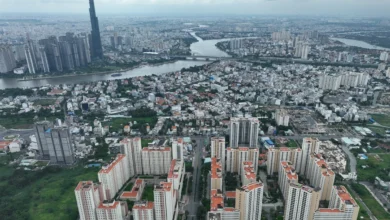
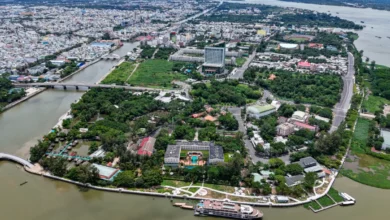
HoREA Proposes Legislative Amendments to Unlock Land Accumulation for Housing Projects and Stimulate Real Estate Market Growth


The Ho Chi Minh City Real Estate Association (HoREA) has formally submitted a critical proposal to the Prime Minister and the Standing Committee of the National Assembly, advocating for the urgent codification of mechanisms allowing real estate developers to negotiate land use rights acquisition for housing projects. This legislative adjustment, if adopted within the proposed amendments to the Land Law, aims to eliminate the regulatory bottlenecks that have effectively stalled thousands of housing projects across Vietnam for the better part of a decade.
The Core Regulatory Dilemma
At the heart of the current crisis lies the rigid interpretation of the 2024 Land Law, which stipulates that developers of commercial housing projects may only acquire land use rights if they possess "residential land." This legal framework explicitly restricts developers from purchasing "non-residential" land—or a combination of residential and non-residential plots—for the purpose of initiating new projects.
For over ten years, this restrictive clause has acted as a significant barrier to development. Industry experts and market analysts note that in a rapidly urbanizing environment like Vietnam, large, contiguous plots of purely residential land are increasingly rare. Consequently, developers seeking to expand housing stock are forced to navigate complex land-use conversion processes that are often bogged down by bureaucratic inconsistencies. This legal "gridlock" has left approximately 2,750 projects nationwide in a state of suspended animation, unable to proceed despite significant capital investment and market demand.
Chronology of the Land Acquisition Impasse
The history of this regulatory struggle is marked by several attempts at reform, yet the implementation of these changes has often lagged behind the industry’s requirements.
- 2014–2023: The period characterized by the initial tightening of land-use regulations, where the requirement for "clean" residential land led to a sharp decline in new project launches.
- 2023: The National Assembly issued Resolution 171, a pilot program designed to allow developers to negotiate the transfer of various types of land, not just residential land, to break the legislative deadlock.
- 2023–2024 (The Pilot Phase): Despite the optimism surrounding Resolution 171, the rollout has been sluggish. As of late 2024, only 742 out of 2,750 registered applications have been processed, representing a completion rate of just 30%.
- November 2024: HoREA issued its latest appeal to the Prime Minister, arguing that the existing pilot process is too slow to address the urgency of the housing supply crisis.
Data-Driven Analysis of the Current Crisis
The data provided by HoREA highlights the severity of the situation in major urban hubs, particularly in Ho Chi Minh City. As of the most recent reporting cycle, the municipal government received 974 applications related to land-use agreements. However, the multi-agency appraisal process—involving the Department of Natural Resources and Environment, the Department of Planning and Architecture, and various district-level authorities—is notoriously time-consuming.
On average, the municipal government only grants approval to a handful of projects per year. HoREA’s internal assessment indicates that if the current trajectory continues, and if the government waits until the 2030 review to fully evaluate the pilot’s success, the market will suffer from a decade-long deficit in new housing supply.
Economically, the stakes are substantial. By unlocking approximately 20,000 hectares of land currently caught in the regulatory crossfire, the government could potentially stimulate an infusion of 6 trillion to 10 trillion VND (approximately $235 million to $395 million USD) in direct capital investment nationwide. This investment would not only revitalize the construction sector but also create thousands of jobs and address the chronic shortage of affordable housing in major cities.

Official Responses and Industry Sentiment
While the Ministry of Natural Resources and Environment (MONRE) has acknowledged the validity of the concerns raised by industry associations, they emphasize the necessity of maintaining rigorous oversight to prevent land speculation and ensure the integrity of the national land use plan.
"We are balancing the need for market liquidity with the necessity of protecting agricultural land and ensuring that urban development remains sustainable," a representative from the Ministry noted in a recent briefing. However, developer sentiment remains frustrated. Many firms argue that the current appraisal process treats land negotiation as a purely administrative hurdle rather than a market-driven necessity.
HoREA Chairman Le Hoang Chau has been vocal in his critique of the existing multi-tiered approval process. "The administrative burden on developers is currently disproportionate to the economic benefits. We are essentially asking for a streamlined mechanism that validates the negotiation process between businesses and landowners, provided the project aligns with the approved provincial master plan," Chau stated.
Broader Economic Implications
The ripple effects of this land acquisition issue extend far beyond the real estate sector. A frozen housing market contributes to a slowdown in related industries, including steel, cement, interior design, and financial services. When developers cannot initiate projects, capital remains trapped, and local governments lose potential tax revenue that could be reinvested into public infrastructure.
Furthermore, the lack of new housing supply exacerbates the affordability crisis. As supply remains artificially constrained by legal hurdles, housing prices in major urban centers continue to rise, pushing the dream of homeownership further out of reach for middle-income families and migrant workers.
Proposed Legislative Path Forward
HoREA’s proposal calls for a more proactive approach:
- Legal Codification: Moving from a "pilot" status under Resolution 171 to a permanent, codified feature of the Land Law, allowing developers to negotiate the acquisition of various land types for commercial housing.
- Streamlined Appraisal: Implementing a "one-stop" administrative process to reduce the reliance on inter-agency coordination, which currently serves as the primary cause of delay.
- Transparency and Digitalization: Establishing a unified, digital land-use database that allows developers to see in real-time which land parcels are eligible for negotiation, thereby reducing the risk of investing in ineligible land.
Conclusion: A Pivotal Moment for Vietnam’s Urbanization
As Vietnam continues its trajectory toward becoming a high-growth economy, the efficiency of its land management systems will be a determining factor in its development success. The tension between strict land preservation policies and the needs of an expanding urban population is at a breaking point.
The proposal from HoREA represents more than just a request for deregulation; it is a call for a modernized legal framework that reflects the realities of 21st-century urban development. Whether the National Assembly chooses to accelerate these reforms will signal the government’s willingness to prioritize market-led growth while managing the delicate balance of national land security. For the thousands of projects currently on hold, the upcoming legislative session may be the defining moment that decides whether they remain on paper or finally break ground.
Related posts: