Global precious metals markets have experienced a dramatic week of trading, marked by swift rallies driven by escalating geopolitical tensions in the Middle East, shifting monetary policy expectations from the United States Federal Reserve, and fluctuating macroeconomic indicators. As international bullion prices edge closer to historic milestones, domestic markets in various regions are reacting with widening spreads and distinct regional premiums, prompting both seasoned investors and retail buyers to reassess their portfolio strategies amid persistent global uncertainty.
Rapid Global Bullion Surge Driven by Geopolitical and Monetary Shifts
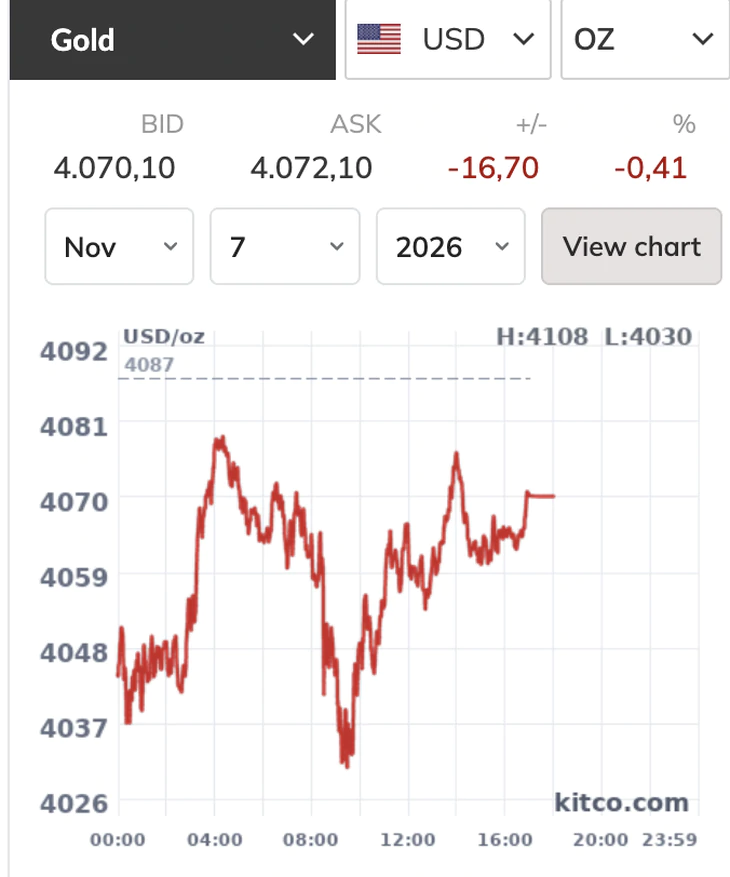
At the close of the preceding trading week, spot gold settled at approximately 3,876.4 USD per ounce, marking a notable local floor reflecting multi-month consolidation phases. However, momentum shifted sharply over the subsequent seven days, propelling spot gold to 4,072 USD per ounce. This robust weekly appreciation of nearly 200 USD per ounce—roughly equivalent to a gain of 6.2 million VND per tael—has signaled a strong bullish continuation pattern across global commodities desks, with short-term technical targets now projected toward 4,279 USD per ounce in the immediate future.
The catalyst for this renewed upward trajectory was further intensified by developments in the Middle East. Geopolitical friction heightened following direct diplomatic and security warnings, accompanied by heightened military postures involving regional missile capabilities. According to commodities analysts, while these localized conflicts traditionally inject immediate safe-haven flows into energy and precious metals markets, their underlying long-term impact on foundational global economics remains bounded.
Tran Duy Phuong, a prominent financial and commodities expert, noted that while the complex Middle East situation will provide near-term support for recovering crude oil prices—which in turn may temporarily cap aggressive rallies in gold and silver—a severe, protracted macroeconomic shock remains unlikely.
Furthermore, political shifts in major economies continue to mold market expectations. With legislative shifts impacting executive policy execution heading into early 2027, energy markets face structural constraints that bolster the long-term appreciation potential of gold relative to historical baselines. Simultaneously, interest rate projections suggest that the Federal Reserve’s monetary tightening cycle is nearing its definitive conclusion, with market consensus pricing in at most one final rate adjustment. Once the central bank halts its rate-hike campaign, non-yielding assets such as gold and silver are widely anticipated to resume aggressive upward momentum.
Domestic Gold Premiums and Retail Market Dynamics
The ripple effects of international volatility have been acutely felt within domestic retail markets, where physical gold prices continue to trade at substantial premiums compared to spot valuations converted at official bank exchange rates.
When evaluated against current commercial bank reference rates, international spot gold equates to roughly 126.6 million VND per tael. Nevertheless, domestic trading values for benchmark SJC gold bars have maintained firm ground at approximately 141 million VND per tael for selling prices, while acquisition quotes hover around 138 million VND per tael. Similarly, 9999 purity plain gold rings have maintained selling levels near 140.5 million VND per tael, with buy-in prices registered at 136.5 million VND per tael.
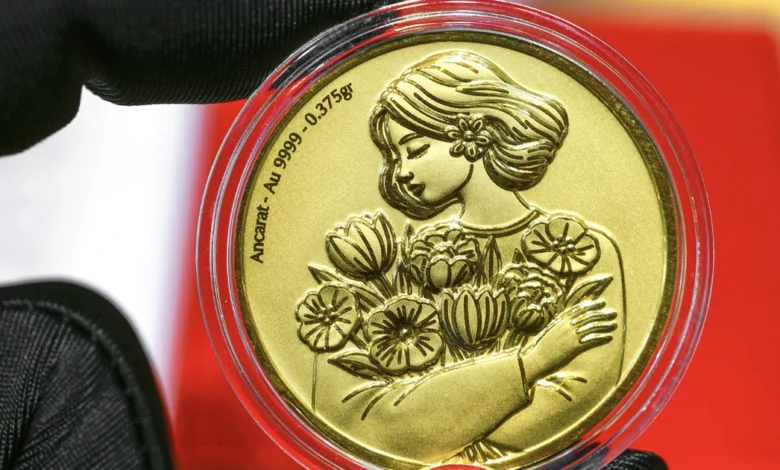
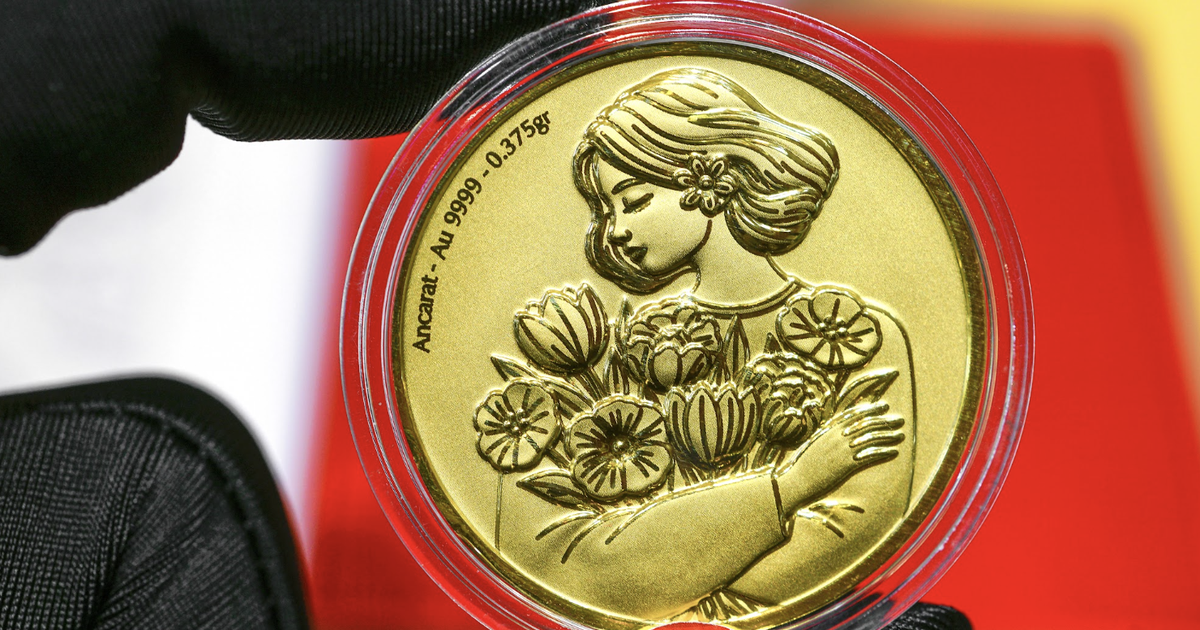
The intense velocity of international price fluctuations has forced domestic bullion enterprises to widen their bid-ask spreads significantly—expanding up to 4 million VND per tael—as a risk-mitigation strategy against sudden overnight market gaps. Alternative private trading houses, such as Ancarat and Mi Hong, report selling rates oscillating between 141 million and 145.5 million VND per tael, creating a substantial domestic premium that currently exceeds international spot conversions by roughly 14.4 million VND per tael.
This persistent divergence has raised critical questions among retail investors regarding optimal entry points. Financial advisors caution that because physical domestic holdings carry elevated premiums over global benchmarks, participants must carefully weigh transaction costs and liquidity risks before committing capital to physical bullion during periods of heightened market turbulence.
Long-Term Macroeconomic Projections and Silver Market Performance
Looking beyond immediate weekly catalysts, international institutions have updated their multi-year commodity forecasts to account for shifting inflation paradigms and central bank reserve management strategies.
In its comprehensive October Commodity Markets Outlook, the World Bank projected that average global gold prices for the year 2026 would reach 4,600 USD per ounce, representing a substantial 33.6% increase compared to 2025 averages. However, this bullish cycle is anticipated to face cyclical headwinds in subsequent years. World Bank models forecast a 7.6% correction in 2027, bringing average prices down to 4,250 USD per ounce, followed by an additional 5.9% decline in 2028 toward the 4,000 USD per ounce threshold. Consequently, industry experts emphasize that while precious metals maintain a robust bullish outlook through the conclusion of the current calendar year, breaking past historical ceilings above 5,600 USD per ounce remains an improbable scenario over the next two years.
Parallel developments in the silver market mirror the broader macroeconomic sentiment governing precious metals. Spot silver closed the trading week at 51.82 USD per ounce, translating to approximately 1.61 million VND per tael based on prevailing banking exchange rates. Domestic silver distributors, including Ancarat, SBJ, and Phu Quy, have listed retail selling prices ranging from 1.618 million to 1.65 million VND per tael, with acquisition values supporting the 1.569 million to 1.599 million VND per tael range.
As market participants prepare for forthcoming macroeconomic releases—including the United States Consumer Price Index (CPI) report slated for publication—any definitive evidence of persistent inflationary cooling is expected to act as the primary catalyst for the next leg up in global precious metals valuations.