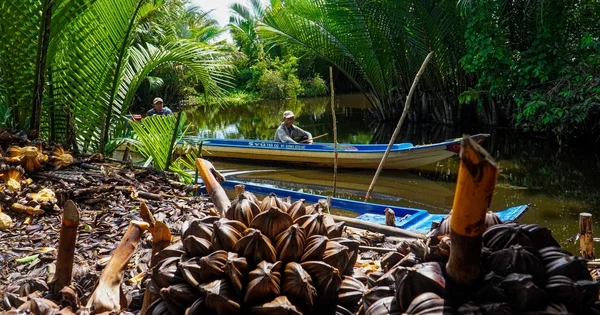
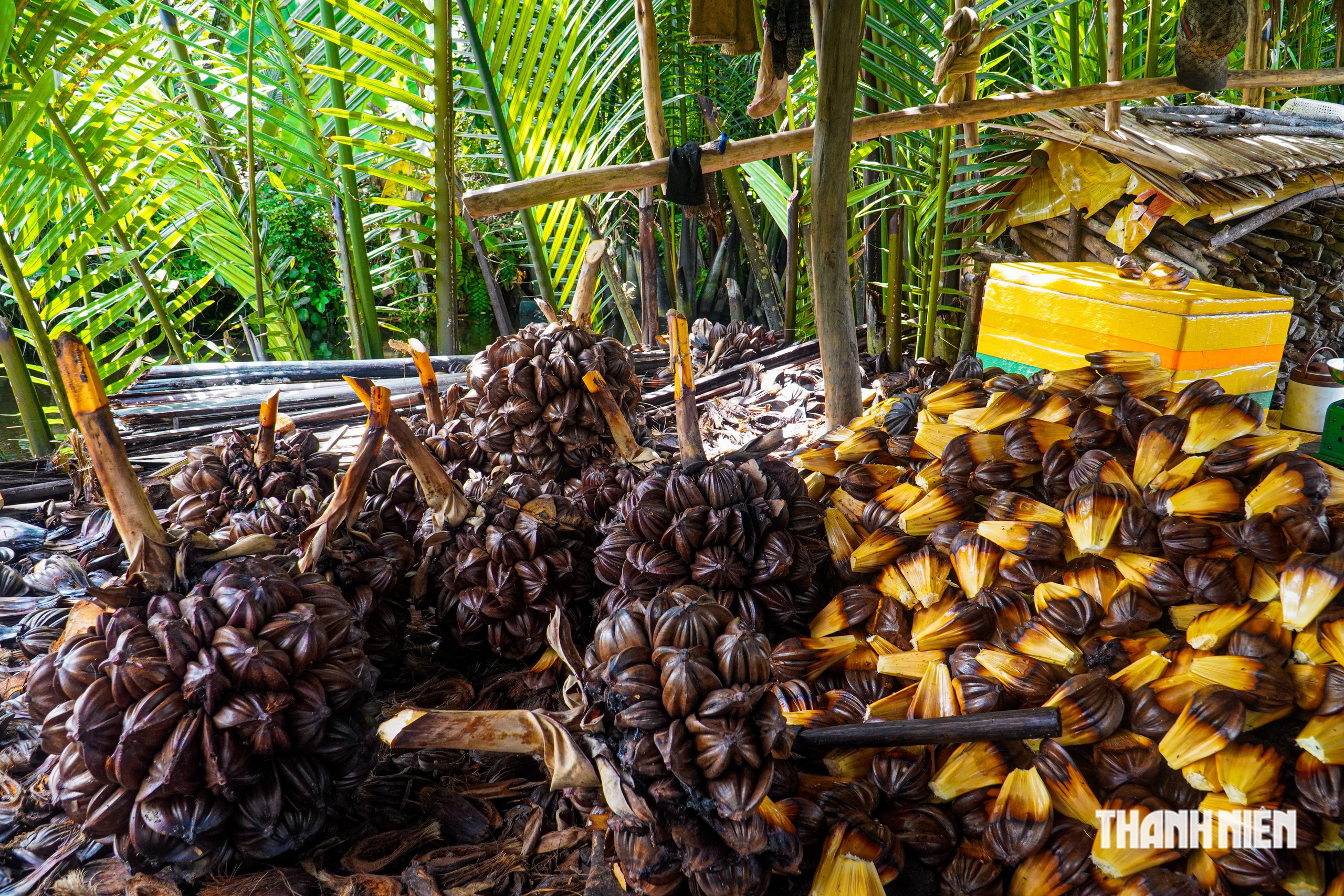
In the heart of the Mekong Delta, specifically within the My Phuoc Ward of Can Tho City, a traditional landscape defined by winding canals and dense nipa palm forests is undergoing a quiet economic transformation. Once harvested primarily for their leaves, which were traditionally used as basic roofing material for rural dwellings, the nipa palm (Nypa fruticans) is now fueling a burgeoning industry centered on its fruit. The "nipa palm villages" of the region have turned the humble, often overlooked fruit into a lucrative daily source of income for local families, highlighting a shift toward sustainable, high-value agricultural exploitation.
The Shift in Economic Perspective
For generations, the nipa palm was viewed as a staple of construction rather than a commodity for consumption. Locals would weave the broad leaves into thatch panels to waterproof their homes, a practice that sustained the delta’s architecture for centuries. However, as modern construction materials replaced natural thatch, the economic relevance of the palm appeared to wane.
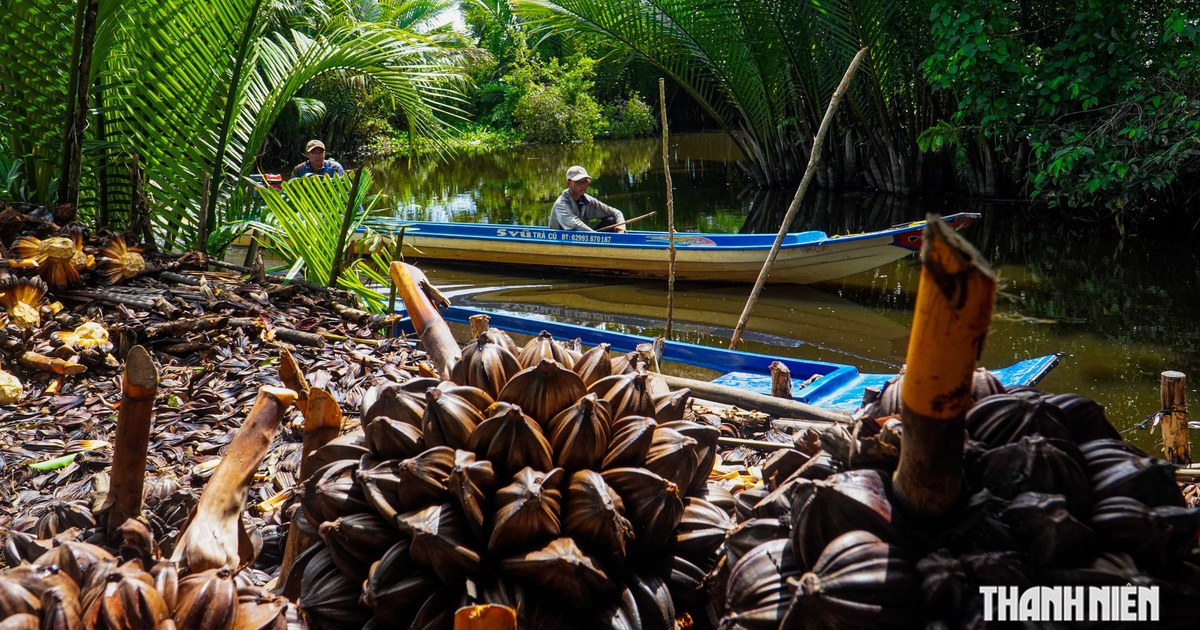
The recent resurgence in the popularity of nipa palm seeds—the edible, jelly-like endosperm found within the hard shell—has revitalized the local economy. Today, this product is in high demand for use in desserts, refreshing beverages, and as a standalone snack. This transition from a building material provider to a culinary resource has allowed families to move away from subsistence living toward a more stable, market-oriented income stream.
A Typical Morning in the Nipa Palm Canals
The workday for the harvesters in My Phuoc begins before the heat of the sun peaks. Equipped with wooden boats, machetes, and collection crates, farmers navigate the intricate web of narrow canals that snake through the naturally occurring nipa palm groves. The process of harvesting is not merely a task of collection but an art of selection.
Experienced harvesters, such as 51-year-old Dang Van Ai, explain that the most critical phase is identifying the maturity of the palm fruit. "A harvester must be able to judge the ripeness by the color and the tension of the shell," Ai notes. "If the fruit is too young, the endosperm is thin and lacks the desired texture. If it is too old, the kernel becomes tough and loses its appeal."
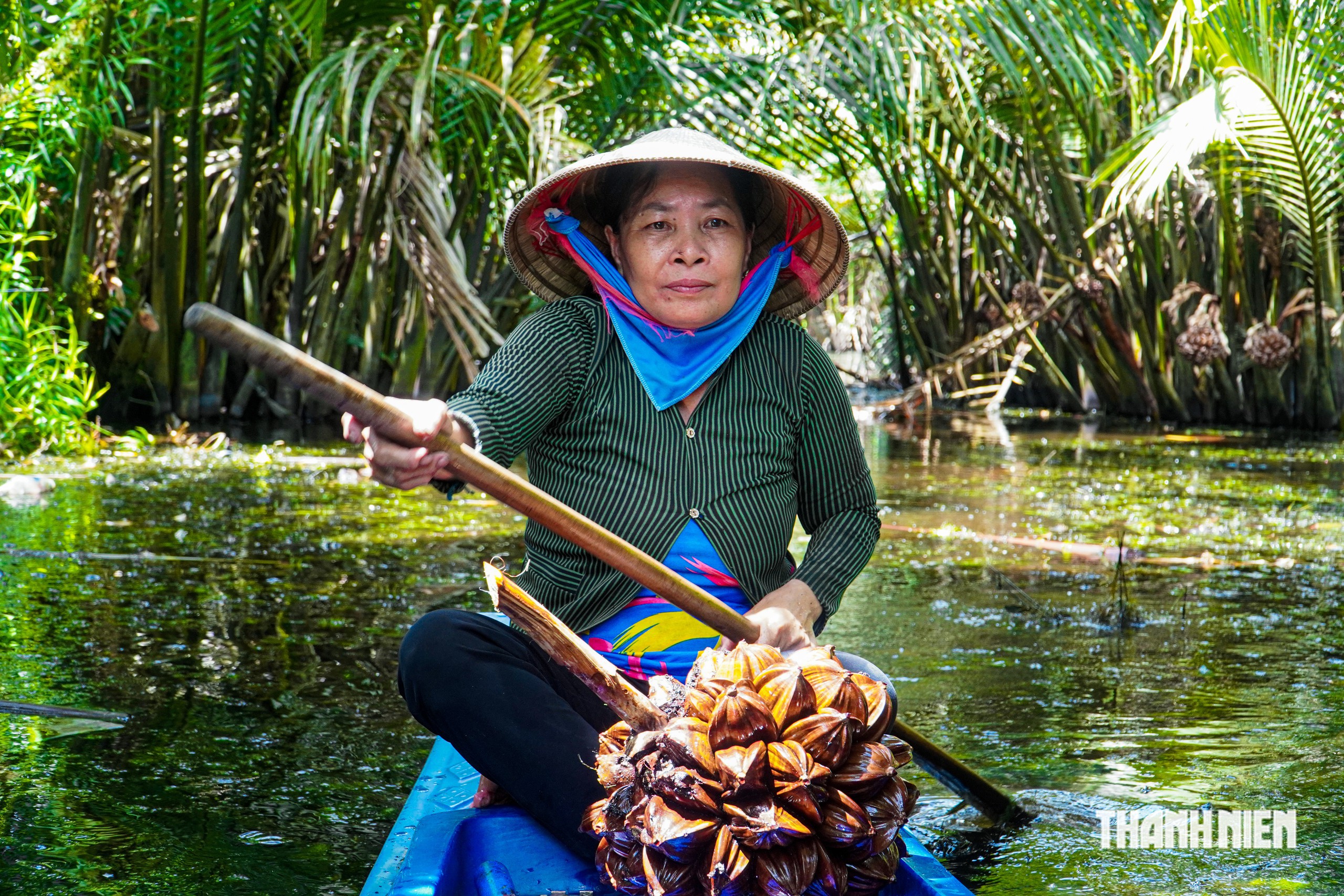
If a cluster is deemed not yet ready for harvest, the farmers will mark the area and return within five to seven days. This selective harvesting ensures the sustainability of the groves, preventing over-exploitation while maintaining a consistent quality that commands a premium price from wholesale merchants.
The Anatomy of the Industry: From River to Market
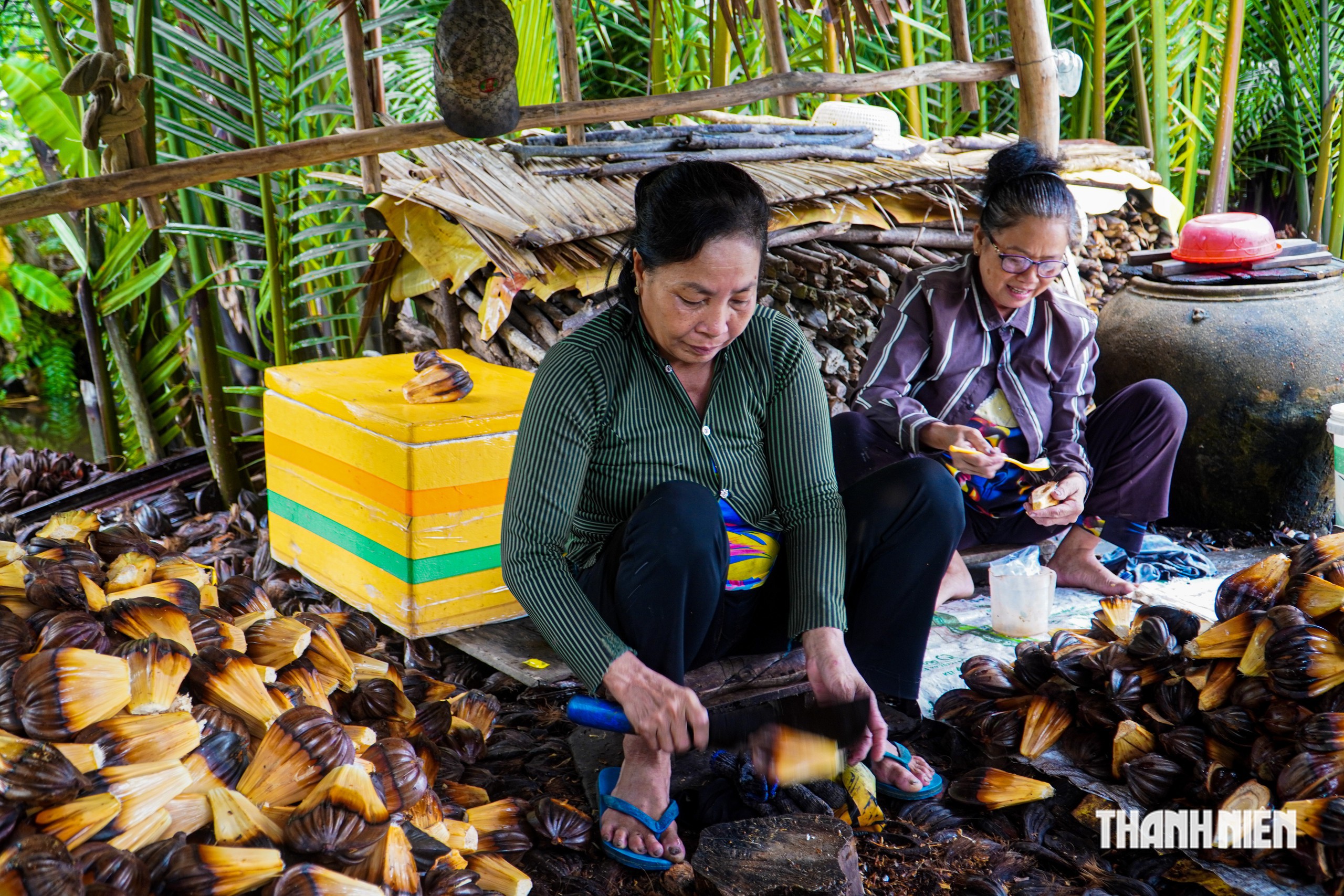
Once the mature clusters are harvested and transported to the riverside homes of the processors, the work shifts from physical labor to precision handcrafting. Using heavy mallets, the workers crack open the thick, woody shells to extract the white, translucent jelly.
This extraction process is highly specialized. The delicate endosperm must be removed without bruising, as any damage reduces the commercial value of the product. Once cleaned, the kernels are packed into airtight containers and kept in ice-filled chests to ensure freshness during transport.
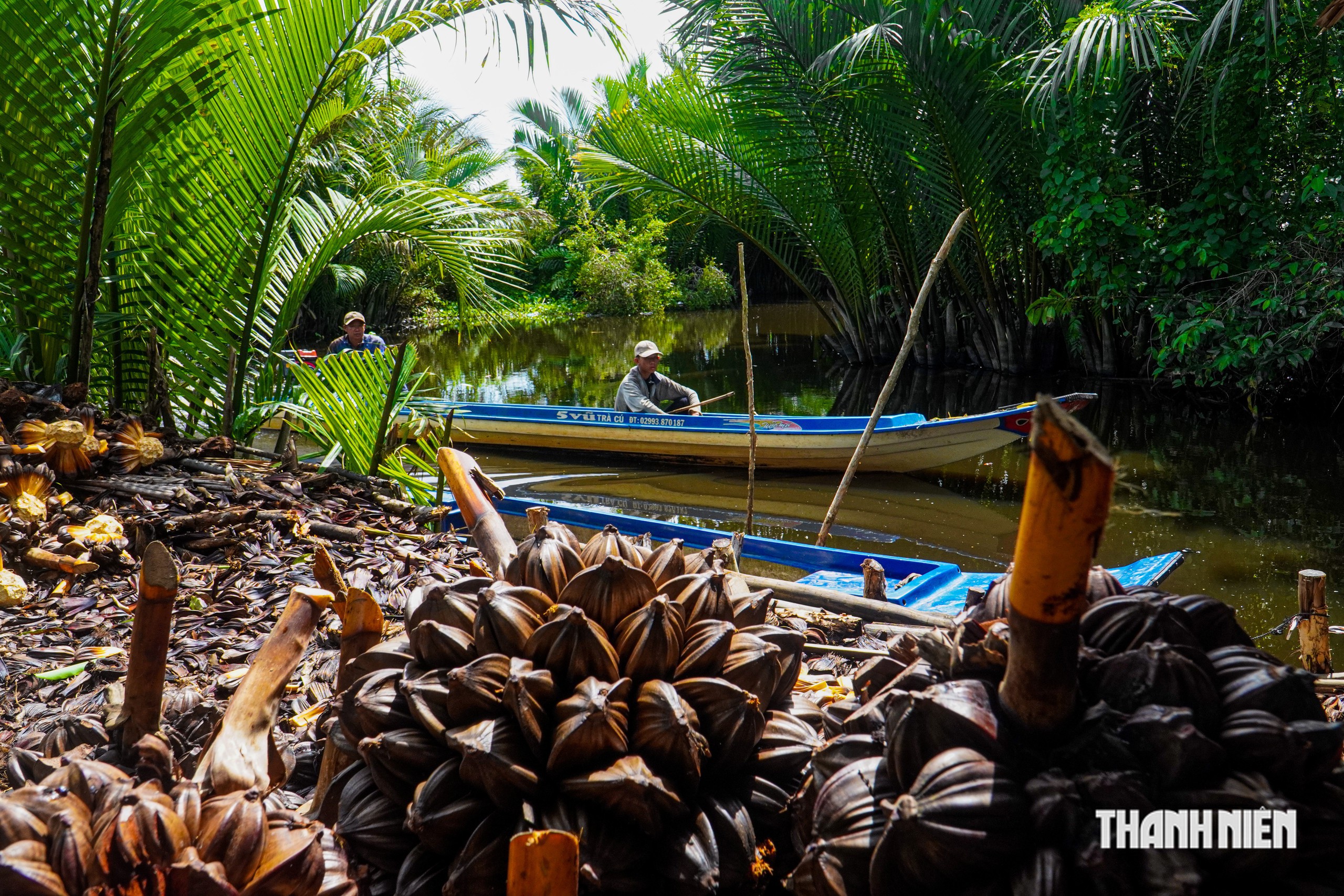
The economic output is significant. A typical household involved in the trade—often working as a family unit with members divided into harvesters, shell-crackers, and processors—can produce approximately 20 kilograms of finished product daily. With market prices fluctuating between 30,000 and 40,000 VND per kilogram, a single family can generate between 600,000 and 800,000 VND per day. For many, this represents a life-changing income that covers household expenses and eliminates the need for expensive hired labor.
The Physical Demands of a Growing Market
The industry is not without its challenges. Harvesting is labor-intensive and requires a high level of physical fitness and local expertise. Harvesters often travel between 10 to 20 kilometers along the canals, frequently navigating shallow waters and dense, sharp foliage to reach the best clusters.
"It is a physically demanding job, but the daily returns make the effort worthwhile," says Huynh Van Canh, a 53-year-old resident who has seen his income stabilize over the last six years. "Previously, we only harvested for local consumption or small, irregular sales. Now, it is the primary pillar of my family’s financial stability."
Strategic Moves Toward Cooperative Consolidation
Recognizing the potential for long-term growth, residents of My Phuoc have begun to move beyond individual, fragmented operations. The formation of cooperative groups, such as the one led by Le Thi Nga, marks a significant step toward professionalizing the sector. The group, currently comprising 16 active members, aims to stabilize the supply chain, aggregate production volumes, and negotiate better terms with regional distributors.
"Before we organized, our supply was inconsistent, making it difficult to fulfill large orders from major retailers," explains Nga. "By pooling our resources, we can guarantee a steady supply of high-quality, processed nipa palm kernels to satisfy larger market demands."
Broader Implications and Future Potential
Local authorities are now looking at the nipa palm industry as a candidate for the OCOP (One Commune, One Product) program. This government-backed initiative aims to promote regional specialties, standardize production processes, and improve packaging and food safety protocols.
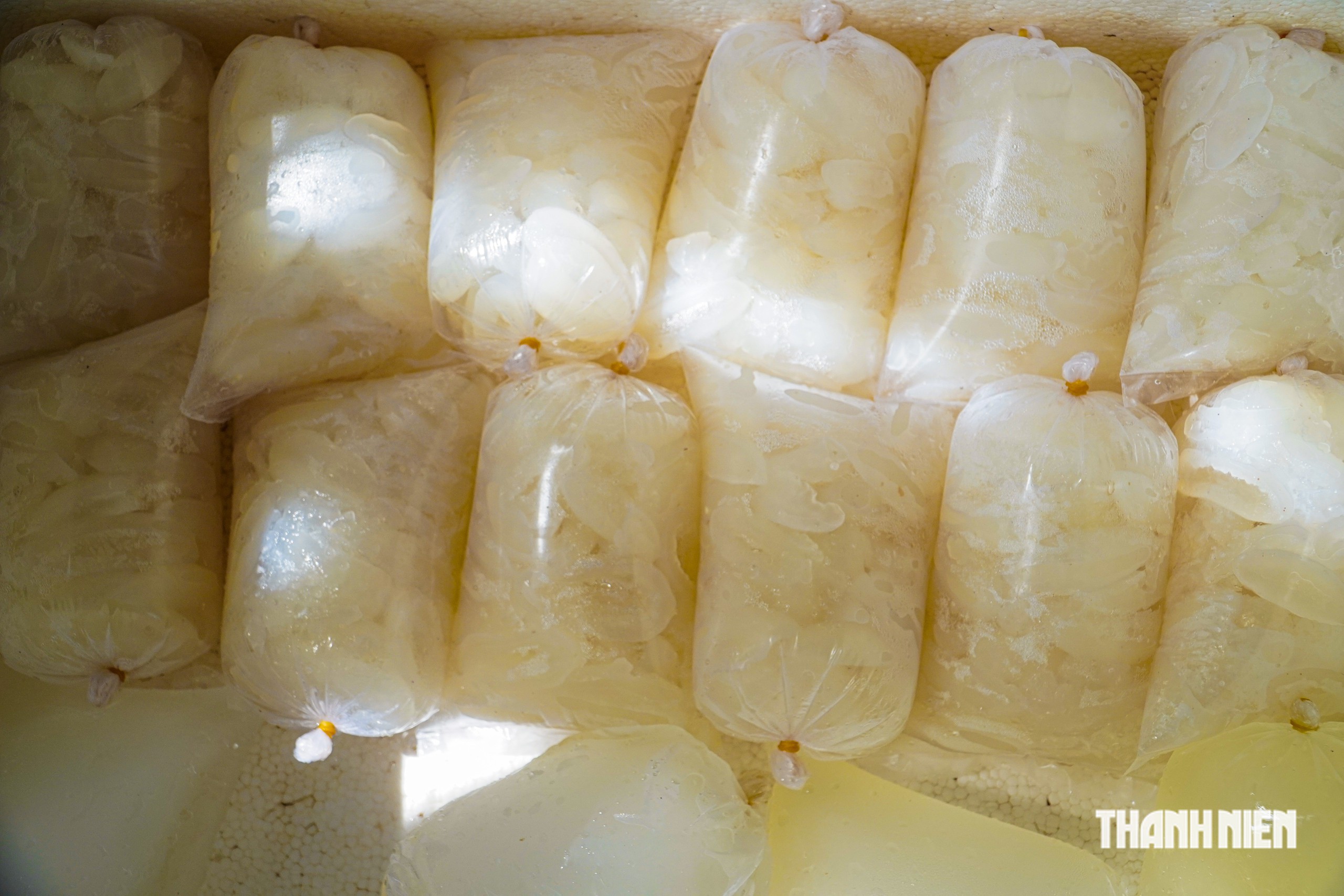
The vision is to transition from selling fresh, unprocessed kernels to creating value-added goods such as canned nipa palm jelly, dried snacks, and bottled nipa-based drinks. These products have a longer shelf life and are better suited for sale in supermarkets and broader national markets.
However, industry experts warn that scaling up will require rigorous attention to detail. "To maintain a sustainable market, the focus must remain on food safety, standardized packaging, and efficient cold-chain logistics," notes Nguyen Thi Hanh, a local processor. "We have the product, but we must now prove that we can meet the stringent requirements of modern retail."
The Socio-Economic Outlook
The success of the nipa palm trade in My Phuoc serves as a microcosm for the potential of the Mekong Delta’s bio-economy. By leveraging natural resources that are abundant and endemic to the region, local communities are creating resilient, small-scale industries that provide stable employment.
As the industry moves toward formalization, it faces the typical challenges of transition: balancing traditional knowledge with modern food safety regulations and ensuring that the natural groves are managed in a way that prevents depletion. Nevertheless, the trajectory for the "nipa palm villages" is positive. The rhythmic sound of mallets cracking shells and the sight of boats laden with fresh fruit have become symbols of a community that is effectively turning the tide of economic uncertainty.
The story of the nipa palm in My Phuoc is not just about the fruit; it is about the empowerment of rural laborers who have successfully identified a niche, organized their efforts, and secured their place in the modern Vietnamese market. As infrastructure improves and the brand value of these local products increases, the humble nipa palm may well become a cornerstone of sustainable development for the entire region.