Ministry of Information and Communications and VCCI Forge Strategic Partnership to Accelerate National Digital Transformation


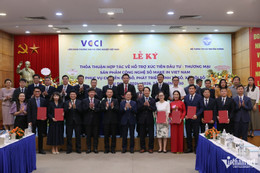
In a significant move to catalyze the nation’s digital trajectory, the Ministry of Information and Communications (MIC) and the Vietnam Chamber of Commerce and Industry (VCCI) have officially entered into a comprehensive cooperation agreement. The partnership, formalized on July 30, 2024, is designed to bolster the promotion and adoption of "Make in Viet Nam" digital technology products, providing a roadmap for digital transformation across the domestic business landscape for the 2024-2026 period, with a long-term vision extending to 2030.
The agreement marks a pivotal alignment between the government body overseeing technological policy and the primary organization representing the voice of the Vietnamese business community. By synchronizing efforts, both entities aim to resolve existing bottlenecks that have historically hindered small and medium-sized enterprises (SMEs) from successfully integrating digital solutions into their core operations.
The Imperative for Leadership-Led Transformation
During the signing ceremony in Hanoi, Minister of Information and Communications Nguyen Manh Hung emphasized a fundamental shift in the approach to digital adoption. Addressing VCCI Chairman Pham Tan Cong, the Minister asserted that VCCI must serve as a model of successful digital transformation before it can effectively advocate for such changes among its constituents.

Minister Hung underscored that the national digital transformation program, now entering its fifth year, has yielded critical insights. The primary obstacle is not merely technical, but cultural and structural. According to the Minister, "Digital transformation starts with the leadership." He argued that for any organization or enterprise, the process must be driven by a firm decision from the top down.
The Minister’s guidance was clear: leaders must personally engage with digital systems, understand the data flows of their organizations, and be willing to change traditional working habits. When leaders mandate that employees input tasks into digital environments, the process becomes streamlined. Once data is digitized, the application of advanced technologies like Artificial Intelligence (AI) becomes a matter of operational efficiency rather than a complex technological hurdle.
Chronology and Strategic Context
The cooperation between the MIC and VCCI is not an isolated event but a culmination of four years of national digital development efforts. Since the inception of the national digital transformation agenda, Vietnam has sought to move beyond mere infrastructure upgrades toward the integration of domestic technology into the economy.
- 2020-2023: The formative years focused on building national digital infrastructure and raising awareness.
- July 2024: The formalization of the MIC-VCCI partnership to bridge the gap between technological providers and traditional business sectors.
- 2024-2026 (Strategic Period): The current roadmap targets the systematic integration of "Make in Viet Nam" digital solutions across industries, with VCCI facilitating the connection between tech providers and the wider business community.
- 2030 Vision: The ultimate goal is to achieve a digital economy that contributes significantly to the national GDP, with a robust ecosystem of globally competitive Vietnamese technology firms.
Data-Driven Collaboration: Bridging the Gap
Under the terms of the agreement, the two organizations will implement a data-sharing and advisory framework. The MIC will provide VCCI with a curated list of "Make in Viet Nam" digital solutions and services, categorized by industry and function. In return, VCCI will conduct extensive surveys and investigative research to identify the specific digital needs of its members.

This feedback loop is expected to solve one of the most persistent problems in the domestic tech market: the misalignment between supply and demand. Often, software developers build solutions that do not address the specific pain points of traditional SMEs. By feeding real-world business requirements back to the developers, the MIC and VCCI aim to foster the creation of more relevant, user-centric, and cost-effective digital tools.
Furthermore, the partnership includes a commitment to:
- Market Development: Jointly organizing forums and trade promotion events to connect tech providers with potential clients.
- Investment Support: Assisting tech firms in securing intellectual property rights and navigating international expansion.
- Capacity Building: Providing guidance and consulting services to help enterprises transition their business models.
Official Reactions and Industry Implications
VCCI Chairman Pham Tan Cong acknowledged the historical hesitation within the business community, noting that many enterprises have remained in a "wait and see" mode due to concerns over high costs and potential operational disruptions. "I have wanted to pursue this for many years, but we often felt stuck due to institutional challenges and a lack of clear direction," Cong admitted.
He expressed renewed confidence following the dialogue with Minister Hung, stating that VCCI is now prepared to take a pioneering role. With 60 years of history, VCCI intends to leverage its influence to drive this change, viewing digital transformation not just as an IT upgrade, but as the primary vehicle for increasing competitiveness and economic efficiency in the modern era.

Six major Vietnamese technology firms—Viettel, VNPT, MobiFone, FPT, CMC, and MISA—have already committed to supporting this initiative. These entities will work closely with VCCI to provide the necessary technical expertise and localized support for enterprises undergoing the transition.
The Broader Economic Impact
The implications of this partnership extend far beyond the immediate digital projects. By encouraging the adoption of domestic technology, the government is essentially creating a "home-grown" market that allows Vietnamese tech firms to scale. A larger, more sophisticated domestic customer base will enable these companies to refine their products before entering global markets, a core tenet of the "Make in Viet Nam" policy.
For traditional businesses, the move towards digitalization is an existential necessity. As global supply chains become more data-centric, companies that fail to adopt digital tools risk being excluded from international trade opportunities. The MIC-VCCI collaboration acts as a catalyst, providing the necessary institutional framework to lower the barrier to entry for these businesses.
Fact-Based Analysis of Future Challenges
While the enthusiasm for the partnership is high, analysts note that several challenges remain. The primary hurdles include:
- Workforce Skills: A significant portion of the Vietnamese workforce requires reskilling to operate in a digital-first environment. While leadership may mandate change, the successful execution of this mandate depends on the technical literacy of mid-level managers and staff.
- Cybersecurity: As businesses move their operations online, they become more vulnerable to cyber threats. The partnership must ensure that digital transformation is accompanied by robust cybersecurity training and infrastructure.
- Regulatory Adaptation: As identified by Chairman Cong, there are still bureaucratic bottlenecks that may hinder the rapid adoption of new business models. Future success will require ongoing dialogue between the business sector and legislative bodies to ensure that regulations keep pace with technological advancement.
Conclusion
The agreement between the Ministry of Information and Communications and the Vietnam Chamber of Commerce and Industry serves as a vital signal to the private sector: the state is fully committed to removing the barriers to digital transformation. By focusing on leadership-led change and fostering a stronger link between tech providers and traditional businesses, this partnership is set to accelerate Vietnam’s digital economy.
The success of this initiative will be measured not just by the number of agreements signed or software licenses sold, but by the tangible increase in productivity and the successful transition of thousands of Vietnamese SMEs into the digital age. As both organizations begin the implementation phase, the eyes of the nation’s business community remain focused on how effectively these high-level strategies translate into practical, day-to-day operational advantages.
Related posts: