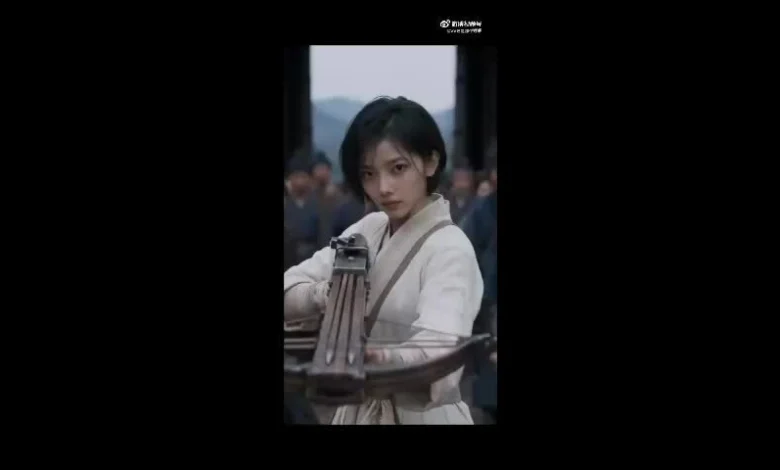
In a groundbreaking development for the Chinese digital entertainment sector, a short-form drama series titled "Cẩm Binh Khí Xuyên Không Thời Tống" (often referred to by its short name "Nhập Tống") has achieved an unprecedented milestone, surpassing 6 billion total views. This project, entirely generated through artificial intelligence, has defied industry skepticism to become a cultural phenomenon, signaling a radical shift in how audiovisual content is produced, distributed, and consumed in the 21st century.
A Technical and Creative Breakthrough
"Nhập Tống" is a multi-genre production that blends elements of action, historical drama, time travel, and military strategy. The narrative follows a group of modern-day special forces soldiers who are abruptly transported back in time to the Song Dynasty. Once there, they must navigate high-stakes political intrigue and historical crises, utilizing their modern knowledge to alter the course of history.
Despite its massive scale—spanning 10 seasons with approximately 100 episodes each—the series was produced by a remarkably lean team of only 10 individuals. Notably, none of the core team members possessed a professional background in screenwriting or traditional film production. The project was led by Zhang Hansheng, 54, a former freelancer, and Li Zhaohua. The production began as an experimental endeavor in March 2025, with team members working remotely across various provinces.
Chronology of Development and Production
The project’s rise was not overnight, but rather the result of a deliberate, iterative process. After Zhang Hansheng self-taught AI filmmaking techniques in early 2025, he established a studio and recruited a small team of highly efficient collaborators.
The division of labor within the 10-person core team was precise: five screenwriters who also handled editing, one animation specialist, one production manager, and one lead director. Li Zhaohua served as the executive producer and primary screenwriter, while Zhang Hansheng directed the overarching vision.

The production workflow was divided into four critical phases:
- Research and Documentation: Extensive historical study to ensure the "Song Dynasty" setting maintained a baseline of authenticity.
- Script Finalization: Adapting historical and speculative narratives into the fast-paced, episodic format favored by mobile users.
- Character Design and Customization: Refining AI prompts to ensure consistent character appearances, a common pain point in early AI video.
- Visual Styling: Establishing a cohesive aesthetic that separates the series from lower-quality AI generated content.
According to Li Zhaohua, the total computational expenditure for the series has exceeded 1 million RMB (approximately 3.8 billion VND). The team invested heavily in pre-production, often requiring 10 to 20 attempts for complex battle scenes to achieve the desired visual fidelity.
Supporting Data and Industry Context
The success of "Nhập Tống" is reflective of a broader, explosive trend in the Chinese entertainment market. According to the China Netcasting Services Association, the first quarter of 2025 saw the release of 128,000 new short-form dramas, with over 122,000 (roughly 95%) incorporating AI technologies. This translates to an average of over 1,000 new AI-assisted productions entering the market daily.
Market intelligence firm DataEye reported that the AI short-drama and animation market in China exceeded 22 billion RMB in the first five months of the year, with full-year projections estimated at 40 billion RMB. Audience engagement is similarly surging; the platform Hongguo, which hosts "Nhập Tống," saw its daily active user base reach 168 million in July, a 107% year-over-year increase.
Challenges and Critical Reception
Despite the commercial triumph, the series has not been without its detractors. Critics, including those from the Bán Nguyệt Đàm magazine under Xinhua News Agency, have pointed to narrative inconsistencies and the "uncanny valley" effect in character facial expressions. Some viewers have argued that the story is unnecessarily elongated, with some episodes feeling like filler content created solely to maintain the 1,000-episode structure.
The team has acknowledged these shortcomings. They have actively worked to avoid the common AI pitfall of repetitive facial structures by assigning unique features to background characters, such as soldiers and civilians. Even so, the dialogue and emotional beats are occasionally criticized for feeling rigid, a lingering limitation of current generative AI models.

Implications for the Future of Filmmaking
The success of "Nhập Tống" carries significant implications for the future of the global film industry. For the production team, the primary motivation was financial sustainability. Many members of the 10-person crew were previously struggling with economic instability, working multiple jobs to make ends meet. The transition to AI-assisted filmmaking has provided them with a new path for career advancement and creative expression.
Zhang Hansheng, reflecting on the project, stated, "AI has given us the opportunity to work in a completely new medium, and it has given ordinary people like us a chance to change our own destiny."
However, industry analysts warn that the sheer volume of AI content is creating a "quality dilution" problem. While 1,055 AI-produced dramas surpassed 100 million views on Douyin in the first half of the year, this accounts for only 0.47% of total output. Most productions are not yet profitable, with costs per minute falling from 5,000 RMB to just a few hundred RMB as competition intensifies.
Broader Socio-Economic Impact
The shift toward AI-generated long-form short dramas suggests a democratization of content creation. By lowering the barrier to entry, individual creators can compete with larger studios, provided they can master the technical prompt-engineering required to maintain narrative cohesion.
However, the dominance of platforms like Hongguo and Douyin in this space raises questions about the long-term sustainability of the model. Many platforms are now experimenting with profit-sharing schemes, yet the market remains volatile. The success of "Nhập Tống" demonstrates that while AI can handle the heavy lifting of visual production, the "soul" of the project—the plot, pacing, and character stakes—still requires a human hand to guide the machine.
As the technology matures, the distinction between "human-made" and "AI-made" will likely continue to blur. For now, "Nhập Tống" stands as a testament to a pivotal moment where technological accessibility, creative ambition, and shifting consumer habits converged to redefine the landscape of popular entertainment. The series has proven that, regardless of the tools used, the audience’s hunger for a well-paced, immersive narrative remains the primary driver of success in the digital age.