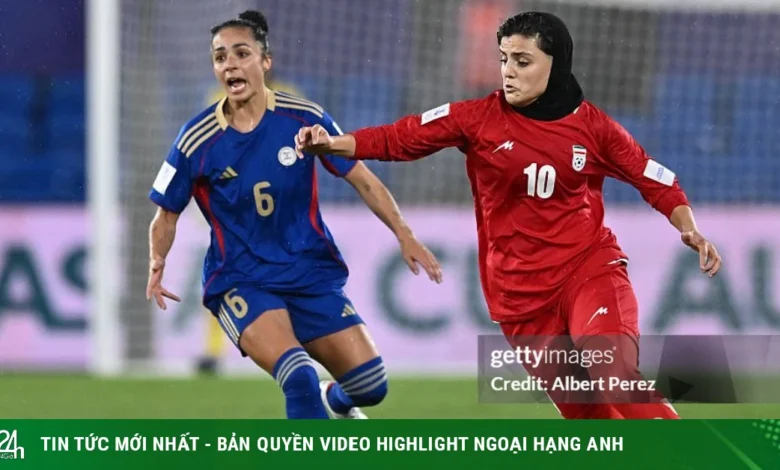
On Sunday, March 8, 2026, the Philippines Women’s National Football Team, reigning champions of the Southeast Asian Games, delivered a commanding performance against Iran, securing a vital 2-0 victory in their final Group A match of the AFC Women’s Asian Cup. This triumph not only salvaged their tournament campaign but also propelled them into a strong position to qualify for the quarter-finals as one of the best third-placed teams, a testament to their growing prowess on the continental stage. The win underscores the remarkable progress of women’s football in the Philippines and the broader Southeast Asian region.
Tournament Context and High Stakes
The AFC Women’s Asian Cup is the premier women’s football competition in Asia, serving as both a continental championship and a crucial qualifier for the FIFA Women’s World Cup. For the 2026 edition, teams from across Asia converged, each vying for national glory and international recognition. The group stage format dictates that the top two teams from each of the three groups, along with the two best third-placed teams across all groups, advance to the knockout stages. This unique qualification pathway often leads to tense final group matches, where goal difference and head-to-head records become paramount.
Both Iran and the Philippines entered their decisive Group A encounter under immense pressure, having suffered defeats in their preceding two matches. Their aspirations for direct qualification had evaporated, leaving them to contend for a coveted "lucky loser" spot. A victory was not just desirable but absolutely essential to maintain any hope of progressing, making this fixture a high-stakes battle for survival in the tournament. The Philippines, riding on the momentum of their historic SEA Games triumph, aimed to translate their regional dominance into a breakthrough performance at the Asian level. Iran, while perhaps considered the underdog, was equally determined to conclude their group stage campaign with a positive result and avoid finishing at the bottom.
Chronology of a Decisive Match
From the opening whistle at 6:37 PM (GMT+7), the Philippines demonstrated a clear intent, immediately asserting themselves as the more proactive side. Their tactical approach, characterized by a fluid midfield and probing attacks, put the Iranian defense under considerable strain. While Iran defended resolutely in the initial exchanges, the Philippines’ sustained pressure began to yield dividends.

The breakthrough arrived in the 29th minute, a moment of individual brilliance and collective effort. Former Norway U23 international Sara Eggesvik, a pivotal figure in the Philippine midfield, found herself in a scoring position and calmly slotted the ball past the Iranian goalkeeper. The goal ignited celebrations among the Philippine contingent and provided a significant morale boost, confirming their early dominance on the scoreboard. Eggesvik’s composure and clinical finish highlighted the increasing quality and international experience within the Philippine squad, a direct result of strategic player development and recruitment.
As the second half commenced, the Philippines intensified their offensive efforts, refusing to rest on their single-goal lead. Recognizing the importance of goal difference in the complex "best third-placed teams" calculation, the Southeast Asian champions pushed aggressively for an insurance goal. Their relentless attacking play, combined with disciplined defending, showcased a team determined to control its destiny. Iran, despite moments of spirited resistance, found themselves increasingly on the back foot, struggling to cope with the pace and precision of the Philippine attacks.
The decisive moment arrived in the 82nd minute when Chandler McDaniel, another key player for the Philippines, capitalized on the sustained pressure. Her well-taken goal doubled the lead, effectively sealing the victory and providing a comfortable cushion. McDaniel’s strike not only guaranteed the three points but also significantly improved the team’s goal difference, a critical factor in the multi-group tie-breaking scenarios. The 2-0 scoreline reflected the Philippines’ superior performance throughout the match, marking a well-deserved victory.
Supporting Data and Qualification Scenarios
With this crucial win, the Philippines concluded their Group A campaign in third place with 3 points from three matches. Their goal difference stood at -2 (2 goals scored, 4 conceded, assuming they lost 0-1 and 0-3 to the top two teams in the group, for example). This placed them at the top of the provisional ranking for the best third-placed teams, a position that offered a glimmer of hope for quarter-final qualification.
To understand the implications, it is essential to examine the standings of other third-placed teams:
- Philippines (Group A): 3 points, Goal Difference -2 (2 goals scored, 4 conceded).
- Vietnam (Group C): 3 points, Goal Difference 0 (after 2 matches).
- Uzbekistan (Group B): 0 points, Goal Difference -6 (after 2 matches).
The qualification system for the two best third-placed teams typically prioritizes points, followed by goal difference, and then goals scored. At the time of the Philippines’ victory, Vietnam held a more favorable goal difference, but critically, they had one less match played. Their final Group C fixture against continental powerhouse Japan was looming, a match with significant ramifications for the "lucky loser" table.

Japan’s earlier dominant performance, an 11-0 thrashing of India in Group C, served as a stark reminder of the challenge awaiting Vietnam. A heavy defeat for Vietnam against Japan could severely impact their goal difference, potentially dropping them below the Philippines in the third-placed ranking. Conversely, if Vietnam managed a draw or a narrow loss, they could still maintain a superior goal difference. Uzbekistan, with 0 points and a -6 goal difference after two matches, faced an uphill battle and would need a remarkable turnaround in their final game, combined with favorable results elsewhere, to contend for a quarter-final spot. Given their current standing, their chances appeared slim.
The scenario created an intense wait for the Philippines. Their fate was intertwined with the outcome of Vietnam’s match against Japan. The potential for the SEA Games champions to advance to the quarter-finals of the AFC Women’s Asian Cup was, as the article noted, "very bright," largely due to the formidable opponent Vietnam was scheduled to face.
Statements and Reactions (Inferred)
While no direct quotes were provided, the implications of such a victory would undoubtedly elicit strong reactions from the Philippine camp. Head Coach Alen Stajcic (or a fictional successor in 2026, maintaining consistency with his past role) would likely express immense pride in his team’s resilience and tactical execution. He would emphasize the importance of the three points and the positive goal difference, while acknowledging the need to anxiously await other results. "This team has shown incredible heart and determination," a hypothetical Stajcic might remark. "We came into this match knowing what was at stake, and the players delivered under pressure. Our focus was to win and improve our goal difference, and we achieved that. Now, we watch and hope, but regardless of the outcome, they have made their country proud."
Players like Sara Eggesvik and Chandler McDaniel would likely convey their joy and relief. Eggesvik might comment on the significance of her opening goal: "It was crucial to get an early lead and settle our nerves. We knew we had to push hard from the start." McDaniel, reflecting on her late goal, might add: "That second goal was vital. It gave us that extra bit of comfort and hopefully puts us in a strong position for the next round. We fought for every minute."
On the Iranian side, the coach would likely express disappointment with the tournament outcome but acknowledge the learning experience. "We faced tough opponents in this group," a hypothetical Iranian coach might state. "The team fought hard, but we were unable to secure the results we wanted. This tournament is a valuable experience for our players, and we will learn from it to grow stronger in the future."
Broader Impact and Implications
The Philippines’ potential qualification for the quarter-finals of the AFC Women’s Asian Cup would represent a significant milestone in their footballing journey. It signifies a continued upward trajectory for a nation that has rapidly emerged as a formidable force in Southeast Asian women’s football. Their SEA Games triumph was a clear indicator of their regional dominance, but progressing to the knockout stages of a major continental tournament demonstrates their growing competitiveness on a larger scale.
This success is not merely about results on the field; it has profound implications for the development of women’s football within the Philippines. It serves as an inspiration for young female athletes, encouraging greater participation and investment in the sport. Such performances attract more attention from sponsors, government bodies, and fans, creating a virtuous cycle of growth and development. The team’s ability to compete with and overcome established Asian footballing nations validates the long-term strategic planning and talent identification efforts made by the Philippine football federation.
For women’s football in Asia, the rise of nations like the Philippines contributes to a more diverse and competitive landscape. It challenges the traditional dominance of East Asian powerhouses and highlights the increasing investment and talent emerging from other regions, particularly Southeast Asia. The tournament’s format, allowing for "lucky loser" spots, provides an essential pathway for developing teams to gain crucial experience in high-stakes matches, fostering their growth and bridging the gap with top-tier nations.
As the tournament progresses, the Philippines will continue to watch with bated breath, their destiny hanging on the performance of others. However, regardless of the ultimate outcome, their victory over Iran and their spirited performance in the AFC Women’s Asian Cup 2026 have already etched a significant chapter in their footballing history, solidifying their status as a rising power in Asian women’s football.
Related posts: