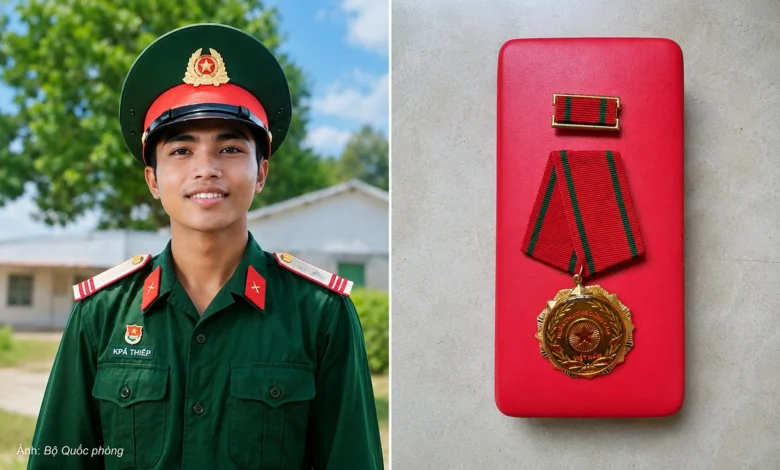
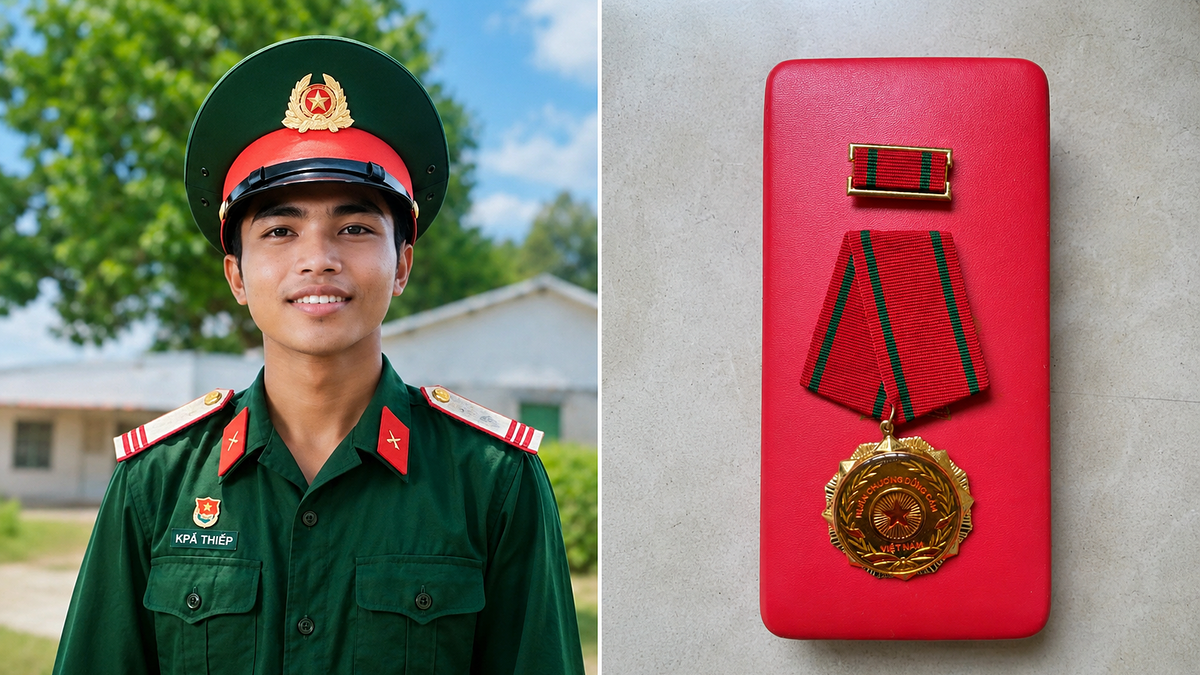
A posthumous commendation for bravery has been awarded to Sergeant Kpui Thiep, who tragically lost his life five days ago while saving two individuals from a perilous situation. Sergeant Thiep, born in 2006 in Chu Se district, Gia Lai province, demonstrated immense courage and selflessness in his final moments, embodying the highest ideals of military service. His sacrifice serves as a poignant reminder of the risks undertaken by those who dedicate their lives to protecting others.
Background of Sergeant Kpui Thiep
Sergeant Kpui Thiep enlisted in the military in February 2024. Following his initial training, he was assigned to the 1st Company, 1st Battalion, 28th Infantry Regiment, part of the Command of Military Affairs, 10th Division. His dedication to duty saw him transferred to a reconnaissance unit within the same regiment, where he was actively engaged in operational readiness. Sergeant Thiep was known among his peers and superiors for his commitment and unwavering sense of responsibility.
The Incident: A Chronology of Courage
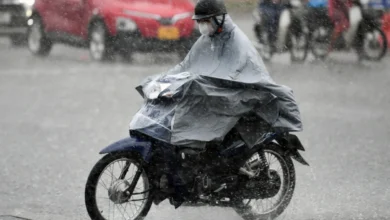
The fateful incident occurred on July 20th, during a scheduled rest period. While at Tai Pêr village, Ia Ko commune, still within Gia Lai province, Sergeant Thiep noticed two individuals in immediate danger due to an approaching flash flood. Without hesitation, he rushed towards the rising waters to rescue Rmah Viêt and Rah Lan HNom. Both civilians were successfully pulled to safety and have since recovered their health, a testament to Sergeant Thiep’s swift and decisive action.
However, in the process of ensuring the civilians’ safety, Sergeant Thiep himself was caught by the surging water. Despite being a trained soldier skilled in rescue operations, the overwhelming force of the flood proved insurmountable. He tragically succumbed to his injuries and drowned at approximately 1 p.m. on the same day. The immediate vicinity of the rescue, identified as a riverbank in Tai Pêr village, became the site of this profound loss.
Official Recognition and Commendation
The Ministry of National Defense has officially recognized Sergeant Kpui Thiep’s heroic act with a posthumous award for bravery. This commendation highlights his exemplary conduct and the spirit of selfless devotion he displayed. The ministry’s statement emphasized that Sergeant Thiep’s actions serve as a powerful symbol of the revolutionary spirit of the military, showcasing a willingness to sacrifice oneself for the protection of the nation and its people. This act is seen as a reflection of the deep-seated patriotism and responsibility ingrained within the armed forces.
Broader Implications and National Impact
Sergeant Thiep’s sacrifice is being viewed as a significant loss not only for his family and his unit but also for the nation. His bravery in the face of extreme danger has resonated deeply, serving as an inspirational example for current and future generations of soldiers. The narrative of his final moments underscores the inherent risks faced by military personnel, even during routine assignments or periods of rest, and the extraordinary courage they often exhibit.
The incident also brings to the forefront the importance of disaster preparedness and response in regions prone to natural calamities like flash floods. While Sergeant Thiep’s actions saved lives, his death also highlights the challenges faced by rescue teams in such rapidly evolving and dangerous situations. Discussions are likely to ensue regarding enhanced training, equipment, and early warning systems to mitigate such tragic outcomes in the future.
The story of Sergeant Kpui Thiep is more than just a report of a soldier’s death; it is a narrative of heroism, sacrifice, and the enduring values of duty and compassion. His actions have cemented his place in the annals of national heroes, a young man who, in his brief but impactful life, made the ultimate sacrifice to ensure the safety of others. The legacy he leaves behind is one of profound courage and an unwavering commitment to the well-being of his fellow citizens.
Supporting Data and Context
Gia Lai province, where Sergeant Thiep served and tragically passed away, is known for its mountainous terrain and susceptibility to heavy rainfall, particularly during the monsoon season. Flash floods are a recurring threat in many rural and remote areas of Vietnam, often posing significant risks to local populations and those undertaking rescue operations. The year 2024 has seen varied weather patterns across the region, with some areas experiencing intensified rainfall leading to increased flood risks. Official meteorological reports from the period indicate a significant weather system impacting the Central Highlands, contributing to the elevated water levels that led to the flash flood.
The Vietnamese military, known as the People’s Army of Vietnam, has a long-standing tradition of prioritizing the protection of civilians and national sovereignty. Soldiers are frequently deployed not only for defense but also for disaster relief and humanitarian aid missions. Sergeant Thiep’s actions align perfectly with this established ethos of service. His unit, the 10th Division, is a key component of the regional military command, responsible for security and stability in a strategically important area.
Family and Community Reactions
While specific statements from Sergeant Thiep’s immediate family have not been widely publicized, it is understood that the loss has been deeply felt. The commendation from the Ministry of National Defense serves as a form of national acknowledgment and solace for their grief. In Vietnamese culture, the sacrifice of a soldier is deeply revered, and the community of Chu Se and Gia Lai province are expected to honor his memory with widespread respect and mourning. Funeral rites and memorial services are anticipated to be conducted with full military honors, reflecting the nation’s gratitude for his ultimate contribution.
Analysis of Implications
Sergeant Thiep’s sacrifice has several significant implications. Firstly, it reinforces the public perception of the military as a selfless protector, willing to face extreme danger for the safety of ordinary citizens. This can strengthen national unity and pride. Secondly, it serves as a critical learning opportunity for disaster management agencies. The swiftness and ferocity of the flash flood, coupled with the tragic outcome for the rescuer, will likely prompt a review of existing protocols and resources for flood response in similar environments. This could lead to improved training for military and civilian rescue teams, as well as investments in better early warning systems and emergency equipment.
Furthermore, the posthumous award highlights the importance of recognizing and honoring individual acts of bravery within the armed forces. Such commendations not only provide a sense of closure and pride for the families of fallen soldiers but also serve as powerful motivators for serving personnel, reinforcing the value placed on courage and sacrifice. The narrative of Sergeant Thiep’s final moments will undoubtedly be integrated into military training and public awareness campaigns, perpetuating the ideals of heroism and duty.
The story also indirectly sheds light on the demographic of Vietnam’s military. Sergeant Thiep, being born in 2006, represents the younger generation of soldiers entering service. His actions demonstrate that the spirit of bravery and sacrifice remains strong among these new recruits, even in an increasingly modernizing military. This is a crucial aspect for maintaining the morale and effectiveness of the armed forces.
In conclusion, the heroic actions and ultimate sacrifice of Sergeant Kpui Thiep represent a profound moment of national mourning and admiration. His bravery in saving two lives, tragically at the cost of his own, has earned him a place of honor and remembrance. The commendation is a fitting tribute to his selflessness, and his story will continue to inspire for generations to come, serving as a potent reminder of the valor and dedication of Vietnam’s soldiers.