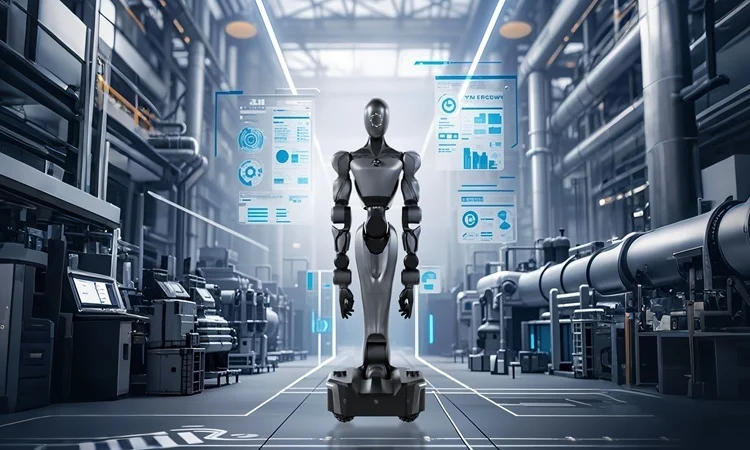
The global race for dominance in artificial intelligence has entered a transformative phase as Chinese technology firms pivot from hardware-centric manufacturing toward the development of sophisticated "brains" for humanoid robots. This strategic shift marks a departure from years of focus on physical aesthetics and basic motor skills, such as running or dancing, toward the creation of embodied AI capable of performing complex, real-world tasks with human-like adaptability.
The Strategic Pivot: From Hardware to Intelligence
For decades, the Chinese robotics sector was defined by its manufacturing prowess—the ability to mass-produce sleek, cost-effective hardware. However, as the commoditization of hardware has compressed profit margins, industry leaders have reached a consensus: the true value in the next generation of robotics lies not in the chassis, but in the intelligence that powers it.
According to data from the research firm ITjuzi, Chinese AI startups dedicated to embodied intelligence raised 93.5 billion yuan ($13 billion) across 322 funding rounds in the first half of 2026. This represents a five-fold increase in investment compared to the previous year. This capital inflow signals a fundamental redirection of resources toward software development, focusing on cognitive systems that allow robots to interpret their environment, learn from visual input, and adapt to new tasks without the need for manual, individual-task programming.
A New Front in the US-China Tech Rivalry
This emerging industrial sector is rapidly becoming a key theater in the broader U.S.-China technology competition. While American firms currently lead in the development of high-end, general-purpose AI foundation models for robots, Chinese developers are leveraging their proximity to massive manufacturing ecosystems and unique access to real-world training data to bridge the gap.
Industry analysts suggest that the nation that successfully integrates AI with industrial machinery will secure a significant competitive advantage in factory automation and logistics. This synergy has the potential to fundamentally redefine global industrial productivity. "Artificial intelligence is truly the most critical missing link in the entire robotics ecosystem," noted Gao Yang, founder of Spirit AI, in recent industry discussions.
Chronology of the Embodied AI Surge
The rapid acceleration of the Chinese robotics sector can be traced back to a series of breakthroughs in late 2025 and early 2026.
- Early 2025: Chinese manufacturers began shifting focus from simple industrial arms to bipedal and humanoid platforms, though these were largely limited to pre-programmed tasks.
- Late 2025: The emergence of "Generalist" AI models in the West began to show that robots could learn tasks from short video demonstrations, triggering an immediate response from Chinese venture capital.
- Q1 2026: A massive surge in funding occurred, with over 300 rounds of investment focusing specifically on "robot brains."
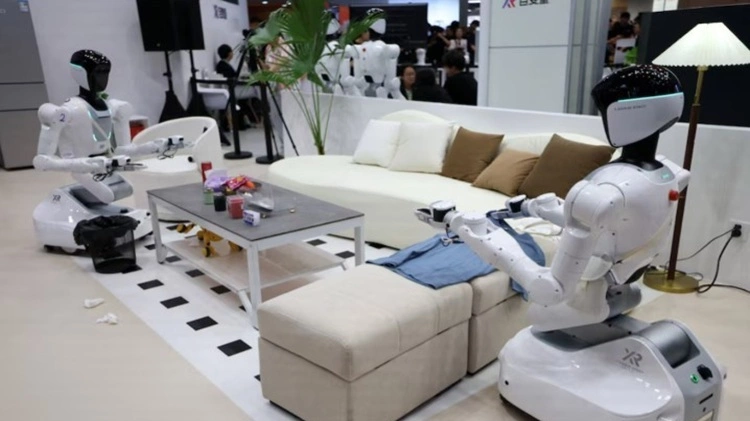
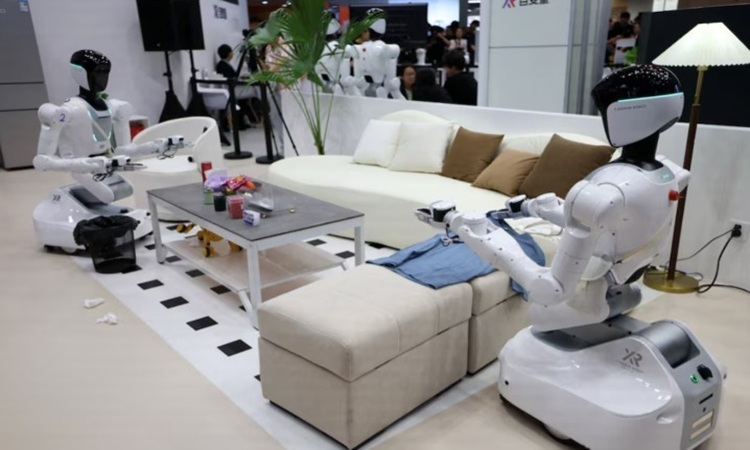
- August 2026: Major industry expos in Beijing showcased robots capable of performing household chores and complex assembly tasks with minimal human intervention, signaling a shift toward commercial readiness.
Training the Robot Mind: The Data Challenge
Unlike Large Language Models (LLMs) that scrape text from the internet, physical robots require high-quality, high-fidelity physical interaction data. This is the primary hurdle for the industry. Building an AI model that can generalize across different tasks requires millions of hours of real-world interaction data.
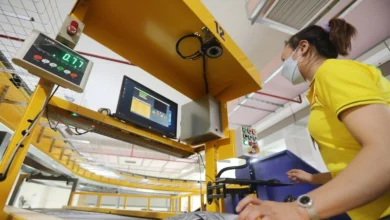
As of early 2026, the global pool of high-quality physical interaction data is estimated at only 500,000 hours—a scarcity that has forced Chinese companies to adopt innovative data-collection strategies. Firms like Spirit AI have employed over 1,000 people to record daily movements and industrial processes, while others like ACE Robotics utilize wearable sensors to track the fine motor skills of workers in retail and hospitality environments.
Robbyant, a subsidiary of the Ant Group, has taken a multi-pronged approach, training its models on 160,000 hours of video data, including 50,000 hours of robots performing tasks under human guidance. By training their software on 20 different robot configurations from 17 brands, they aim to create a universal AI brain that can operate diverse hardware platforms.
Official Responses and Industry Perspectives
Industry experts like Georg Stieler, a robotics consultant, highlight that American labs are currently setting the pace for learning speed and skill transfer. "The standard being set by U.S. labs is incredibly high," Stieler noted. However, Chinese firms are finding success through tight integration with end-users.
By partnering directly with factories and logistics companies, Chinese startups can test and iterate their systems in live, high-pressure environments. Startups such as X Square, Galaxea, and Spirit AI have already reached valuations in the $3 billion range, reflecting investor confidence in this "integrated deployment" model.
"We want robots to transition from following pre-set commands to having the capacity for self-recognition and autonomous problem-solving," says Yang Qian, co-founder and CEO of X Square. This goal is echoed by major players like UBTech, which has recently opened high-paying research roles for AI model development to bolster their internal capabilities.
Broader Implications and Future Challenges
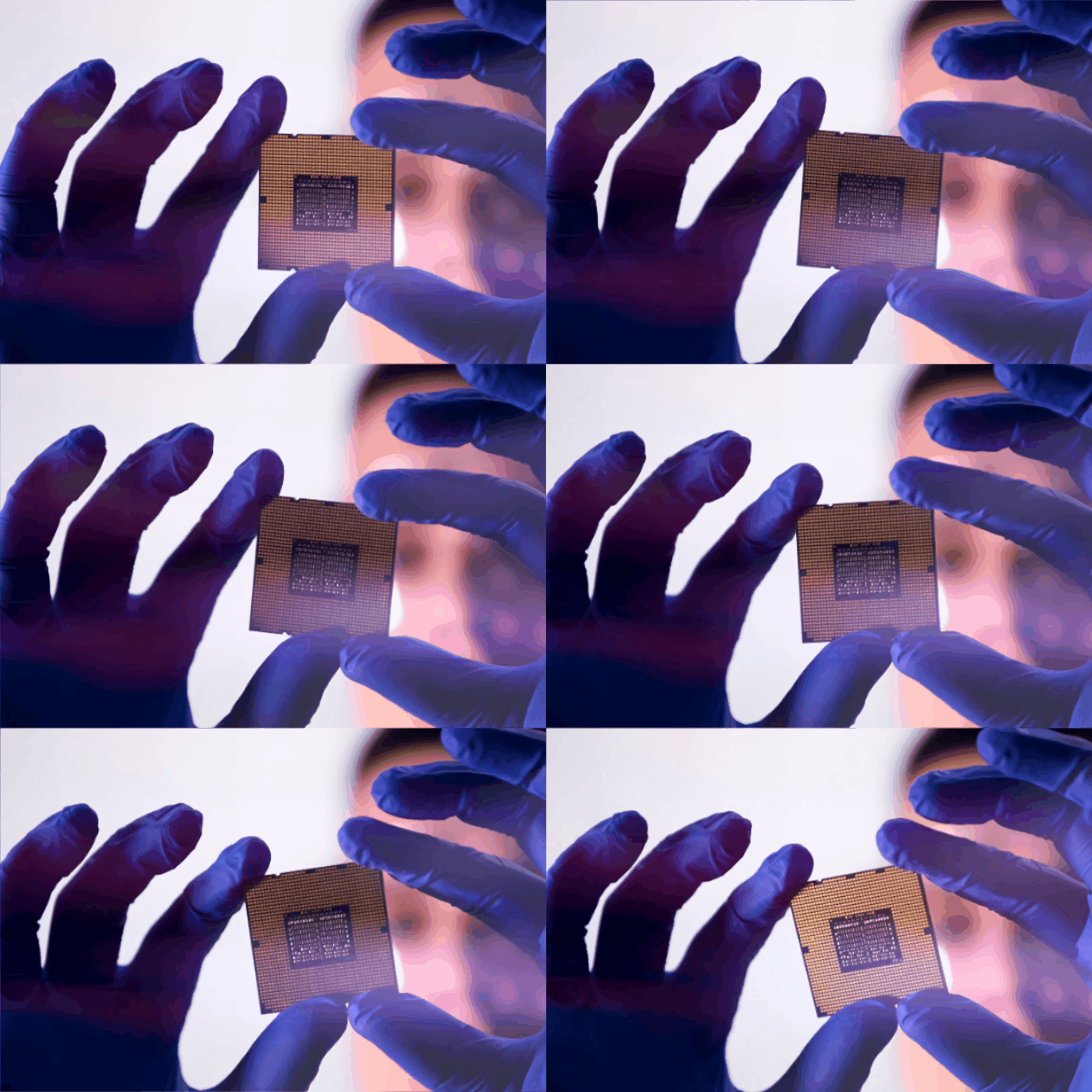
Despite the progress, the industry faces significant headwinds. The U.S.-led restrictions on high-end processing chips, specifically those from Nvidia, present a major obstacle for Chinese developers. As robots become more intelligent, their computational requirements grow, and the lack of advanced semiconductors could become a "bottleneck" for the entire industry.
To mitigate this, many Chinese companies are experimenting with "model distillation"—creating more efficient, compact models that require less computational power—while local chip manufacturers race to develop domestic alternatives.
Furthermore, the scale of production remains a point of contention. According to Merics, China produced 12,800 humanoid robots in 2025, accounting for 90% of the global total. While this is a massive jump from 2024, it is still dwarfed by the 556,000 industrial robots produced annually. The current humanoid robots are primarily used in research labs, controlled factory environments, and logistics hubs rather than general-purpose deployments.
Analyzing the Future Landscape
The transition toward "Embodied AI" is not merely an engineering upgrade; it is an economic necessity for a nation facing a shrinking workforce and rising labor costs. The success of companies like Kepler Robotics, with its K2 model designed for heavy lifting, and UBTech’s deployments in electric vehicle factories, demonstrates that the technology is moving beyond the conceptual phase.
The ultimate goal—a robot capable of learning a new job through observation without significant human reprogramming—is becoming a reality in specific, structured tasks. The next three to five years will be decisive. As the data gap closes and domestic hardware capabilities improve, the focus will shift from "can it do it?" to "how much does it cost to scale?"
If Chinese firms can maintain their current momentum in data collection and industrial integration, they are well-positioned to dominate the supply chain of the next industrial revolution. The race is no longer just about who can build the best robot, but who can create the most efficient "brain" capable of driving the global manufacturing sector into an autonomous future. The outcome of this race will likely define the industrial landscape for the next half-century, setting the terms for how goods are manufactured, transported, and delivered globally.