Determining Residential Land Area for Inherited Property Under Land Law 2024 and Directive 299 Regulations

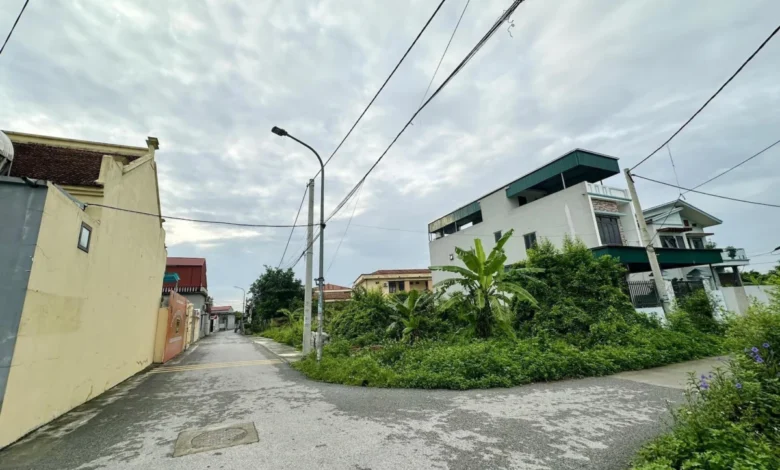
The complex landscape of land ownership in Vietnam often presents significant challenges for heirs attempting to navigate historical records and modern legal frameworks. A recent inquiry regarding a 2,500-square-meter land parcel inherited in 2019 has brought renewed attention to the protocols for re-determining residential land areas. The case involves a plot with a documented history stretching back before 1980, a critical threshold in Vietnamese land law. According to the claimant, the original landholder—their father—had previously declared and registered a residential area of 2,800 square meters under the historical Directive 299/TTg. Despite this, the current Certificate of Land Use Rights (LURC), commonly referred to as the "Red Book," may not fully reflect these historical dimensions, prompting questions about the legal feasibility of re-calculating the residential portion of the plot after an inheritance transfer.
This scenario highlights a common friction point between legacy administrative records and contemporary land management practices. As Vietnam transitions to the implementation of the Land Law 2024, the Ministry of Natural Resources and Environment has provided a framework for how such cases should be handled, emphasizing that while federal guidelines exist, the resolution of specific disputes remains heavily dependent on local cadastral records and provincial regulations.
Historical Context: The Significance of Directive 299/TTg and Pre-1980 Land Use
To understand the current legal dilemma, one must look back at the administrative history of land management in Vietnam. Directive 299/TTg, issued on October 10, 1980, by the Prime Minister, was a foundational effort to survey, measure, and register land across the country for the purpose of establishing a unified land management system. For many families, the documents generated during this period—such as the 299/TTg maps and registration logs—serve as the primary evidence of long-term, stable land use.
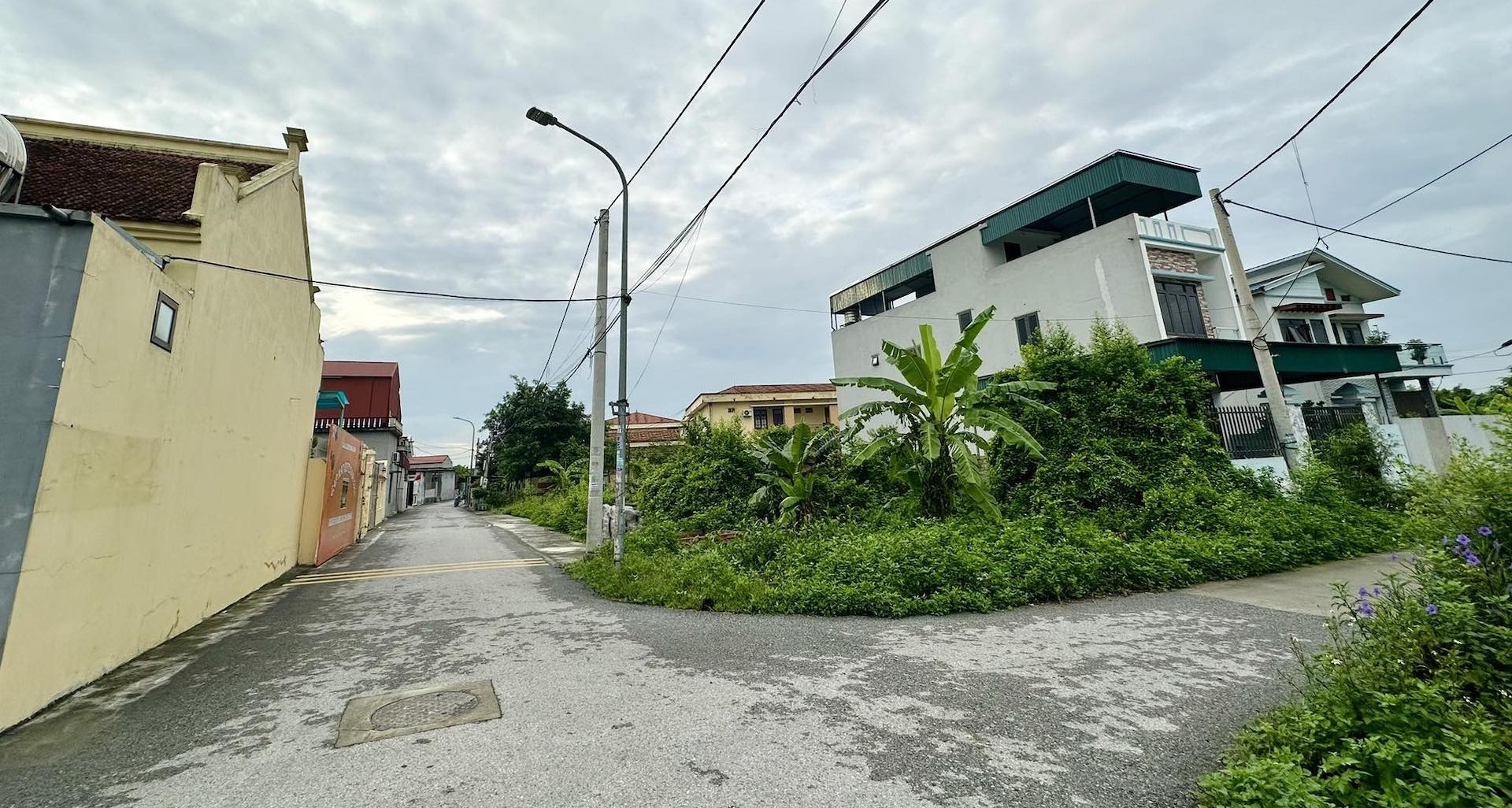
Under Vietnamese law, land used before December 18, 1980 (the date the 1980 Constitution was adopted), is often granted preferential treatment regarding the recognition of residential area. Specifically, if a landholder can prove through Directive 299/TTg records that their plot was used for residential purposes prior to this date, they may be entitled to have a larger portion of their land recognized as "residential" (đất ở) rather than "agricultural" or "garden" land. This distinction is economically vital, as residential land carries significantly higher market value and offers broader construction rights, while also exempting the owner from certain land use fees that would otherwise apply to newly converted plots.
In the case at hand, the discrepancy between the 2,500 square meters inherited and the 2,800 square meters originally declared suggests a potential loss of recognized residential area over decades of administrative updates. The heir’s pursuit of a re-determination is essentially an effort to reclaim the legal status of the land as established by their predecessor.
The Legal Framework of Land Law 2024
The Land Law 2024, which introduces several reforms aimed at protecting the legitimate rights of land users, provides the current basis for addressing these discrepancies. Article 141, Clause 6 of this law specifically addresses the re-determination of residential land areas for plots that have already been granted a LURC.
The Ministry of Natural Resources and Environment has clarified that for an inherited plot to undergo a re-determination of its residential area, it must satisfy a stringent set of four cumulative conditions. Failure to meet any single criterion typically disqualifies the applicant from the re-determination process under this specific provision.
The Four Mandatory Conditions for Re-determination
- Original Land Type Classification: The parcel must be classified as residential land that includes a garden, a pond, or was historically recognized as "homestead" (đất thổ cư). This ensures that the law applies to integrated living spaces rather than purely agricultural or industrial tracts.
- Timing of LURC Issuance: The existing Certificate of Land Use Rights must have been issued prior to July 1, 2004. This date is significant as it marks the effective date of the Land Law 2003, which introduced more standardized procedures for land recognition. Certificates issued after this date are generally presumed to have already accounted for modern measurement standards, unless a specific error can be proven.
- Possession of Historical Documentation: Prior to the issuance of the current LURC, the landholder must have possessed one of the types of documents specified in Clauses 1, 2, 3, 5, 6, and 7 of Article 137 of the Land Law 2024. These documents include records from Directive 299/TTg, old land registers (Sổ địa chính), or other legal papers issued by competent authorities during the various stages of land reform.
- Nature of Land Acquisition: The land must not have been acquired through a commercial transfer of land use rights. The re-determination provision is intended for families with long-term ancestral ties to the land—those who have maintained "stable use"—rather than investors who purchased the property after its boundaries and classifications were already legally settled.
Ministerial Response and the Role of Local Authorities
Responding to the citizen’s inquiry, the Ministry of Natural Resources and Environment noted that while the general principles are clear, the Ministry does not hold the specific cadastral files for individual plots. Consequently, the final determination must be made at the local level.
According to Decree No. 49/2026 (as referenced in the current regulatory guidance), the Government has delegated the authority to establish specific administrative procedures for land re-determination to the Provincial People’s Committees (UBND). This means that while the Land Law 2024 provides the "what," the "how" is determined by the province where the land is located.
Heirs are advised to perform a two-step administrative process. First, they must complete the registration of the change in land use rights due to inheritance. Second, they can simultaneously or subsequently file a request for the re-determination of the residential area. By combining these procedures, the landholder can ensure that the new LURC issued in their name accurately reflects both their ownership and the maximum legal residential area allowed under the law.
Documentation and Evidence Gathering
For the individual in this case, the success of their application will hinge on the quality of their evidence. The Ministry suggests that the following documents are essential:

- The original inheritance documents (will or certificate of inheritance).
- The existing Red Book (LURC) issued before 2004.
- Certified copies of the 2,800-square-meter declaration under Directive 299/TTg.
- Any supplementary records from the local "Land Register" or "Extract of the Cadastral Map" that show the plot’s history prior to 1980.
Local authorities will compare these historical documents with current field measurements. If the historical records (like the 299/TTg files) clearly show a larger residential area than what was recorded in the 2019 inheritance papers, and if the land has been used stably without disputes or encroachments, the authorities have the legal basis to adjust the "residential" designation upward, potentially reaching the original 2,800-square-meter figure.
Broader Implications and Analysis
This case is representative of thousands of similar situations across Vietnam, particularly in peri-urban areas where ancestral land is being subdivided or passed down to younger generations. The transition to the Land Law 2024 is seen as a move toward "legalizing the reality" of land use, acknowledging that many historical records were more accurate regarding traditional family boundaries than the rushed administrative updates of the late 1990s and early 2000s.
From a socio-economic perspective, the ability to re-determine land area is a matter of equity. For a family inheriting 2,500 square meters, having 2,800 square meters recognized as residential land rather than a smaller fraction can result in a difference of billions of Vietnamese Dong in property value. It also dictates whether the family can legally build multiple dwellings for siblings or descendants on the same plot without facing fines for "illegal construction on agricultural land."
However, the process is not without its hurdles. The reliance on local UBNDs means that there can be inconsistencies between provinces. Some local departments may be hesitant to recognize larger residential areas due to concerns over lost tax revenue or complexities in land-use planning. Furthermore, if the original 299/TTg maps were hand-drawn or lacked modern GPS coordinates, reconciling them with 2024 digital cadastral maps requires a high degree of technical and legal expertise.
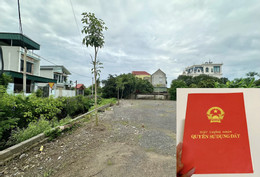
Conclusion and Recommendations for Landholders
The path for the heir of the 2,500-square-meter plot is legally viable but administratively demanding. The Ministry of Natural Resources and Environment’s guidance confirms that inheritance does not extinguish the right to seek a re-determination of land area, provided the historical roots of the plot remain verifiable.
Moving forward, the citizen should contact the Commune-level People’s Committee or the District Land Registration Office to obtain a formal guide on the local "sequence and procedures" (trình tự, thủ tục). As the Land Law 2024 continues to be integrated into local governance, the transparency of these procedures is expected to improve, offering a more predictable outcome for those seeking to honor the historical legacy of their family’s land while securing their legal and economic future. The alignment of inheritance rights with historical land declarations under Directive 299/TTg remains one of the most effective ways for Vietnamese citizens to protect their most valuable asset.