Value of a Birthday: Why Cybersecurity Experts Urge You to Keep Your Date of Birth Private Online

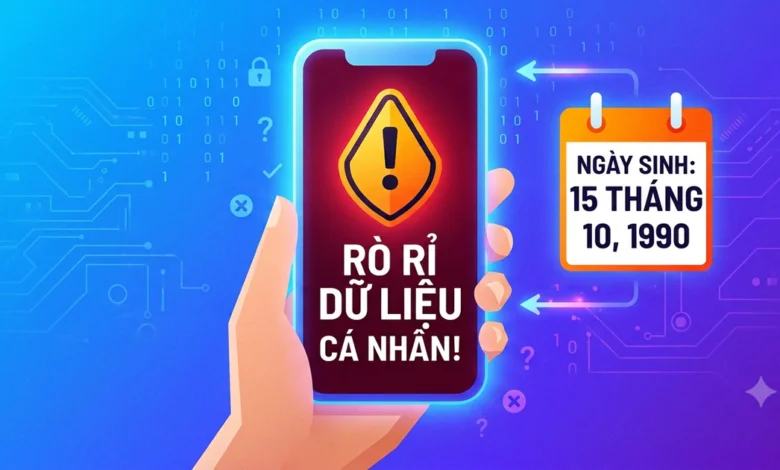
Imagine receiving a phone call out of the blue from your bank, with the representative on the other line effortlessly reciting your full legal name, home address, and exact date of birth. Naturally, you assume it is a legitimate communication from your financial institution, lowering your guard as they inform you of unusual activity on your account.
In reality, you may be speaking directly with a sophisticated fraudster. Cybercriminals are increasingly weaponizing foundational personal data—specifically dates of birth—alongside other verification details to build airtight pretexts, orchestrating high-level social engineering scams and identity theft operations that cost consumers billions of dollars globally each year.
As data breaches continue to scale unprecedented heights across retail platforms, financial sectors, and social networks, cybersecurity authorities are issuing a stark warning: consumers must drastically change how they handle their personal identifiable information online. Experts recommend limiting the disclosure of birth dates during routine online sign-ups, utilizing false or placeholder dates when absolute verification is unnecessary, and minimizing the digital footprint left across the modern internet to prevent bad actors from stitching together comprehensive individual profiles.
The Anatomy of Modern Identity Theft and the Role of Birth Dates
While a date of birth in isolation may seem harmless to the average consumer, it functions as a critical puzzle piece for modern cybercriminals. According to Jake Moore, global cybersecurity advisor at internet security firm ESET, raw information compiled from large-scale enterprise data breaches is routinely harvested, packaged, and sold on clandestine dark web marketplaces. Fraudsters then weaponize these datasets to manufacture synthetic identities or execute hyper-realistic targeted phishing attacks.
"Standalone, a date of birth holds limited immediate value to a bad actor," Moore explains. "However, when combined with ancillary data points such as your full legal name, residential address, email, and active telephone number, this dataset empowers cybercriminals to execute precision identity theft and account takeover attacks."
This multi-stage methodology transforms minor data leaks into catastrophic security events. Alexandre François, an advanced threat intelligence investigator at WhoisXML API, recently surveyed fourteen major online retailers and found that an alarming eight out of fourteen platforms required customers to submit their exact date of birth simply to register a standard online account.
"Retailers often have little structural incentive to discard this data collection practice because birthdates assist them in determining customer demographics, which in turn fuels targeted marketing campaigns and personalized promotional cycles," François notes. "Yet, this convenience for retail analytics creates an enormous vulnerability for the consumer."
The Multi-Step Lifecycle of a Data Breach Exploitation
To fully comprehend why protecting a date of birth is essential, security analysts urge consumers to understand the lifecycle of a modern cyberattack. According to Serpil Hall, a senior security researcher and consultant at Datos Insights, the exploitation of leaked data is rarely instantaneous. Instead, it follows a methodical, calculated timeline designed to bypass both consumer skepticism and automated fraud detection systems.
The exploitation process typically follows a structured progression:
- The Initial Retail Breach: A database breach at an e-commerce merchant or online service provider exposes foundational customer information, including full names, physical addresses, email addresses, and dates of birth.
- Data Enrichment via Secondary Leaks: Bad actors cross-reference the newly acquired retailer data with historical leaks from unrelated platforms to append stolen login credentials, active phone numbers, and unique identification codes.
- Open-Source Intelligence Gathering: Threat actors scour public profiles, social media handles, professional networking sites, and family trees to establish immediate relational context and behavioral patterns.
- Profile Completion and Execution: The final identity dossier is finalized. Armed with a comprehensive set of verified personal attributes, fraudsters initiate contact via voice calls, SMS, or targeted email phishing campaigns, exhibiting a level of authenticity that easily overcomes traditional psychological defenses.
"When a consumer receives a message that accurately cites their home address, date of birth, and recent purchase history, the psychological barrier to compliance drops completely," Hall explains. "The victim believes they are speaking with customer support or a fraud prevention specialist, completely unaware they are engaging directly with the threat actor."
The Great Divide: Necessary Verification Versus Unnecessary Collection
A central point of discussion among cybersecurity professionals is distinguishing between entities that legally require a date of birth for identity verification and those that collect it merely for commercial convenience.
François draws a hard line between highly regulated institutions and consumer-facing retail platforms. "To put it accurately, you only need to provide your genuine date of birth and legal name to institutions where this information is cross-referenced against official government databases to verify your identity for legal and regulatory compliance," he states.
These necessary entities include:
- Commercial banks and financial institutions
- Lending agencies and mortgage brokers
- Local, regional, and national tax authorities
- Government agencies issuing driver’s licenses and passports
- Law enforcement and judicial systems
In these heavily regulated frameworks, a date of birth acts as an immutable cryptographic verification key. However, online clothing retailers, streaming services, newsletter subscriptions, and loyalty rewards programs do not fall into this category. For these platforms, the collection of precise age data is largely optional and heavily weighted toward advertising optimization rather than operational security.
Practical Defensive Strategies for Consumers
As the volume of corporate data breaches continues to escalate annually, cybersecurity advocates stress that individual vigilance is the primary line of defense against synthetic identity fraud. Experts recommend adopting a proactive posture toward data minimization across all internet-connected devices and service accounts.
1. Exercise Data Minimization
Consumers should make it a standard practice to scrutinize every online registration form. If a field requesting a date of birth is not marked as a strict regulatory requirement, it should be left blank or bypassed entirely. When a platform forces the input of a date of birth to proceed with account creation, experts suggest utilizing a consistent placeholder date across all retail websites—such as changing the actual birth day or month—to prevent the proliferation of accurate personal data across vulnerable third-party servers.
2. Isolate Communication Channels
To mitigate the fallout from unforeseen data breaches, security advisors recommend establishing dedicated, single-purpose email addresses for online shopping, newsletter sign-ups, and promotional account creations. "If this isolated email address is compromised in a retail cyberattack, you can simply deprecate the address and spin up a new one without exposing your primary, high-security personal email account," Moore advises.
3. Maintain Healthy Skepticism Toward Unsolicited Contacts
Regardless of how much personal information an inbound caller, email sender, or text message possesses, consumers must remain deeply suspicious of unsolicited communications. Legitimate organizations—particularly financial institutions—will rarely require a customer to verify their full identity profile over an inbound, unverified communication channel. When in doubt, consumers should immediately terminate the communication and independently contact the institution using an officially verified customer service number.
The Broader Implications for Digital Privacy
The ongoing debate over the collection and storage of dates of birth highlights a much larger systemic flaw in contemporary cybersecurity architecture: the over-collection of personal data by commercial enterprises. For decades, the prevailing business model of the internet has incentivized organizations to hoard as much user data as possible, treating consumer information as an infinitely expandable asset without assuming the proportional duty of care required to protect it.
As regulatory bodies around the world begin to scrutinize data minimization practices, privacy advocates argue that sweeping legislative changes are ultimately necessary to curb the systemic risks posed by unwarranted data harvesting. Until stricter corporate compliance measures are universally enforced, the burden of data protection falls disproportionately on the individual consumer. By treating fundamental personal data—such as a date of birth—with the same caution traditionally reserved for passwords and financial credentials, internet users can significantly reduce their exposure to the ever-expanding threat landscape of modern cybercrime.