England Clinches World Cup 2026 Bronze Medal in Thrilling 4-3 Victory Over France

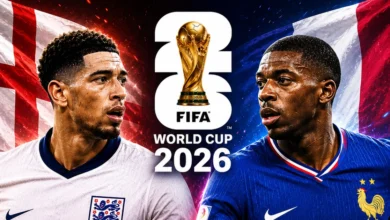
England secured the bronze medal at the FIFA World Cup 2026, overcoming fierce rivals France in a captivating 4-3 encounter held at 4 AM on July 19 (Vietnam time). The third-place playoff, a consolation fixture for both European giants after their respective semi-final defeats, delivered an unexpected goal-fest, marked by England’s dominant first-half display and France’s valiant, though ultimately unsuccessful, second-half comeback. The match, officiated by Venezuelan referee Jesús Valenzuela, provided a dramatic conclusion to the tournament for both nations, with England claiming their highest World Cup finish in decades and France left to ponder what might have been.
A Blistering Start: England’s First-Half Blitz
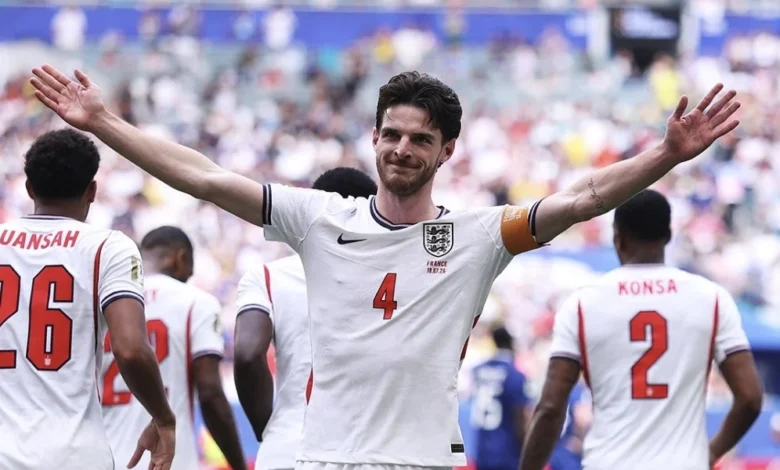
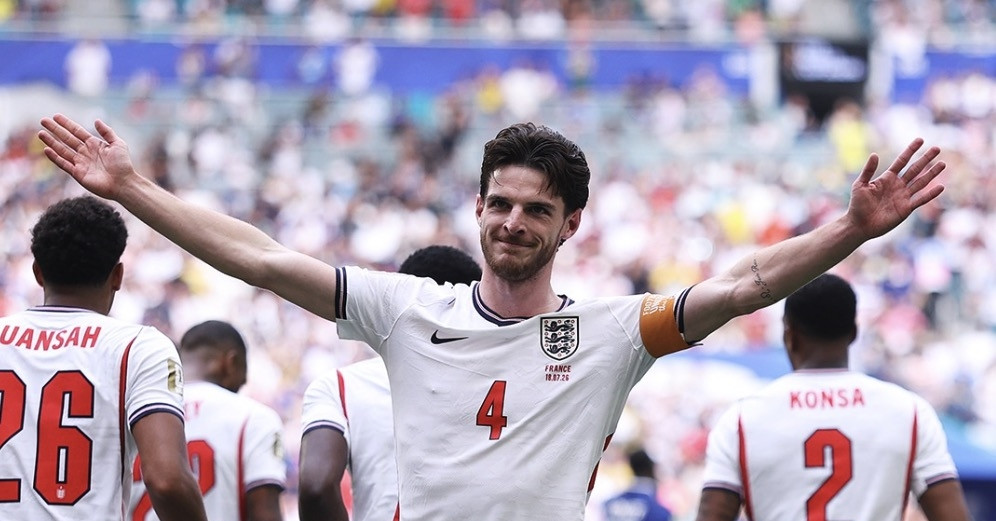
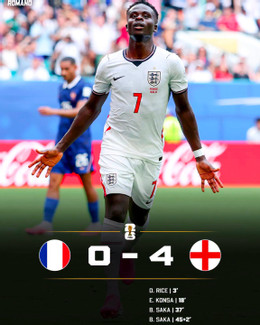
The match exploded into action from the first whistle, with England demonstrating a hunger and precision that caught the French defense entirely off guard. Barely three minutes into the game, West Ham United midfielder Declan Rice opened the scoring with a sensational strike. Capitalizing on a rare lapse in concentration from France’s Désiré Doué, who misplaced a pass in a dangerous area, Rice swiftly intercepted the ball. Driving towards the edge of the box, he unleashed a powerful, curling shot with his left foot that sailed past the outstretched arms of France’s goalkeeper Mike Maignan, finding the top corner with undeniable conviction. It was a moment of individual brilliance that immediately set a high tempo for the Three Lions, putting them in the lead and unsettling their formidable opponents.
England’s early lead seemed to inject them with immense confidence, while France struggled to find their footing. The French, known for their defensive solidity and disciplined structure, appeared disjointed and unusually porous, allowing England to press their advantage with remarkable ease. In the 18th minute, the Three Lions doubled their lead from a corner kick, further deepening France’s woes. Declan Rice, turning provider after his earlier heroics, delivered a perfectly weighted cross into the penalty area. Rising highest amidst a cluster of defenders, Aston Villa’s Ezri Konsa connected with a powerful, downward header, directing the ball towards the far post. Maignan, despite his best efforts to react, was left helpless as the ball nestled into the back of the net, marking Konsa’s crucial contribution and highlighting France’s unexpected vulnerability at set-pieces.
France, reeling from the double blow, attempted to mount a response, with their star forward Kylian Mbappé trying to galvanize his teammates. However, their attacking efforts lacked cohesion and penetration, often breaking down before truly threatening England’s goal. A long-range effort from Rayan Cherki was comfortably gathered by England’s debutant World Cup goalkeeper Dean Henderson, who was making his first appearance in the tournament. Moments later, Bukayo Saka found the net again for England, but his effort was disallowed for offside, offering a temporary reprieve for Les Bleus and a fleeting moment of hope. Despite flashes of individual flair from players like Mbappé, France’s attacks remained largely peripheral, unable to truly test England’s backline. Mbappé himself had a golden opportunity following an incisive through ball, but a rare misstep saw him stumble, squandering what could have been a crucial goal to narrow the deficit. Marcus Rashford also had a chance for England, his shot blocked for a corner, indicating England’s continued offensive threat.
As the first half wore on, England maintained their aggressive stance and high pressing game, and their persistence paid off handsomely just minutes before the break. In the 37th minute, a swift and devastating counter-attack saw England transition rapidly from defense to offense. Marcus Rashford and Bukayo Saka combined beautifully, their quick interplay disorienting the struggling French defense. Saka, receiving the ball with space, expertly weaved through the disorganized Les Bleus backline before unleashing a precise shot that beat Maignan for England’s third goal. The Arsenal star wasn’t finished, however. Deep into first-half stoppage time, in the 45th+1 minute, Saka notched his second goal of the match and England’s fourth. Receiving a well-placed pass from Eberechi Eze at the edge of the box, Saka took a decisive touch, and his powerful strike, deflecting slightly off the outstretched leg of Theo Hernández, flew into the bottom corner, leaving Maignan with no chance and sending the English fans into raptures. The half-time whistle blew shortly after, with England holding an astonishing and almost unbelievable 4-0 lead, a scoreline that sent shockwaves through the footballing world and left the French camp in disarray, prompting urgent tactical rethinking.
France’s Valiant Second-Half Comeback Bid
Facing an improbable deficit and the prospect of a humiliating defeat, France’s coach Didier Deschamps made drastic tactical changes at halftime, introducing four fresh players to inject pace, renewed vigor, and a desperate fight into his side. Ousmane Dembélé, Dayot Upamecano, Lucas Digne, and Bradley Barcola were brought on to replace Ibrahima Konaté, Theo Hernández, Désiré Doué, and Rayan Cherki. These bold substitutions immediately signaled a clear intent to fight back and salvage some pride from what had been a disastrous opening 45 minutes, illustrating Deschamps’ willingness to gamble in pursuit of a turnaround.
The impact of Deschamps’ changes was almost instantaneous, transforming the French attack. Just two minutes into the second half, in the 47th minute, France found a crucial lifeline. Following a successful defensive block by Upamecano, who brought a much-needed solidity to the backline, Michael Olise threaded a superb through pass to Kylian Mbappé. The Real Madrid forward, finding space and unleashing his characteristic burst of speed, fired a powerful shot with his right foot that beat Dean Henderson, reducing the deficit to 4-1. This goal was significant not just for France’s hopes, but also for Mbappé personally, as it temporarily put him ahead of Lionel Messi in the race for the World Cup 2026 Golden Boot, and pushed his overall World Cup goal tally to 21, surpassing Messi’s previous record for goals scored in the tournament’s history. Olise’s assist also marked his sixth of the tournament, equaling the legendary Pelé’s record for assists in a single World Cup.
The momentum had clearly shifted, and the French side, playing with renewed purpose and urgency, continued to press high up the pitch. In the 53rd minute, the substitute Bradley Barcola further narrowed the gap, electrifying the stadium. The newly introduced forward showcased his pace and clinical finishing, breaking through the English defense with determination and unleashing a precise shot that once again beat Henderson, making the score 4-2. The rapid succession of French goals had completely transformed the atmosphere, turning what seemed like a comfortable English procession into a nail-biting, unpredictable contest. Olise continued to be a central figure in France’s attacking plays, consistently dribbling past defenders and creating opportunities, though he was yet to find his own first World Cup goal.
France’s relentless pressure and improved attacking fluidity yielded yet another goal in the 66th minute. A well-orchestrated attacking move saw Olise once again providing the assist, setting up Kylian Mbappé. Mbappé, with his characteristic composure and a precise left-footed strike, found the back of the net for his second goal of the match, bringing France within touching distance at 4-3. This goal further cemented Mbappé’s position as the leading scorer in the World Cup 2026 Golden Boot race, now two goals clear of Messi, and remarkably, elevated his all-time World Cup goal tally to an astounding 22 goals, surpassing Messi’s record by one and becoming the outright top scorer in World Cup history. Olise, with his seventh assist of the tournament, continued to impress with his exceptional playmaking ability, drawing comparisons to some of the game’s greatest creators.
Despite drawing within a single goal and the palpable shift in momentum, France found themselves unable to complete the incredible comeback. They continued to launch attacks with desperate intensity, with Olise at the heart of many of their creative endeavors, but ultimately lacked the final decisive touch. Olise had several more opportunities to score, including one moment where he was presented with an apparently open goal, but inexplicably chose to dribble further into a crowded area, allowing the English defense to recover and block his eventual shot. Another well-worked French move saw Dembélé set up Mbappé, but his shot was directly at Henderson, who made a comfortable save, denying Mbappé a hat-trick and France an equalizer. On the other end, goalkeeper Mike Maignan made a superb save from an English header, preventing England from extending their lead from a corner and keeping French hopes alive until the final whistle. Ultimately, despite their spirited second-half performance and the flurry of goals, France could not find the equalizer, and the match concluded with England holding on for a dramatic 4-3 victory, a testament to their early dominance and resilience under pressure.
Key Player Performances and Tactical Insights
The match was a dramatic tale of two distinct halves, heavily influenced by individual brilliance and decisive tactical adjustments. For England, Declan Rice’s early goal not only opened the scoring but also set the tone for their dominant first half, showcasing his leadership and offensive capability. His all-action midfield display provided both crucial defensive cover and incisive offensive impetus, controlling the tempo for the Three Lions. Bukayo Saka was undoubtedly England’s standout performer, with his well-taken brace highlighting his clinical finishing and astute ability to exploit defensive weaknesses, particularly down the flanks. Ezri Konsa’s aerial prowess from a set-piece added to England’s diverse scoring threats, demonstrating the team’s readiness to capitalize on every opportunity. Dean Henderson, despite conceding three goals in the second half, made several crucial saves, particularly during France’s relentless onslaught, to ensure England held onto their slender lead. Gareth Southgate’s side demonstrated a potent blend of rapid transitions and effective set-pieces in the first half, but also showed vulnerability under sustained pressure in the second, a point that will undoubtedly be analyzed in post-match reviews.
France’s performance was a microcosm of their tournament: flashes of individual brilliance often overshadowed by moments of defensive frailty and a lack of consistent team cohesion in critical periods. Kylian Mbappé, despite his team’s defeat, further cemented his status as a global superstar, breaking significant World Cup scoring records and keeping France in the game almost single-handedly. His two goals underscored his immense talent, determination, and unyielding desire to influence matches. Michael Olise was a revelation in terms of creativity, his seven "dribbles" (as noted in the live blog) and seven assists (after Mbappé’s second goal) highlighting his exceptional playmaking abilities and vision. However, his decision-making in front of goal, particularly the missed opportunities late in the game, will undoubtedly be a point of reflection for the young talent. Didier Deschamps’ halftime substitutions were a masterstroke, completely altering the complexion of the game and almost leading to an unprecedented comeback. The introduction of players like Barcola and Dembélé injected much-needed urgency, directness, and attacking verve into the French attack, proving the depth of their squad.
Background Context: The Road to the 3rd-Place Playoff
Both England and France arrived at the third-place playoff with a shared sense of profound disappointment, having fallen short in their respective semi-final clashes, just one step away from the ultimate glory. England’s journey to this stage saw them lose a hard-fought battle against South American rivals Argentina, succumbing to a late goal that sealed a painful 2-1 defeat after initially taking the lead. The loss was particularly agonizing for captain Harry Kane and his teammates, who had set their sights firmly on lifting the World Cup trophy, forcing them to recalibrate their ambitions towards the bronze medal. The emotional toll of such a defeat is immense, making the motivation for a third-place game challenging.
France, on the other hand, suffered a 2-0 defeat against a resurgent Spain in their semi-final. Despite their formidable attacking talent and star-studded lineup, Les Bleus found themselves unable to break down a resolute Spanish defense, with Kylian Mbappé and his fellow attackers struggling to find the back of the net on that particular day. For both nations, the third-place match represented a final opportunity to end their World Cup campaign on a positive note, to restore some pride, and to claim a tangible reward for their strenuous efforts over the preceding weeks. While not the coveted gold, a bronze medal is still a significant achievement on the global stage, offering a measure of success and a morale boost looking ahead to the next cycle of international competitions. The match also served as a platform for players to prove their worth and for coaches to experiment with different lineups.
Pre-Match Buildup and Team News
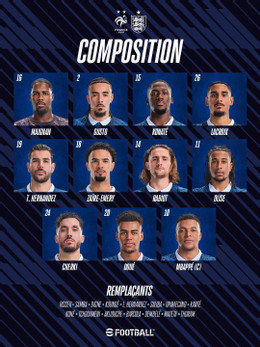
The buildup to the playoff was overshadowed by various injury concerns for both squads, adding an element of uncertainty and strategic complexity to the team selections. For France, central defender William Saliba was nursing a nagging back injury, making his availability doubtful for the crucial fixture. Kylian Mbappé himself was under close observation due to a minor ankle issue, though he ultimately started the match, demonstrating his commitment. Midfielder Aurelien Tchouameni was also struggling with a hamstring problem, casting doubt on his full fitness and potentially limiting his usual commanding presence in midfield. These potential absences forced Didier Deschamps to consider his options carefully, particularly in defense and midfield, which may have contributed to the early disorganization observed in the first half.
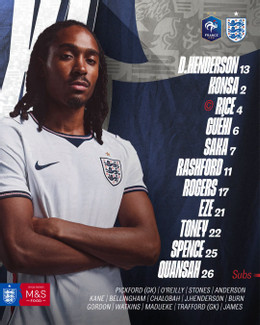
England also faced their share of fitness woes leading into the game. Valentino Livramento was ruled out with a thigh injury, and promising full-back Reece James was under monitoring for a similar concern. Key veteran midfielder Jordan Henderson was unavailable, a significant loss of experience. Furthermore, Declan Rice and Marc Guéhi required fitness assessments after their intense semi-final clash against Argentina, raising questions about their ability to perform at peak levels in another demanding match. Despite these concerns, both Rice and Guéhi were deemed fit enough to start, proving pivotal in England’s strong opening performance. The coaches’ decisions regarding these players highlighted the delicate balance between playing fully fit players and giving opportunities to those who had seen less game time but were eager to contribute.
Statistical previews had painted a picture of two evenly matched teams, despite France’s perceived superior talent. Head-to-head records showed France having won three of their last five encounters against England, with one win for England and one draw. Historically, across 32 total meetings, England held a slight edge with 17 wins to France’s 10, with 5 draws, indicating a competitive rivalry. In terms of recent form, both teams had won four and lost one of their last five matches, scoring an identical 10 goals each, suggesting comparable offensive firepower. France boasted an impressive record of being unbeaten in 96 out of their last 108 matches across all competitions (an 89% unbeaten rate), while England had not lost a first half in their last 14 competitive matches (a 100% record) and were unbeaten in 33 out of their last 36 games (a 92% unbeaten rate). England also had a remarkable record of scoring at least one goal in their last 19 competitive matches, averaging 2.71 goals per game in competitive fixtures. These statistics underscored the high stakes and the evenly matched nature of the contest, even for a third-place game, promising an engaging battle.
Broader Impact and Implications
England’s bronze medal represents a significant achievement for Gareth Southgate’s side and English football. While the ultimate goal of lifting the World Cup trophy remained elusive, securing third place demonstrates the progress, depth, and resilience of the current squad. It provides a tangible reward for their arduous efforts and can serve as a strong foundation for future tournaments, building confidence and experience. The performance, particularly the dominant first half, showcased the team’s attacking potential and ability to execute a game plan effectively against a world-class opponent. The resilience shown in holding off France’s furious second-half comeback will also be a valuable lesson learned for a relatively young squad, highlighting their mental fortitude under pressure. For individual players like Bukayo Saka, his brace in a high-stakes match against a top opponent further solidifies his standing as one of England’s most vital and clinical attackers.
For France, finishing fourth will undoubtedly be a disappointment, especially given their talent-rich squad and the high expectations placed upon them as reigning (or recent) champions. However, their spirited second-half performance, spearheaded by Kylian Mbappé, offered a compelling glimpse of their immense potential