Imexpharm Maintains Resilient Growth with 8 Percent Profit Increase in First Quarter of 2026 Amidst Market Volatility

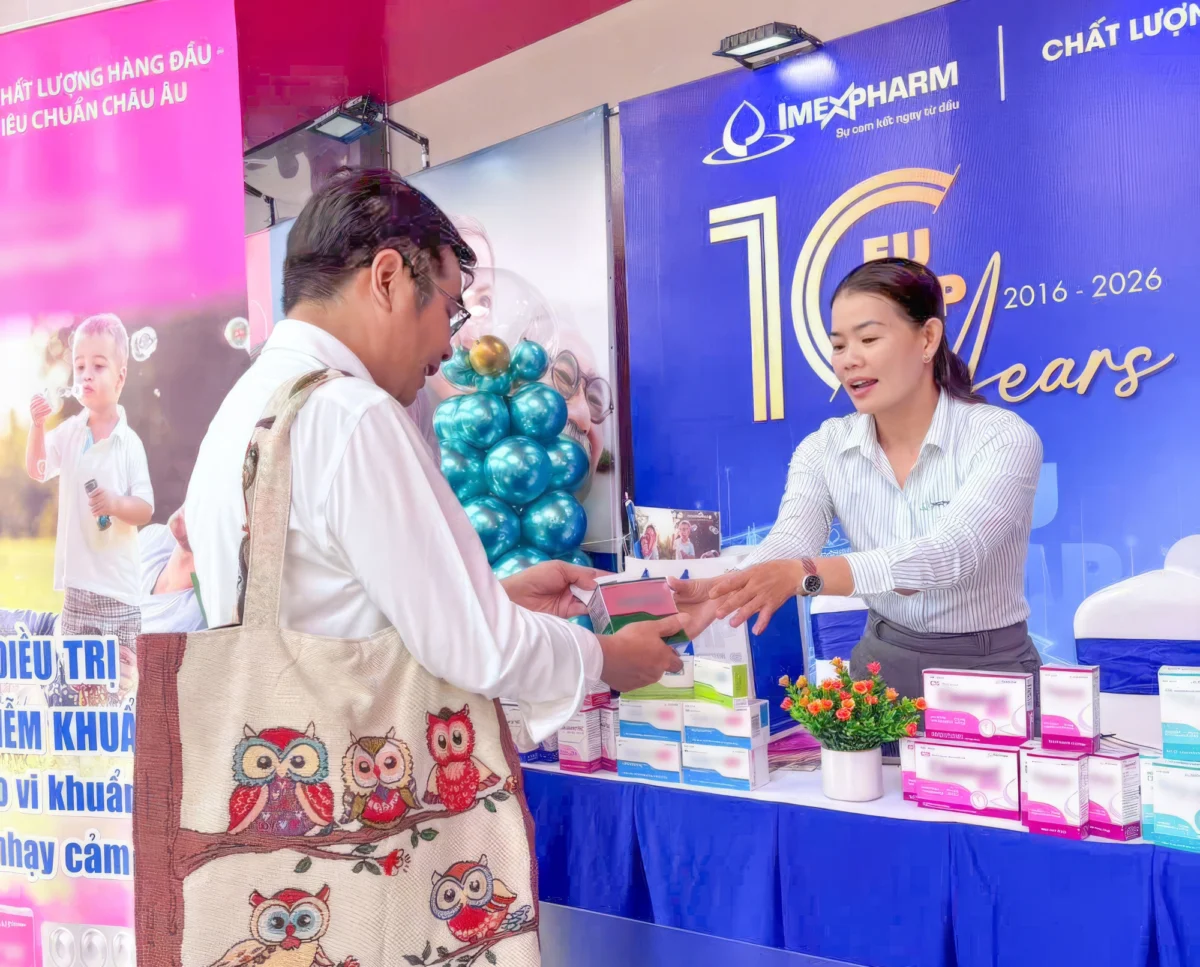
Imexpharm Pharmaceutical Joint Stock Company (IMP) has officially released its financial results for the first quarter of 2026, demonstrating a robust ability to navigate a complex and increasingly competitive domestic landscape. Despite a broader slowdown in the pharmaceutical sector and significant shifts in regulatory frameworks, the company reported a pre-tax profit of 103 billion VND, representing an 8 percent increase compared to the same period in 2025. This performance underscores the company’s strategic focus on operational efficiency and high-quality manufacturing standards, which have allowed it to sustain profitability even as top-line revenue faced downward pressure.
The first quarter of 2026 was characterized by a confluence of challenges for Vietnamese pharmaceutical manufacturers. New policies regarding tax management and stricter regulations on prescription drug sales have induced a sense of caution among retail distributors and consumers alike. Furthermore, the pharmaceutical market has seen an influx of competitors achieving EU-GMP (European Union Good Manufacturing Practice) certification, intensifying the battle for market share in the high-end hospital (ETC) channel. Against this backdrop, Imexpharm’s financial resilience serves as a significant indicator of its entrenched market position and the effectiveness of its long-term investment in quality.
Financial Performance and Operational Efficiency
According to the financial report published on April 20, 2026, Imexpharm recorded gross revenue of 629 billion VND for the first quarter. This figure represents a 6 percent decline from the first quarter of the previous year and accounts for approximately 20 percent of the annual revenue target currently being presented to the General Meeting of Shareholders. Net revenue stood at 546 billion VND, an 8 percent year-on-year decrease, reflecting the general cooling of market demand across various distribution channels.
However, the contraction in revenue did not translate into a decline in the bottom line. On the contrary, Imexpharm’s profitability metrics showed marked improvement. The company’s gross profit margin rose to 41.5 percent, up from 39.5 percent in the corresponding period of 2025. This 2-percentage-point increase is attributed to enhanced factory utilization rates and the successful implementation of a centralized procurement strategy for promotional goods across the entire organization. By streamlining its supply chain and leveraging its scale, Imexpharm was able to mitigate the impact of fluctuating raw material costs.
In addition to improved margins, the company demonstrated disciplined cost management. Selling and administrative expenses were reduced by 9 percent compared to the same period last year. This rigorous control of overheads proved to be the "linchpin" in maintaining profit growth while revenue was under strain. Consequently, the company’s Earnings Before Interest, Taxes, Depreciation, and Amortization (EBITDA) reached 129 billion VND, a 3 percent increase, with an EBITDA margin of 23.7 percent—a significant 2.5 percentage point improvement over the previous year.

Navigating Shifts in Distribution Channels
The pharmaceutical market in Vietnam is traditionally split between the over-the-counter (OTC) retail channel and the ethical (ETC) hospital channel. In the first quarter of 2026, both segments faced unique headwinds that required Imexpharm to adapt its approach.
In the OTC channel, revenue saw a 7 percent decrease. This dip was largely driven by a psychological shift among pharmacy owners and distributors. As 2026 began, new administrative regulations regarding tax compliance and more stringent enforcement of prescription-only drug sales led many retailers to adopt a "wait-and-see" approach, maintaining lower inventory levels than in previous years. Despite this temporary caution, Imexpharm remains optimistic about the OTC segment, citing stable underlying healthcare demand as a primary driver for recovery in the subsequent quarters of the year.
The ETC channel, which focuses on hospital bidding and government contracts, experienced an 11 percent decline in sales during the quarter. This segment has become increasingly crowded as more domestic manufacturers upgrade their facilities to meet EU-GMP standards. Imexpharm, a pioneer in this space, has had to balance the pursuit of volume with the necessity of maintaining healthy profit margins. The company’s management noted that the decrease in ETC sales was a result of a deliberate strategy to prioritize high-value products and ensure sustainable growth rather than engaging in aggressive price wars that could erode long-term value.
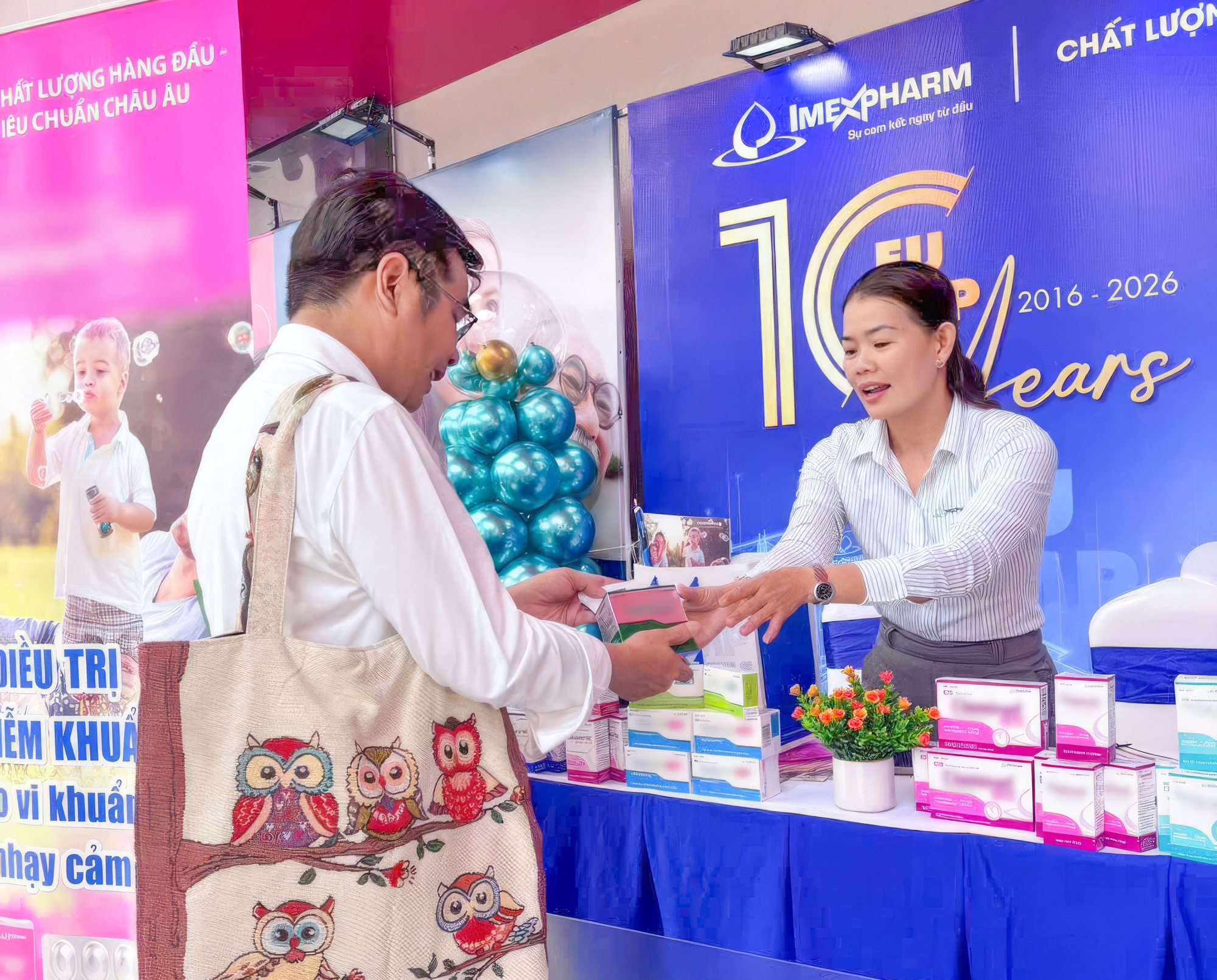
A Decade of EU-GMP Excellence as a Competitive Moat
A central pillar of Imexpharm’s resilience is its decade-long commitment to EU-GMP standards. As the pharmaceutical industry in Vietnam moves toward higher quality requirements for hospital tenders—specifically in Group 1 and Group 2 bidding categories—having multiple production lines that meet European standards provides a significant advantage.
People’s Physician, Pharmacist Tran Thi Dao, General Director of Imexpharm, emphasized that the company’s strategic foundation is built on "selective growth" and a "quality-first" philosophy. "In a market environment fraught with challenges, Imexpharm remains steadfast in its strategy of prioritizing efficiency and quality," she stated. "With a foundation of over 10 years of pioneering investment and operation of EU-GMP compliant factories, coupled with continuous innovation capabilities, I am confident that Imexpharm will continue to conquer new goals in scale and efficiency, bringing sustainable value to the community, shareholders, and stakeholders."
This commitment to quality is not merely a marketing tool but a functional necessity in the 2026 landscape. Global geopolitical tensions have continued to disrupt supply chains, affecting the availability and cost of Active Pharmaceutical Ingredients (APIs). Companies with high-standard facilities and sophisticated procurement systems, like Imexpharm, are better positioned to navigate these external shocks than those relying on lower-tier manufacturing standards.

Innovation and Research as Growth Engines
To maintain its momentum, Imexpharm has continued to invest heavily in its Research and Development (R&D) pipeline. During the first three months of 2026, the company added eight new projects to its R&D portfolio, bringing the total number of active projects to 159. This robust pipeline ensures a steady flow of new products into the market, allowing the company to diversify its offerings and reduce reliance on any single therapeutic category.
In Q1 2026, the company successfully launched one new product, further expanding its reach in the domestic market. The focus of these R&D efforts is increasingly directed toward specialized medications and generic versions of high-demand drugs, particularly those that can be produced on EU-GMP lines to compete directly with imported pharmaceuticals. This strategy aligns with the Vietnamese government’s policy of increasing the proportion of domestically produced drugs used in the healthcare system.
Engagement with the Medical Community and Social Responsibility
Imexpharm has also intensified its engagement with healthcare professionals and the broader medical community. By positioning itself as a partner in medical education and clinical excellence, the company strengthens its brand reputation among those who prescribe and dispense its products.
In the first quarter, Imexpharm was a prominent participant in several large-scale scientific conferences. These included the Annual Meeting of the Ho Chi Minh City Respiratory Society (HRS 2026), which attracted over 500 in-person delegates and 1,500 online participants. The company also supported the 42nd Annual National Otorhinolaryngology (Ear, Nose, and Throat) Scientific Conference, which brought together nearly 700 experts and doctors from across Vietnam.
Furthermore, in late March 2026, Imexpharm collaborated with the Department of Health of Dong Thap Province to organize a training program aimed at enhancing clinical pharmacy capacity in hospitals. The event drew 270 attendees, including hospital leaders, heads of pharmacy departments, and clinical pharmacists. These initiatives serve a dual purpose: they contribute to the professional development of the medical workforce while reinforcing Imexpharm’s status as a leader in pharmaceutical quality and professional knowledge sharing.
Beyond its commercial and professional activities, the company has remained dedicated to Corporate Social Responsibility (CSR). Notable activities in early 2026 included the "Border Spring 2026" program and charitable initiatives at the Social Protection Center of Dong Thap Province. Demonstrating a commitment to environmental sustainability, Imexpharm employees also participated in a project to plant 50 mature Mai Anh Dao (cherry blossom) trees in Da Lat, contributing to the "A Thousand Cherry Blossom Trees for a Forever Pink Da Lat" initiative.
Future Outlook and Strategic Vision
As Imexpharm looks toward the remainder of 2026, the company is preparing for its Annual General Meeting (AGM) scheduled for April 22, 2026. At this meeting, the leadership team is expected to share a detailed strategic vision for the coming years, focusing on market expansion, digital transformation in manufacturing, and continued sustainability efforts.
The release of the 2025 Annual Report in early April, themed "Healthy Rhythm," set the tone for the company’s future direction. It emphasizes the concept of "harmonizing with the nation’s transformation" while maintaining a steady pulse of growth and contribution to public health.
The broader implications of Imexpharm’s Q1 performance are significant for the Vietnamese pharmaceutical industry. It suggests that while the "easy growth" phase of the post-pandemic era may be over, companies that have invested in high-standard manufacturing and operational discipline can still thrive. The ongoing shift toward EU-GMP standards will likely lead to a consolidation in the market, where established players with deep R&D pipelines and strong institutional relationships, like Imexpharm, will gain an edge over smaller, less specialized firms.
However, challenges remain. The company must continue to manage the pressures of rising interest rates, exchange rate fluctuations—which impact the cost of imported raw materials—and the increasing cost of energy. Moreover, as more players enter the EU-GMP space, the competition for skilled pharmaceutical labor and specialized APIs will likely intensify.
In conclusion, Imexpharm’s first-quarter results for 2026 reflect a company in a state of "resilient transition." By absorbing revenue shocks through cost efficiency and margin protection, and by doubling down on its quality-centric R&D, Imexpharm is positioning itself not just to survive the current market volatility, but to emerge as a more dominant force in Vietnam’s high-standard pharmaceutical manufacturing sector. The upcoming AGM on April 22 will be a critical venue for shareholders to gain further insight into how the company intends to navigate the evolving geopolitical and regulatory landscape of the late 2020s.
Related posts: