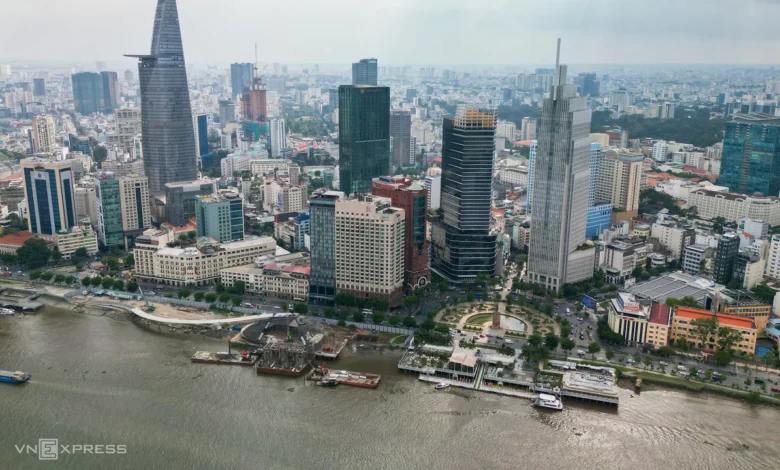
Ho Chi Minh City authorities are currently drafting a significant policy shift aimed at resolving long-standing construction violations that have paralyzed urban development projects for years. Under the new proposal, rather than mandating the immediate demolition of non-compliant structures—a process that is often costly, logistically complex, and environmentally wasteful—the city government is seeking a framework that would allow developers to retain these structures, provided they meet a rigorous series of safety, legal, and financial criteria.
This policy evolution represents a departure from the rigid enforcement mechanisms that have historically characterized Vietnam’s urban management. By providing a pathway for the legalization of specific violations, the city hopes to unlock stalled capital, resolve legal disputes, and integrate previously "orphaned" projects into the formal urban landscape.
A New Framework for Urban Compliance
The draft resolution, which is currently under review by municipal authorities, clarifies that the ability to retain a non-compliant structure is not a "blanket amnesty." It does not equate to the legitimization of the violation itself. On the contrary, the policy mandates that all involved parties—including developers, contractors, and supervising agencies—must still face the legal consequences of their actions.
To qualify for retention, a project must demonstrate full compliance with master zoning plans, technical infrastructure safety standards, and traffic safety corridors. Furthermore, the land upon which the building stands must be under legitimate ownership, and the structure must be proven to be structurally sound, equipped with modern fire prevention and safety systems, and free from any ongoing civil disputes.
Developers seeking this reprieve are required to fulfill all outstanding financial obligations, rectify the specific environmental or social consequences of their violations, and complete all necessary construction documentation. Crucially, they must pay administrative fines and remit a calculated portion of the "illegally obtained profits" derived from the non-compliant elements of the project.
Chronology and Legislative Context
The challenge of managing construction violations in Ho Chi Minh City is deeply rooted in the rapid, and sometimes uncoordinated, urban expansion of the early 21st century.
Between 2008 and 2018, the city witnessed a massive surge in real estate development, often outpacing the local government’s ability to monitor site-level compliance. The existing legal framework, primarily governed by Decree 16/2022, provided limited mechanisms for regularizing these projects, leading to thousands of stalled units across the city. Many of these projects were caught in a "legal limbo," where buildings were nearly finished but could not be granted official certificates of ownership (pink books) because of minor or technical violations committed during the construction phase.
The current proposal seeks to expand the scope of eligibility for this "rectification" process. By targeting projects stalled before October 1, the city aims to clear a backlog that has effectively frozen billions of dollars in private and institutional investment.
Calculating the Cost of Regularization
One of the most innovative aspects of the proposal is the mathematical formula used to determine the "ill-gotten gains" that developers must return to the state. The policy establishes that 50% of the value of the violated floor area must be paid back to the city.
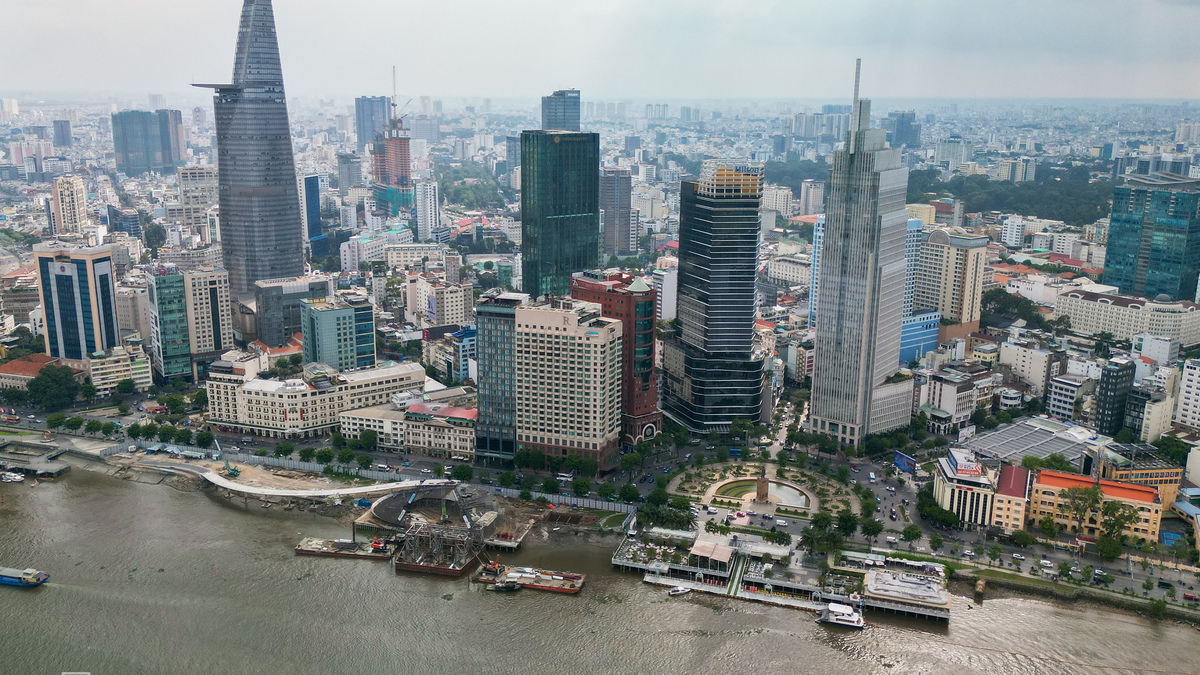
For commercial properties, the calculation is based on the floor area of the violation multiplied by the unit price stipulated in the signed sales contracts. For non-commercial or public-interest projects, the city utilizes the construction cost per square meter as determined by the approved project estimates. In cases where neither a sales contract nor an approved budget exists, the city will apply a standard "investment capital rate" for similar building types as established by the Ministry of Construction.
This methodology ensures that developers do not benefit financially from their non-compliance, effectively nullifying the incentive to cut corners on zoning or building codes. The strict requirement that these payments cannot be lower than the government-mandated investment rates prevents developers from under-reporting their costs to minimize their penalties.
Expert Analysis: Implications for the Real Estate Market
Market analysts suggest that this move is a pragmatic response to the current economic climate. Real estate, being a primary driver of the regional economy, has suffered under the weight of these stalled projects. When a building is left empty due to a permit violation, it does not just represent a loss for the developer; it represents a loss for the city in property taxes, residential capacity, and overall economic vitality.
"The goal is to move from a punitive-only model to a restorative-justice model," says an independent urban policy analyst. "By allowing the regularization of these buildings, the city is effectively returning these assets to the market. It provides certainty for homeowners who purchased units in these buildings and have been waiting for their legal documentation for years."
However, the policy also carries risks. Critics argue that if the conditions for regularization are too lenient, it could inadvertently encourage future violations, as developers might calculate that the cost of the fine is cheaper than the cost of strict compliance. To mitigate this, the city has explicitly stated that even if a structure is allowed to remain, the administrative and disciplinary actions against the developers and the officials who oversaw the permits will proceed unabated.
Official Responses and Future Outlook
The Department of Construction and the Ho Chi Minh City People’s Committee have emphasized that the criteria for structural safety and fire prevention are non-negotiable. "Safety is the absolute priority," a municipal spokesperson noted during a recent briefing. "We are not trading safety for speed. If a building cannot prove it is structurally sound and safe for its occupants, it will still be subject to demolition, regardless of the developer’s willingness to pay the fine."
The proposal is currently in the final stages of the consultative process. If adopted, it is expected to provide a clear roadmap for thousands of apartment owners who have been living in buildings without legal titles. This, in turn, is expected to restore confidence in the real estate market and provide a much-needed boost to the city’s housing supply.
As the city continues to grow, this policy serves as a test case for how rapidly developing urban centers can balance the rule of law with the economic necessity of functional, high-density housing. The success of this initiative will likely depend on the transparency and consistency with which these new rules are applied, ensuring that the path to regularization is fair, rigorous, and clearly defined for all stakeholders involved.
Ultimately, this move signals a maturation of the city’s governance, acknowledging that while the law must be upheld, the mechanisms of the state should also be flexible enough to address the complex, real-world problems created by a fast-moving, and sometimes chaotic, real estate sector.
Related posts: