Sơn Hải Group Contests Decision to Assign Nha Trang – Đà Lạt Expressway Feasibility Study to Đèo Cả Consortium

The landscape of Vietnam’s transport infrastructure development has been marked by a significant administrative dispute following a formal objection raised by the Sơn Hải Group regarding the selection of a consultant for the Nha Trang – Đà Lạt expressway project. In a document sent to the Standing Committee of the Provincial Party Committee and the People’s Committee of Khánh Hòa Province, Sơn Hải Group expressed its strong disagreement with the decision to appoint a consortium comprising Đèo Cả Group and Thịnh Vượng TVS Construction Investment Joint Stock Company as the primary entities to research and prepare the pre-feasibility study for this vital infrastructure link.
The dispute centers on the Nha Trang – Đà Lạt section, a critical component of the broader Nha Trang – Liên Khương expressway project. This project is slated for development under the Public-Private Partnership (PPP) model, a framework designed to leverage private capital and expertise for national infrastructure. However, the selection process for the initial research phase has sparked concerns over procedural fairness and the recognition of prior intellectual and financial investments made by private enterprises.
The Core of the Dispute: Claims of Prior Investment
The formal document, signed by Mr. Lê Thanh Hưởng, Director of Sơn Hải Group, on July 14, 2024, conveys a sense of profound "surprise" at the provincial government’s decision. According to the leadership of Sơn Hải, the company has dedicated more than three years—specifically dating back to February 3, 2023, and extending through prior preliminary periods—to conducting extensive research and drafting feasibility reports for the Nha Trang – Đà Lạt expressway.
Sơn Hải Group contends that its research materials and technical data have not only been completed but have already been utilized by the Khánh Hòa Provincial People’s Committee in working sessions with various central ministries and relevant agencies. The company argues that the sudden shift to assign the pre-feasibility study to the Đèo Cả – Thịnh Vượng consortium disregards these contributions.
In its petition, Sơn Hải Group emphasized that the decision could lead to "economic damage" and "adversely affect the prestige and honor" of the enterprise. Consequently, the group has requested that the Khánh Hòa provincial authorities re-evaluate the decision to grant the research mandate to the rival consortium, citing the need for transparency and the protection of investor rights in the early stages of project development.
Technical Profile of the Nha Trang – Đà Lạt Expressway
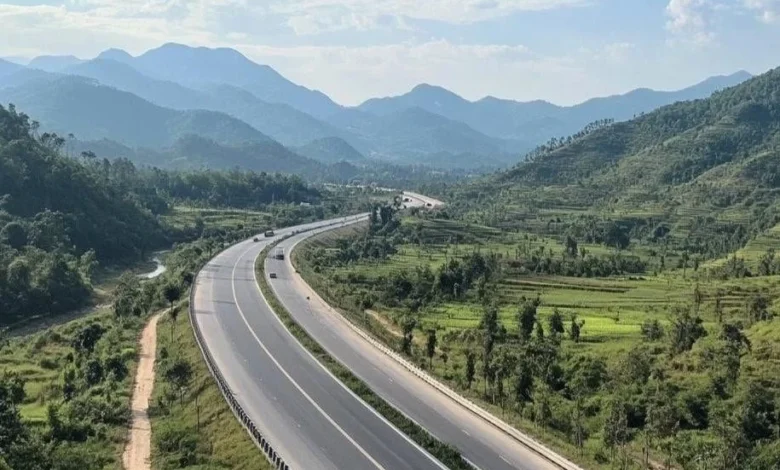
The proposed expressway is not merely a regional road but a strategic artery connecting the coastal tourism hub of Nha Trang with the highland resort city of Đà Lạt. According to the preliminary planning data, the project has the following specifications:
- Total Length: Approximately 80.81 kilometers.
- Starting Point: The intersection with the North-South Expressway (Eastern segment) in Diên Thọ commune, Diên Khánh district, Khánh Hòa province.
- Ending Point: The Đarahoa intersection, located at the junction of National Highway 27C and Huỳnh Tấn Phát Street in Thái Phiên, Đà Lạt City, Lâm Đồng province.
- Design Scale: A 4-lane configuration in accordance with national highway standards.
- Roadbed Width: Ranging from 22 meters to 24.75 meters.
- Design Speed: Planned for 80 to 100 km/h.
- Geographic Scope: The route traverses challenging mountainous terrain across the provinces of Khánh Hòa and Lâm Đồng, necessitating advanced engineering solutions for tunnels and bridges.
Currently, the primary connection between these two cities is National Highway 27C, which includes the notoriously difficult Khánh Lê Pass (also known as the Omega Pass). This route is frequently subject to landslides during the rainy season and is characterized by sharp curves and steep inclines that limit transport capacity and safety. The new expressway is envisioned as a safer, faster, and more reliable alternative.
The Appointment of the Đèo Cả – Thịnh Vượng Consortium
Prior to the objection from Sơn Hải, the People’s Committee of Khánh Hòa Province had issued a document officially approving the Đèo Cả – Thịnh Vượng consortium (represented by Đèo Cả Group Joint Stock Company) to conduct the pre-feasibility study. Under this agreement, the consortium is tasked with:
- Surveys and Research: Conducting comprehensive geological, topographical, and hydrological surveys.
- Report Preparation: Drafting the pre-feasibility study report in strict accordance with the Law on Public-Private Partnerships and other relevant regulations.
- Timeline: Completing and submitting the dossier to the Khánh Hòa People’s Committee and the Department of Finance within a maximum of six months from the date of the authorization.
- Financial Risk: The investors are required to bear all costs and risks associated with the research and dossier preparation. If the project does not proceed or if the consortium is not selected as the final investor, these costs may not be reimbursed, depending on the final legal determinations of the PPP framework.
Profiles of the Contending Entities
The dispute involves two of Vietnam’s most prominent infrastructure players, each with a distinct reputation and track record.
Sơn Hải Group: Based in Quảng Bình, Sơn Hải Group has gained national fame for its commitment to quality. The company made headlines by offering a 10-year warranty on its highway projects, a move that was unprecedented in the Vietnamese construction industry. Their involvement in segments of the North-South Expressway has solidified their reputation as a "quality-first" contractor. Their claim of having researched the Nha Trang – Đà Lạt route for three years suggests a long-term strategic interest in the Central Highlands-Central Coast corridor.
Đèo Cả Group: Known as the "King of Tunnels" in Vietnam, Đèo Cả Group has a massive portfolio of complex projects, including the Đèo Cả, Cù Mông, and Hải Vân 2 tunnels. They have extensive experience in managing large-scale BOT (Build-Operate-Transfer) and PPP projects. The group is often the preferred choice for projects involving high technical difficulty, such as those requiring significant tunneling through granite mountain ranges—a key feature of the Nha Trang – Đà Lạt route.
Legal Framework and PPP Implications
The conflict highlights the complexities of the Law on Public-Private Partnerships (Law No. 64/2020/QH14). Under Vietnamese law, the preparation of a pre-feasibility study by a private investor (the "investor-proposed" method) is permitted. However, the state retains the authority to select which investor is allowed to conduct this study.
A critical point of contention in such cases is the "right of priority." While conducting the study does not guarantee that the firm will win the final construction contract, it often provides a significant informational advantage. Furthermore, if a different investor eventually wins the project, the winning entity is typically required to reimburse the original researcher for the costs of the study.
Sơn Hải’s grievance suggests a breakdown in the administrative transition between the "research phase" and the "formal study phase." If the province had indeed used Sơn Hải’s data for preliminary work, the decision to pivot to a different consortium for the formal pre-feasibility study raises questions about how the intellectual property and initial expenses of the first mover are recognized.
Broader Impact and Regional Implications
The resolution of this dispute is crucial for the timeline of the Nha Trang – Đà Lạt expressway. Any delay in the study phase will push back the commencement of construction, which is eagerly anticipated by both the tourism and logistics sectors.
Tourism Synergy: Nha Trang is a premier beach destination, while Đà Lạt is the leading highland retreat. Currently, the 140km journey takes 3 to 4 hours due to terrain constraints. An expressway could reduce this to under 2 hours, creating a powerful "sea-and-forest" tourism circuit that could significantly boost international and domestic arrivals for both provinces.
Economic Connectivity: Beyond tourism, the expressway will facilitate the transport of agricultural products from the fertile Central Highlands to the seaports of Khánh Hòa. This is vital for the export of coffee, flowers, and vegetables from Lâm Đồng.
Investment Climate: How the Khánh Hòa authorities handle this petition will be watched closely by the private sector. A transparent and fair resolution is necessary to maintain investor confidence in the PPP model. If investors feel that their early-stage research can be dismissed without clear justification, they may be less willing to commit resources to future infrastructure proposals.
Conclusion and Next Steps
As of now, the Khánh Hòa Provincial People’s Committee has not issued a final public response to Sơn Hải Group’s petition. The provincial authorities are expected to review the chronological records of submissions from both Sơn Hải and the Đèo Cả – Thịnh Vượng consortium to determine the most equitable path forward.
The situation remains a high-stakes standoff between two of the country’s infrastructure giants over a project that is vital to the development of Southern Central Vietnam. Whether the province will allow both entities to contribute, or if it will stand by its decision to favor the Đèo Cả consortium, remains to be seen. What is certain is that the Nha Trang – Đà Lạt expressway represents a new frontier in Vietnamese engineering, and its successful realization will require not just technical expertise, but also administrative precision in managing the competing interests of its most capable builders.