World Bank warns of potential global food crisis as El Nino and geopolitical instability threaten commodity markets

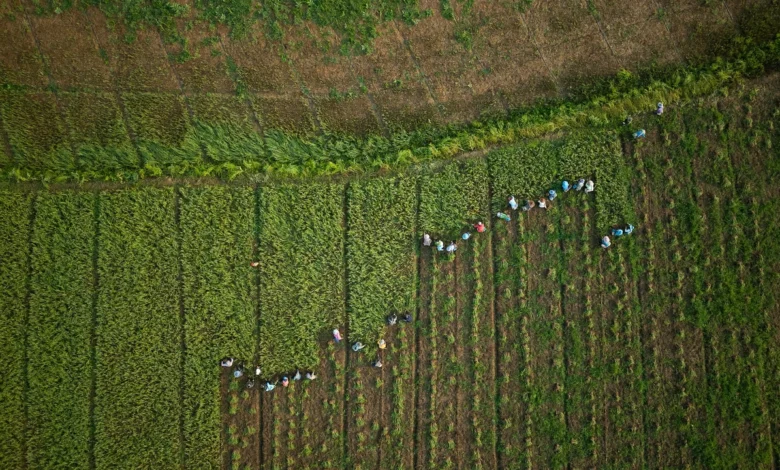
The confluence of a powerful El Nino climate event and escalating geopolitical tensions has placed the global food supply chain in a precarious position, with experts warning of a potential crisis reminiscent of the instability observed in the early 2010s. According to a comprehensive market outlook report published by the World Bank on October 28, 2026, global food prices are projected to climb by 18% during the 2026-2027 period under baseline scenarios. This upward trajectory is driven by significant disruptions to transportation routes and the extreme weather conditions generated by the current El Nino cycle, which threatens to devastate crop yields in key agricultural hubs across the globe.
The Anatomy of the Impending Crisis
The World Bank’s assessment highlights a "perfect storm" of factors currently converging to tighten global food availability. At the heart of this challenge is the dual pressure of energy costs and extreme climatic volatility. Modern agriculture is deeply intertwined with energy markets; rising oil prices directly inflate the costs of agricultural logistics, irrigation, and the production of nitrogen-based fertilizers.
Furthermore, the surge in energy prices has created an incentive for farmers to pivot toward the production of biofuels—such as corn, sugarcane, and vegetable oils—rather than food crops. As energy becomes more expensive, the profitability of energy-focused crops increases, effectively siphoning resources away from the food supply chain. This structural shift, combined with logistical bottlenecks in major shipping lanes, has created a scenario where even if global harvest yields were sufficient, the ability to distribute food to vulnerable regions remains severely compromised.
Geopolitical Fragility and the Black Sea Corridor
A critical variable in this outlook is the ongoing conflict in the Middle East and its secondary impacts on global trade, specifically concerning the security of critical shipping lanes. The World Bank explicitly warns that the current stability of the global food system is fragile. While current baseline projections assume that regional military conflicts will not escalate into a full-scale global confrontation, any further disruption to the supply of essential commodities could have catastrophic results.
Central to this concern is the ongoing security situation in the Black Sea, which remains a vital artery for grain exports. Persistent attacks on merchant vessels in this region have disrupted the flow of staples to global markets, creating a vacuum that is difficult for other producers to fill. When these supply chain interruptions occur alongside the climate-induced droughts in South America and Australia, the global buffer for food security is effectively eliminated.
Comparative Chronology: Lessons from the 2010s
The current market environment draws uncomfortable parallels to the period of 2010–2011, a time characterized by severe food price volatility that many political analysts believe served as a catalyst for the "Arab Spring" uprisings. During that period, a combination of heatwaves in Russia, flooding in Australia, and energy-induced fertilizer shortages caused food prices to spike, leading to widespread civil unrest in the Middle East and North Africa.
History serves as a grim indicator of what happens when food prices become untethered from the purchasing power of the average consumer. In 2010, the spike in the cost of wheat and maize led to protests in over 30 countries. The World Bank report cautions that the current structural conditions—namely, the reliance on a few key agricultural producers combined with high energy costs—are reaching a threshold where similar social unrest could manifest in regions already struggling with economic stagnation.

Data-Driven Projections and Market Realities
The World Bank’s baseline scenario expects Brent crude oil to average 91 USD per barrel throughout 2026, with a moderate decline to 79 USD by 2027. However, the "risk scenario" provided by the report paints a far more volatile picture. Should the combination of extreme weather and geopolitical conflict intensify, Brent crude could reach an average of 105 USD per barrel in 2027. Under these conditions, food prices are expected to jump 12% higher than the baseline forecast, exceeding the peaks recorded during the global energy shock of 2022.
The reality of these numbers is already being felt on the ground. On October 29, 2026, spot prices for Brent crude hit 114 USD, reflecting the market’s underlying anxiety. S&P Global, in its own industry assessment, noted that the cost of inputs for farmers has reached a historical high. In Brazil, the rate of expansion for soybean planting has hit a twenty-year low due to exorbitant costs, while Australian wheat production has plummeted 13% compared to the previous year.
Agricultural Impact and the Fertilizer Dilemma
The crisis is not limited to the end-product price; it is fundamentally an input-driven crisis. Farmers are currently caught in a cycle of "cost-tightening," where they are either forced to reduce the total acreage planted or cut back on fertilizers and advanced irrigation techniques to maintain a thin margin of profitability.
The global supply of oil, which serves as the precursor for synthetic fertilizers and fuel for heavy machinery, is expected to decrease by 5.2% in 2026. Excluding the anomalous period of the 2020 global economic shutdown, this represents the largest decline in oil supply in over half a century. Even as the global economy attempts to shift toward renewable energy, the transition is proving insufficient to replace the energy density required by industrial-scale agriculture. Consequently, nations are being forced to draw from strategic petroleum reserves, leaving the global market with little to no resilience against the next major supply shock.
Implications for Global Migration and Policy
The nexus of climate change and food insecurity is expected to have a profound impact on human migration patterns. As agricultural land in equatorial and semi-arid regions becomes increasingly unproductive due to El Nino-driven droughts, populations are increasingly forced to relocate, creating a secondary pressure on global social infrastructure.
Experts from international development agencies have urged governments to re-evaluate their food security strategies. The current approach of relying on international spot markets for the majority of caloric intake is becoming an untenable risk for many developing nations. Policy shifts being discussed include:
- Diversification of Staple Crops: Moving away from a reliance on three or four major grains toward more climate-resilient indigenous crops.
- Decentralization of Fertilizer Production: Reducing the reliance on energy-intensive imported fertilizers by investing in localized, organic, or green-hydrogen-based fertilization processes.
- Strengthening Strategic Reserves: Increasing national grain and energy buffers to insulate against short-term price shocks.
The Path Forward
The warning issued by the World Bank is a stark reminder that the global food system is not an isolated market but a complex, interdependent ecosystem that is currently under immense strain. The interplay between the El Nino phenomenon, which disrupts rainfall patterns, and the geopolitical volatility in the Middle East creates a feedback loop that exacerbates the very conditions it creates.
As 2027 approaches, the global community faces a choice between reactionary crisis management and proactive structural reform. If the geopolitical situation in the Middle East does not stabilize and the intensity of the El Nino event continues to impact agricultural output as predicted, the global economy may find itself facing a period of prolonged inflation and social instability. The path to a more secure future requires not only a cessation of the current trade-disrupting conflicts but also a radical rethink of how the world produces, consumes, and distributes its most essential resources. For now, the global markets remain in a state of high alert, watching the weather patterns and the shipping lanes with equal apprehension.