Vietnam emerges as a strategic hub for global app developers and Yandex eyes local talent for Russian market expansion


The digital economy in Vietnam is undergoing a period of unprecedented expansion, positioning the nation as a pivotal player in the global mobile application ecosystem. According to recent data from the Ministry of Information and Communications, Vietnam has consistently maintained a top-tier global ranking in mobile app download volumes and revenue generation over the past six months. This surge in digital engagement has caught the attention of major international technology firms, including Yandex, the Russian technology giant, which is actively seeking to leverage the expertise of Vietnamese developers to penetrate the Russian-speaking market.
A Rapidly Maturing Digital Landscape
Vietnam’s rise in the global app economy is not merely a product of increased hardware adoption but a reflection of a maturing consumer base and a highly skilled software development sector. Statistics from the Ministry of Information and Communications indicate that Vietnam currently holds the 11th position globally in terms of mobile app download volume and ranks 31st in revenue generated through in-app purchases.
While the trend for free-to-download applications has seen a slight decline, there has been a notable 11% year-on-year increase in the downloading of paid applications. This shift signifies a growing willingness among Vietnamese consumers to invest in premium digital experiences. The ecosystem is supported by a robust base of active users: there are currently seven applications with over 10 million active accounts, 10 applications with between 5 and 10 million, and 43 applications boasting between 1 and 5 million active users.
Chronology of Growth and Market Shifts
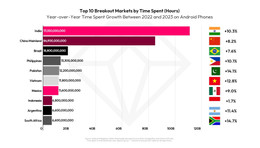
The trajectory of Vietnam’s digital growth can be traced through the massive surge in time spent on mobile devices. Data from analytics firm Data.ai reveals that in 2023 alone, Vietnamese users spent an additional 11.8 billion hours on mobile applications compared to the previous year—a 12.8% increase, specifically on Android devices.

This growth has not gone unnoticed by international stakeholders. For several years, Vietnamese developers have been quietly building a reputation for producing high-quality gaming and utility applications. Companies such as Falcon Studio, Wolffun, Amanote, Funtap, and iKame have successfully exported their products to international markets, proving that the local talent pool is capable of competing on a global stage. The current landscape is defined by this transition from a purely domestic focus to an export-oriented model, where Vietnamese developers are increasingly targeting audiences in Europe, North America, and the Commonwealth of Independent States (CIS).
Yandex and the Strategic Pivot to Vietnam
Yandex, often described as the "Google of Russia," has identified Southeast Asia—and Vietnam in particular—as a high-potential market for both user acquisition and development partnerships. During a recent engagement with industry representatives in Vietnam, Yandex underscored the potential for local developers to find success by localizing their applications for Russian-speaking users.
Nana Phan, a strategic relations lead for Yandex Ads in Southeast Asia, noted that the mobile app business in Vietnam is characterized by a high degree of maturity. "With our experience, I am completely confident in stating that Vietnam is one of the most promising markets for mobile advertising investment in Asia," she said. According to Phan, advertising revenue is projected to constitute more than half of the total income for many Vietnamese app developers, making it a critical component of their business models.
The collaboration between Yandex and Vietnamese firms is not speculative; it is already yielding results. A prime example is the success of the title "Traffic Jam 3D" by IndieZ, which has gained significant traction in both the Russian and CIS markets. This success serves as a blueprint for other developers looking to bridge the gap between Vietnamese innovation and the vast consumer base of the Russian-speaking world.
Supporting Data: The Mobile Economy in Numbers
The economic implications of this trend are substantial. The shift toward a paid-app model and the reliance on in-app advertising suggest that the Vietnamese tech sector is moving toward a more sustainable and revenue-diverse model.
- Global Standing: 11th in total app downloads; 31st in in-app purchase revenue.
- User Engagement: An increase of 12.8% in time spent on mobile apps in 2023, totaling 11.8 billion additional hours.
- User Base Concentration: 60 apps in the country have over 1 million active users, forming a solid foundation for further scaling.
Furthermore, the "readiness" of the Vietnamese market for advanced technologies is high. Recent reports indicate that Vietnam possesses an Artificial Intelligence (AI) readiness index that exceeds the global average, providing a competitive advantage for developers aiming to integrate machine learning and automation into their consumer-facing applications.
Broader Impact and Future Implications
The implications of this trend are twofold. First, for the domestic economy, the rise of the app sector represents a move toward a high-value, digital-first economy. It encourages the retention of talent and creates high-paying jobs in software engineering, UI/UX design, and digital marketing.
Second, for the international market, Vietnam is being recast as an outsourcing and development hub. The advice offered by Yandex to local developers—to prioritize understanding the specific nuances of the Russian-speaking audience, such as local legal frameworks, consumer preferences, and payment habits—highlights the importance of "glocalization."
The challenge for the next phase of growth will be navigating the complexities of international regulations. As developers look toward the European and Russian markets, they must adhere to stricter data privacy and compliance standards. Experts suggest that the next wave of growth will be driven by those who can successfully combine technical excellence with a deep understanding of local legal corridors in target countries.
Analysis of the "Go Global" Strategy
The "Go Global" strategy being adopted by Vietnamese developers is a logical evolution. As the domestic market becomes increasingly saturated, the natural step is to seek out underserved markets. The Russian-speaking region, while culturally and linguistically distinct, represents a massive opportunity due to the shared interest in specific genres such as hyper-casual gaming, photo editing, and travel utilities.

However, success in these markets requires more than just a good product. It requires a sophisticated approach to monetization, specifically through advertising networks that understand the local purchasing power. Yandex’s intervention provides a critical bridge here, offering the infrastructure and analytical tools necessary for Vietnamese firms to optimize their ad revenue.
In conclusion, Vietnam is currently at a turning point. The intersection of a large, digitally savvy population and a robust, export-ready development community is creating a unique economic engine. Whether this momentum can be sustained will depend on the ability of the industry to navigate international regulatory landscapes and the continued support for innovation from both the public and private sectors. As Yandex and other global players continue to deepen their ties with Vietnamese developers, the world can expect to see an increasing number of global-facing applications with a "Made in Vietnam" pedigree. This integration into the global digital supply chain is not merely a milestone for the local tech industry—it is a testament to the country’s increasing influence in the global digital economy.